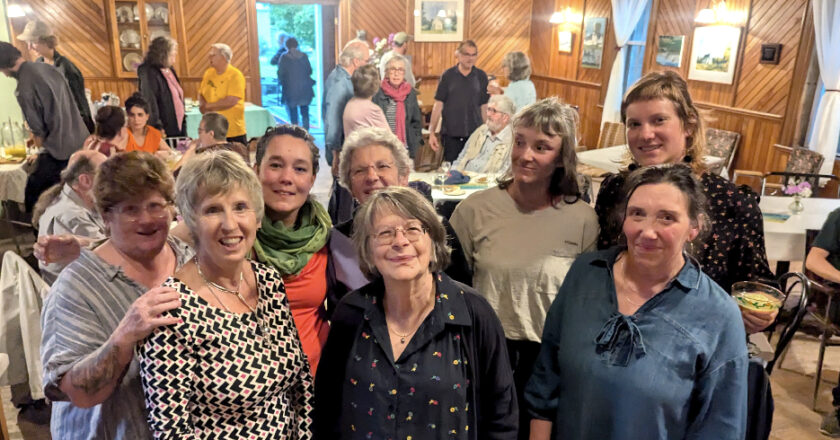
Rachel

THRIFTING

We have such a glut of stuff. Despite that, it’s hard to resist accumulating more.
As my sister used to say, « Things just glom onto me! »

Remember when « re-gifting » became a thing, especially around holidays where giving is one of the principal rituals? That was the beginning of our enlightenment, so to speak. We simply had too much stuff, and many of the items we could not use and maybe didn’t really like … but couldn’t bear to hurt the feelings of the giver. Re-gifting was a relief.

For me, this is personal. My mother was a teacher. Little treasures, little glass doodads, rained onto her desk every Christmas, and she kept them faithfully on display.

I had to dust them.
Then came the minimalist movement: get rid of everything and keep only the bare minimum needed for daily living.

« Comptoirs familials » are wonderful places to lighten our burden, bit by bit, by dropping off a box of things. They’re also great places to acquire more stuff, for bargain prices and for only a sliver of guilt.

Newcomers to our fair « forgotten » Townships―the Haut-Saint-François and points east―may not be familiar with our hidden economy. It’s not quite under the table; it’s on them.

I’m talking about the practice of « thrifting, » or shopping at thrift shops, flea markets, discount stores, and, most of all, comptoirs. Thrifters revel in the joy of the hunt, the triumph of getting something for almost nothing, finding something really unusual, and most of all, making short ends meet.

A relatively new Haut-Saint-Françisan, Xania, asked me where she could « thrift, » and I introduced her to the comptoir in Cookshire, in the basement of the big Catholic church just across the street from Korvette’s. That’s the Église Paroisse St-Camille, 170 Principale East.

Go down the hill, turn into the driveway just before the church building, I told her. Go around the back, and park along the right side of the church, near the front. The entrance to the comptoir is right there. It’s open Wednesdays from 8:30 a.m. to 3 p.m. They’ve got everything―kitchen stuff, clothes, toys.

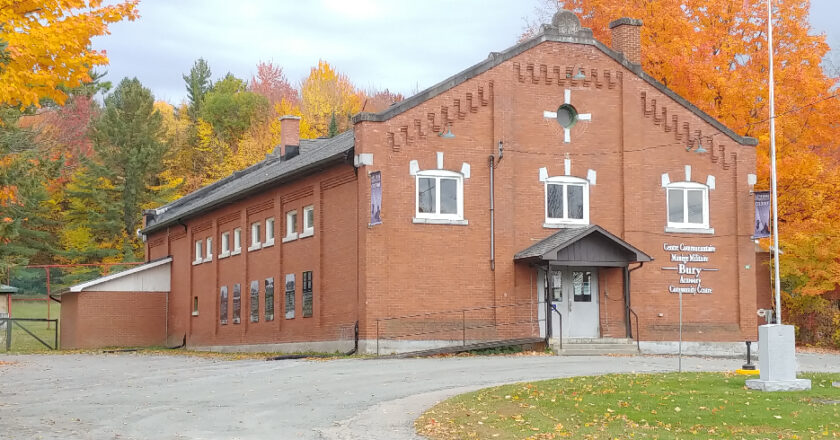
A little further east is a lesser known comptoir, at the Centre des Loisirs, 529 Main Street in Bury. It’s open 9 a.m. to 4 p.m. on Tuesdays and Wednesdays. They have everything too, but especially clothes―for men, children, babies, women. And linens―sheets, blankets, pillows, tablecloths.

They have doodads, too!
Do you know more great places to go thrifting in our area? Please let me know at rawrites@gmail.com.

Rachel Garber is editor of the Townships Sun magazine and writes from her home in the old hamlet of Maple Leaf, in Newport.

Major savings in opening of new Bury fire station

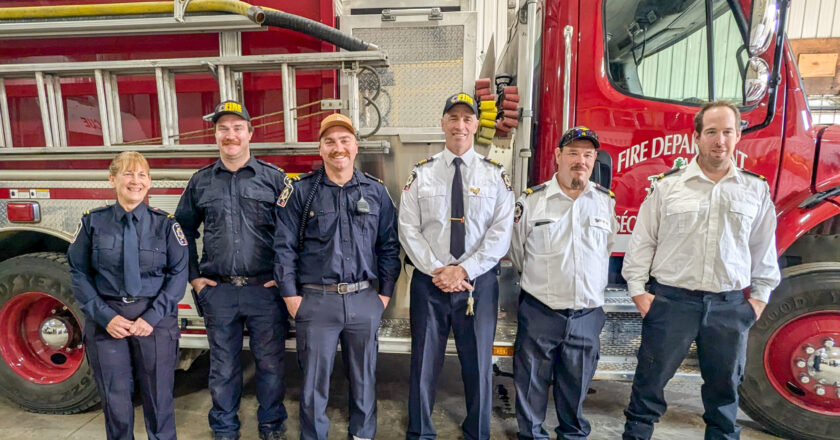
Members of the Bury Fire Department. From left to right : Teresa Jacklin, Tristan Coates, Philippe Carrier, Chief Edward Jacklin, Sébastien Gauthier and Mike McIver.

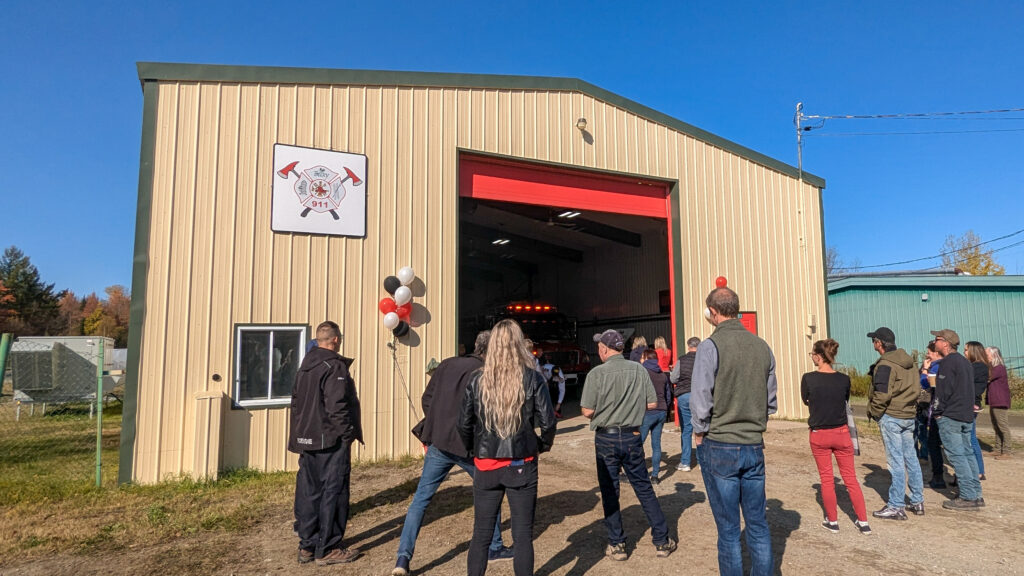
An exceptionally warm and sunny day greeted the crowds of visitors attending the inaugural open house of the new Bury Fire Station. Denis Savage, the mayor of Bury; Louise Brière, director general; and fire chief Edward Jacklin, along with other uniformed firefighters welcomed the public to have a look around at the modern, newly constructed facility. 

According to fire chief Jacklin, who also serves as coordinator for Public Works for the Municipality of Bury, the new fire station’s location at 783 McIver Street was selected by town council’s public security committee in collaboration with the fire department. It was determined the location was « ideally suited » due to its proximity to Highway 210 and McIver Street (Route 255). « This facilitates rapid access and lower response times to a greater portion of the Township of Bury, and also the neighbouring municipalities of Newport, Scotstown, Westbury, and Cookshire-Eaton, with which Bury maintains mutual emergency aid agreements. » 

Chief Jacklin expressed gratitude for and pride in his fellow firefighters’ dedication and tireless efforts. « They pitched in to help set up the station while continuing to train and practice, in order to maintain constant readiness in the event of any emergency call. » 

He pointed out that the all-metal building was essentially « fire-proof »—not a bad feature for a fire hall—and the land obtained by the town surrounding the building will allow for future expansions when needed. For the time being, the one building is perfectly adequate to house the firetruck, pumper truck, and emergency support vehicle. The building has oversized doors, both front and back, allowing for quick and secure access for responding to and returning from emergency calls. The well-insulated and heated building has replaced the former under-insulated brick fire hall located next to the Armoury on Main Street, making it more comfortable for firefighters and easier to maintain vehicles. 

Mayor Savage made short remarks in both official languages, expressing gratitude to all involved. He described the new facility as one of the greatest achievements of his term as Mayor, now on the cusp of beginning its fourth year. 

He added that it was particularly commendable so many firefighters and town employees contributed to the project, and that everyone should be proud that the community will be safer and more secure. 

Director general Louise Brière concurred with the mayor’s statements and added that the town purchased the nearly new building that had been built originally as a repair shop from a local mechanic. It meets all the fire department’s needs and fulfills government health and safety requirements. The purchase and renovations were thus made for only $350,000 rather than the projected $1.5 million for an all-new building. A subsidy from the Canada Community Building Fund covered all but about $20,000-$30,000, saving taxpayers a great deal of money. 

Robert Roy, prefect for the Haut-Saint-François regional county municipality, also attended and expressed his satisfaction with the addition of this vital link in the regional public security network. 

About 100 visitors attended, congratulating firefighters and officials, and enjoying snacks and drinks in a festive atmosphere. 

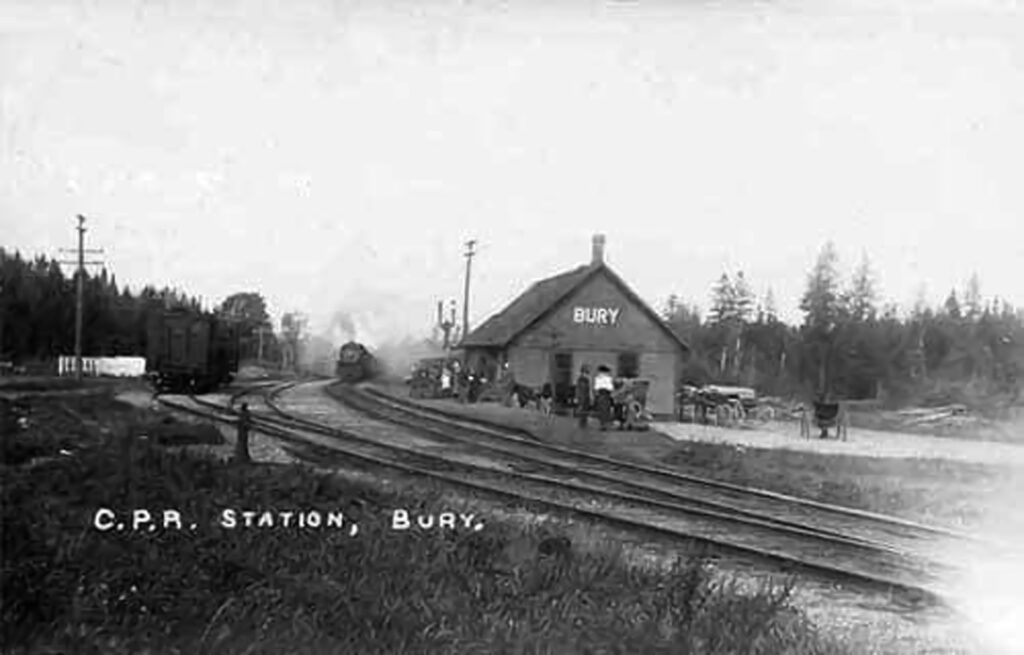
On a historic note, the new Bury Fire Station is located very near to the original former Bury Train Station that hailed the first arrival of the railway to the region in 1874.  

Bury Train Station – Bury Historical and Heritage Society
Rachel Garber

Gould was scammed

Out of the skies of cyberspace has emerged five nifty videos about our forebears here in the Townships. Right in the centre of the fivesome is Gould Station in Bury.

The videos belong to « Raising Spirits, » a series of shorts (14 to 20 minutes) « exploring the cemeteries, crossroads, and vanishing places of rural Quebec, » in the words of the Quebec Anglophone Heritage Network, the series’ promoter. They are easily found at youTube.com/@QAHNCanada.

Closest to home is the third film in the series, about Gould Station, featuring family historian, Rebecca MacMillan. This once prosperous hamlet has a sawmill and train station, but today it has almost disappeared.

One of Gould Station’s special features is that it contains the Epps home, where Bernard Epps lived and wrote many of his Eastern Townships books. Among them was The Outlaw of Megantic: One Man’s Fight Against Injustice, and another was The Eastern Townships Adventure, an ambitious work that braids together stories of the generations of Townships explorers and settlers before 1900.

Heads up : A brand new edition of The Eastern Townships Adventure is being published by the Townships Sun in partnership with the Eastern Townships Resource Centre and Shoreline Press. The Bury Historical and Heritage Society is hosting its launch on Sunday, December 1st, at the Bury Armoury.

It’s just a bit ironic that Epps does not tell the intriguing story of Gould Station itself in this book, but we have QAHN’s video to do that. In short, Gould was scammed. The railway promised the village it would have its own station if it paid for the tracks. Gould paid up, but because of the terrain, the company situated its station about 10 kilometres away from the village―in Bury! So in 1875, when the railroad was built, thus was born Gould Station—in the municipality of Bury.

The five films were produced this summer under the leadership of historian Heather Darch. They begin with Episode 1, Malmaison, telling the story of this hamlet in Stanbridge Township, once the seigneury of James McGill.

The second episode, Heathton, is about this crossroads in Barnston Township near Stanstead, located along the Stagecoach Road.

The fourth, Magoon’s Point, shows the ruins of a community near Georgeville on Lake Memphremagog, once renowned for its lime production.

In the final episode, Townships writer Maurice Crossfield tells a story about the Lost Nation, a place that no longer exists except for a tiny overgrown graveyard in the middle of a woods in West Bolton, in Bolton Township.

Rachel Garber

Girls—washing dishes. A girl and her orange shirt.

My sister the storyteller was seven years older than I was. Doing the dishes was our job. She would wash; I would dry.

Looking back at my last column, I see I wrote about bad feelings between me and the act of washing dishes. Anger. Resentment. But today, I write about good feelings. Put my hands in dishwater, and I feel a sense of solidarity with the many girls and women around the world whose responsibility it is to make food and wash dishes. I remember my sisters. I think stories.

In those days, when I was eight or nine, the rectangles surrounding us were windows rather than screens. And books.

My preferred occupation was reading a book. Spending good reading time on the mindless repetition of doing dishes seemed a waste. My sister got me to help her by telling stories while we worked.
The one I recall, with many chapters, was about the Alphabet family. The father was Andrew for A, the mother was Barbara for B, the oldest brother was Caleb for C, and so on―13 children, all the way to Baby O.

Every dishwashing session, my sister required me to recite the name of each Alphabet family member, and recap the ending of the previous instalment. Only then would she start inventing a new chapter in the family’s adventures.

When I got enthralled in the story, my hands would stop moving. When that happened, my sister’s mouth would stop moving―until I quickly picked up another plate and began wiping again.
When my sister left home, I was on my own. I’d stand hours with my hands in the dishwater, reading a book propped open on the windowsill above the sink. My strategy was to string out the job as long as possible, to avoid the next job. I’d finish just before my mother entered the kitchen to make the next meal.

Some might think I was lazy, but I worked hard at my stories.

Stories are powerful. Think of Phyllis Jack Webstad’s story. She wrote a children’s book telling what happened when authorities took her, at age 6, to a residential school. She was wearing a new orange shirt her grandmother had given her. On her arrival, it was stripped from her, along with her other clothes, and never returned.

The orange shirt story is a strong reminder of the mission of the residential school system to destroy the children’s Indigenous identity. The story became a focal point in raising awareness of the atrocities of the residential school system in Canada. This awareness has been hammered home in recent years by the discovery of more than 1,000 unmarked graves surrounding former residential schools.
Webstad’s story led to September 30 being named as the National Day of Truth and Reconciliation, or
Orange Shirt Day. Her story lets readers identify with her, to feel what she felt as a six-year-old. To empathize.

It is said that Truth must come first in order for Reconciliation to happen. I agree. But so must empathy. It is one thing to know what happened to someone else; it is another to understand how they felt. A story lets us imagine ourselves inside their experiences and to feel their feelings, at least for a few minutes.
Today when I am washing dishes, I like to listen to memories in my head, like an inner radio. My hands swing in rhythm, and my mind flies far away on the wings of a story.
In my mind, my sister the storyteller is beside me still. We let the dishes air dry.

opinion

Pushed off the land. Maybe interest-rate reductions aren’t so great

While lower interest rates are certainly welcome to those of us with mortgages and loans, they might not be so great for some of our other longer term economic woes.

The price of land in the Townships is already high—often too high for farmers to afford it on their farm income. Will diminishing interest rates increase demand for property in the Townships and therefore prices? If land values further increase, will food and housing costs rise even more?

It was a neighbouring sugar producer who made that link between interest rates and land prices for me some months ago, noting that high interest rates might actually be a good thing to control our land values. I then learned at the Cookshire Fair that a couple of local farmers are indeed being pushed off their land by the high value of farmland.

For 15 years, the young couple invested in their herd and the farm they were renting, in the hopes of one day buying it. But when the owner died, the successors sold to the highest bidder. The young couple offered close to two million dollars, but the property sold for more than two million. Three lots were then divided, and the speculator who purchased it turned around and put them up for sale, including the house.

Not wanting more trouble than they’ve already had, the couple asked to remain anonymous. They admitted they weren’t sure how they would have made payments on their offer, considering the gap between the land value and what they earn on and off the farm.

Asked about the problem at a funding announcement in Saint-Isidore in August, federal Minister Marie-Claude Bibeau acknowledged the problem. “It’s true that land values have increased significantly in recent years,” she said. “It’s true that it’s a major challenge.”

In British Columbia, the government charges an additional tax on transfers of property by foreign entities, to try to cool down high real-estate values. Should we have the same, for non-occupant owners of property? She would go further and offer a lower interest rate to buyers who will occupy their property, be it farmland or otherwise?

In response to questions about land values and interest rates that I put to Ayer’s Cliff economist and Record columnist Dian Cohen, she wrote, “Around here (Hatley area), my farmer friends say that it’s very hard for a young farmer to buy a farm… If the farm is owned by a stranger, they will ask a higher price than they would if they were selling to a family member. Even if the buyer is a family member, the purchase is difficult because of the high price of farmland and interest rates.”

Brome Village farmer Meagan Patch wrote, “I’m told that land values locally are too high to be able to support agriculture; in general, I think this is true. Especially if you consider the level of debt many are operating under… The relationship between food prices and farm viability is worth researching. Technically speaking, I don’t think most farms are profitable. Many survive because of subsidy programs. Bottom line: corporations are making the money; farmers are burning out and getting out.”
Like farmland, housing prices have also grown out of reach, in turn causing high apartment rents. On our farms, the gap between incomes and costs are very difficult to bridge.
Something’s gotta give.

Lavers

Cleaning out the house

Guile Ralph Lavers visited our office recently to show this 1941 Parks Canada brochure, which had been hiding in his house for some 40 years. Mr. Lavers recently moved to town, in Cookshire, from the Lawrence Colony. He is a gold medallist postal collector.

Welcome to Cookshire, Mr. Lavers!

Gerald Goddard

Obituary : Gerald Goddard

July 13, 1933—July 22, 2024

Gerald Goddard was known for his faith, generosity, good humour, hard work, and loving family.
“Gerry,” as some affectionately called him, was born in Thetford Mines, the son of Frank Goddard and Rose McCutcheon, French-speaking Quebecers, according to Gerald’s son, Stephen.

“Around age 3, he moved with them to Island Brook. His first language was French, but he went to school in English in Island Brook until halfway through Grade 4 when he was taken out of school to begin working to help support the family,” Stephen wrote in his eulogy, given at Hope Church in Lennoxville in August.

“He worked on local farms and started logging at age 11, meeting the minimum requirement to cut and pile to scale five cords of four-foot pulp to keep a job with a logging crew. This was done with a crosscut saw.

“He left me a very strong work ethic and attitude that no job was too difficult to complete.”
At age 18, Gerald and his mother split the cost—$2000 each—of buying a farm in Island Brook, where Gerald lived, married, farmed, and raised his family for the next 60 years.

In 1959, Gerald married Mary Cooper, and they had five children: Daniel, Shirley, Stephen, Tim, and Ruth. Gerald continued logging throughout his life, earning a reputation locally for being very thorough and thrifty in his work. His forest floors were left tidy.

He also made and sold maple syrup on his farm and grew Christmas trees, oats, buckwheat, potatoes, and more.

Gerald became a strong devotee of Christian religious faith after attending evangelical meetings in Island Brook, guided by Hubert Lewis, then pastor of the Island Brook Pentecostal Church. Later in life, Gerald was also renowned for sharing that faith, sometimes more generously than time allowed. Son Stephen said the family estimates Gerald gave out around 1200 sheets of paper with biblical verses to guests and people he met along his way.

“Much later in life, he went to Adult Education, completing the equivalent of Grade 8 or 10,” Stephen wrote in his eulogy.

“He was an outdoors man who loved hunting, fishing, gold-panning, and metal-detecting… I received a love of the outdoors from my Dad,” wrote Stephen, who is today an arborist based on the outskirts of Cookshire-Eaton.

Rachel Garber

A man—washing dishes!

Visiting my family reminds me of my love-hate relationship with doing the dishes.


Flashback 1:
Angry mother

In our old farm kitchen, my father stood at the sink, elbow-deep in dishwater.
Supper was over. Of the seven children, the older ones were in the barn doing the evening chores. My mother was upstairs, putting the littlest ones to bed.
This was before my time―I was the eighth child. My sister told me this story. She was the middle one, hiding around the corner, watching and listening.
Grandmother―my father’s mother―came into the kitchen behind him. She was visiting from Virginia.
“John! What are you doing? A minister of the Gospel washing dishes! Shame on you! Why isn’t your wife doing that? A man―washing dishes!”
Hearing about it as a teenager, after both Grandmother and Father were dead and buried, I sucked my breath in sharply.
“What did he do? What did he say to her?”
“Nothing. He didn’t even look at her. He just kept on washing the dishes.”
We sit together in silence, imagining the scene. Our father, the ultimate authority in our young lives, washing dishes. His mother, whipping him with her angry words. My sister, the secret witness.


Flashback 2:
50-50 not always fair

We agreed our relationship would be an equal partnership, fifty-fifty. But what did that mean, exactly? What if we both hated washing dishes, what then?
In his previous marriage, he never did the dishes. They had a dishwasher. So we must too, he said. The cost of the machine must be split fifty-fifty, even if he earned twice as much as I did. Was that fair?
I closed my mouth and acquiesced, feeling lucky to be with a man who didn’t expect me to do all the housework alone.
Our evenings were governed by a rigid routine. Supper, we took turns preparing: He, one day; me, the next; my son on day three. The person who made supper loaded the dishwasher.
We never did any of this together. It got done, but it was never fun.
He died some 20 years later. One of the first things I did? Get rid of the dishwasher. I was living alone then, and just cooking for myself.
It was a relief to be one hundred percent of my partnership.


Flashback 3:
Boys’ toys

My antipathy for dishwashers of the mechanical kind dates way back. I guess I was in third grade when our reading book fed us a story that confused and enraged me.
A brother and a sister had a certain rivalry, the story went. He thought boys were the bees knees. Boys had all kinds of new machines that girls were not allowed to use. A lawn mower. A tractor and wagon. A motorcycle.
Sister was jealous.
Then she got her own machine―a dishwasher!
Now Brother was jealous, but Sister wouldn’t let him touch it. Only girls were allowed to use it, she insisted.
This was unbearable for Brother. One afternoon when Sister wasn’t around, he sneaked into the kitchen to try out the dishwasher. But woe! When he started the machine, a great clatter arose and scared him out of his wits.
Sister heard the noise and came running. With an air of calm triumph, she opened the dishwasher and discovered a loose cup rattling around among the plates.
Moral of the story: Only girls were allowed to operate dishwashers, and it was a privilege to do so, a privilege denied to boys, whose birthright was, however, all kinds of other motorized toys.
I seethed in silence. I remember standing in the kitchen facing a pile of dirty dishes, full of rage.
Rachel Garber is editor of the Townships Sun magazine and writes from her home in the old hamlet of Maple Leaf, in Newport.

Centre Communautaire Manège Militaire de Bury

Matthew Dubé in Dudswell, Russell Perkins in Bury

Polling station – Bury Armoury Community Center.

by John MACKLEY
The results of recent municipal by-elections are in: Matthew Dubé was elected councillor in Dudswell, and Russell Perkins in Bury, according to Elections Québec.
In Dudswell, Dubé was elected by acclamation in the by-election scheduled for September 22, after Jean-Pierre Briand and Alain Dodier, the other two candidates for Position #6, withdrew. This eliminated the need to hold the scheduled ballot, for which 1,544 electors were registered.
In Bury, the August 25th by-election filled Seat #4 left vacant by the resignation of Alain Villemure, who moved away. Of the four candidates, Russell Perkins received 47.5 percent of the votes; Sandy Lalancette received 27.92 percent; Michael Coleman, 20.42 percent; and Samantha Brooks, 4.17 percent. Registered to vote were 979 residents; 240 valid ballots were received, giving a voter turnout of 24.62 percent.


New councillor Dubé said he was satisfied and hoped to use his 22 years of experience in construction. “It’s just for one year,” he said in French. “Next year I’ll see if I’m competent to do a full term. I’ll see what I can do to add to the quality of life for the municipality. I’m not the candidate who wants to turn everything on its head.”
Asked what he hoped to accomplish on the Bury municipal council, Mr. Perkins said, “I’ve worked for them for over 40 years, so I figure I know a little something about the roads and the water, and the sewer, and the buildings and that. Taxes are starting to go up quite a bit, and I’d like to cut down a little bit on some of the expenses. I’m not sure how we can do it yet, but give me a little time, and we can all figure out something, I hope.”

BuryCultural

Bury’s United Cultural Centre launches new season

Plans for folk music, blues, a jazz cabaret, arts workshops, and maybe a café were “something new” at a 5 à 7 on August 31st, when the new Cultural Centre committee launched a new season of activities. More than 50 people enjoyed a bountiful buffet, including a strong contingent of young adults.

“Something old” is the “magnificent building,” in the words of Martine Staehler, who chairs the new activities committee. The crowd was seated café-style in the Mackenzie Chapel, built in 1910 in Gould Station, and moved in 1958 to become the Sunday School space for the Bury United Church. The Bury church was built in 1898; the two small buildings form a unique L-shape, with intricate wood panelling lining the interior.

In 1998, a committee led by Margaret James formed the Bury Cultural Centre, known for its art shows. Now, the new committee promises a much more active program for all ages.

The crowd applauded when Staehler described upcoming events, a Folk-Blues show as part of the Religious Heritage Days, now past; a Jazz Cabaret on September 27 with the Trio du Haut; poetry and drawing workshops on September 28; an art show with more than 15 local artists on October 19; a Migratory Roots Festival with Literacy in Action on October 31, with a collective kitchen and crafts; dance and music workshops on September 15, October 6 and 27, and at the Victoria Hall on November 8; and arts and crafts workshops on September 22 and October 13, and December 1st at the Bury Library.
Staehler said she was glad to see so many young people involved. “I think they need a place to get together,” she said. “And this is such a beautiful space.”

She pointed out their initiative needs support from local people, both volunteers and participants, as well as financial assistance. The committee plans to apply for grants for the activities, as well as to restore the building and perhaps winterize it. She hopes to open a café in May 2025, if they have adequate support.
Just before dessert, the crowd fell silent as Chloë Fortier sang and played her autoharp, beginning, “I heard a story…” Then Sandy Lalancette gave a rousing rendition of a traditional Quebec song, “Mes Sabots,” accompanied by clapping and chanting. Both performances earned enthusiastic applause.

ACTU-Rachel

SMALLPOX

Stephen Burroughs is infamous for his counterfeiting activities back in the 1790s and early 1800s. It was in the Eastern Townships, at Burroughs’ Falls among other locations. But flash forward to about 1835: Then almost 70, he had converted to Catholicism and was headmaster of a school in Three Rivers, as Trois-Rivières was then known. A visitor reported, “I inquired if his health was feeble at that period of life. ‘No,’ said he, ‘but everyone then said I should be hanged before I was forty!’”


Indeed, Burroughs barely escaped hanging after a volatile life that included impersonating a minister, posing as a ship’s surgeon, and functioning as a revolutionary soldier, a schoolteacher, a rake, a confidence man, and a counterfeiter. Fed up with the rampant counterfeiting of American bills in the Townships, the Vermont legislature sent a delegation to the Governor of Lower Canada, asking for the death penalty for counterfeiters. After several arrests and escapes, Burroughs was captured and found guilty at last, but was “pardoned on giving heavy bonds for his future good conduct.”

All this, Bernard Epps recounts in detail in his An Eastern Townships Adventure, Volume 1. Epps leaned on Burroughs’ own memoir, newspaper reports and personal correspondence of the day. But he also tells about Stephen Burroughs’ connection with two Haut-Saint-François townships, Eaton and Newport.
The occasion was an outbreak of smallpox in the fall of 1802.
It was recorded that Burroughs “set to work with untiring energy and in almost every instance treated the disease successfully.”
Smallpox broke out again in the fall of 1810. Newport appointed a committee to watch out for any cases within the township, and to quarantine those families to prevent it spreading. The History of Eaton recorded, Epps wrote, that “when but 17 years old Mr. [Ward] Bailey was taken sick at La Baie [on the St. Francis 18 miles from Three Rivers] and was given over by his physician, when Stephen Burrows [sic] happened to come along and told them what to do and how to treat him, and brought him through all right.”


It seems Stephen Burroughs had learned a few things during his stint as a ship’s doctor (“There were directions, he explained, on all the bottles of medicine.”).
Burroughs’ story is one of many narrated in the two volumes of An Eastern Townships Adventure set to be published in December by the Townships Sun, Shoreline Press, and the Eastern Townships Research Centre, supported by the Bélanger-Gardner Foundation. Look for it!

EATON CORNER
In a former congregationalist church built in 1840, the Eaton Corner Museum at 374 Route 253 offers a permanent exhibit, “A Tale of the Townships.” Temporary exhibits in the church building as well as displays across the street in the Old Academy building include the Bill “The Glass Man” McCallum’s glass exhibit, with an added feature. Also on display are quilts and linens, a full British Home Children Display, the Bobbin Lace-Making Machine, a few artefacts from the Sherbrooke Protestant Hospital School of Nursing, and more.
During September, the Museum is open Saturdays and Sundays from 11 a.m. to 4 p.m. Info: 819-875-5256 or eatoncorner59@gmail.com.


BULWER GOLDEN AGERS
If it’s Tuesday, it’s Bulwer Golden Agers! Every second Tuesday, that is, starting September 10, from 1:30 to 4:30 p.m., at the Bulwer Community Centre, 254 Jordan Hill Road. On the agenda are card parties, carpet bowling, and a light lunch, accompanied by general friendliness. “New members are welcome,” said Peggy Grapes, who prepares the lunch.
Info: Peggy & Leigh Grapes, 819-875-3543.


CANTERBURY POTLUCK
A potluck supper is planned for the Canterbury Centre on Saturday, September 14, from 4:30 to 8:30 p.m. Corn-on-the-cob, salads, meats, desserts, and delights from the kitchens of you and your friends. Everyone is welcome; RSVP to Candace Coleman, 819-657-4661.


BROOKBURY HALL
Brookbury Hall hosts a “this ‘n’ that” garage sale on Saturday, September 14, from 9 a.m. to 2 p.m., at 571 Brookbury Road (aka Route 255). Info: Brenda Bailey, 819-884-5984.


VIACTIVE
Two bilingual Viactive groups meet Wednesdays in Sawyerville and Newport: Bring water. Wear good shoes and comfortable clothes.
The Newport group starts September 18 at 1:30 p.m., led by France Demers and Lyne Maisonneuve at the Newport Municipal Hall, 1452 Route 212, Island Brook. Info: 819-889-1340.
Sawyerville recommences at 10 a.m. on September 11 or later, depending on the availability of the space. Gérard and Denise Nault lead the sessions in the basement of the Saint-Rosaire Catholic Church, 4 Randboro Road, Sawyerville. Info: 819-889-2630.


CULTURE IN BURY

The United Cultural Centre, 560 Main Street, Bury, plans a series of music and art events, starting with a dance workshop on Sunday, September 15, at 4 to 5:30 p.m., and a crafts workshop on Sunday, September 22, from 2 to 4 p.m. On Friday, September 27, at 7:30 p.m. is a Cabaret, with a jazz show by the Trio du Haut beginning at 8:30 p.m. (bring your own drinks). On Saturday, September 28, are poetry and drawing workshops from 1 to 4 p.m. Info: Centre Culturel de Bury’s Cultural Center Facebook page.


CHURCHES
United. Sunday, September 15, Trinity United Church’s 161st Anniversary Worship Service is planned for 10:30 a.m. On September 22 at 10:30 a.m. is a service at Sawyerville United, and September 29 at 11 a.m., a joint service for all United Church communities at Lennoxville United Church, followed by a potluck lunch. Info: 819-889-2838. For pastoral care, call Rev. Spires at 819-452-3685.
Baptist. Sunday services are in French at 9 a.m. and in English at 11 a.m. at the Sawyerville Baptist Church, 33 Cookshire St. For information, please contact Pastor Michel Houle at 819-889-2819.
Anglican. A Sunday service is on September 15 at 9 a.m. at St. Peter’s Anglican Church in Cookshire. St. John’s in Brookbury is closed for the season. To find services in the deanery, check the schedule at deaneryofstfrancis.com/calendar/. Info: 819-887-6802, or quebec.anglican.ca.
Do you have news to share? Call 819-640-1340 or email rawrites@gmail.com by September 12 for publication September 25.

Letter from the Fair – and a quiet road east

The roar of the truck and tractor engines in Cookshire could be heard east of Island Brook. Then, when their multi-ton pulls paused, the thumping of the bass music also filled the night air, Thursday through Sunday this beautiful mid-August.

Someone on a local social media site asked, “Just a little question, do you get many raves around here? Is there a special occasion happening this weekend?” (That’s the thing about Facebook and the others: if you spend all your time on it, you might actually not know what’s going on.)

The Cookshire Fair is close to if not the largest event on the annual calendar of our Upper Saint-Francis region. It started in 1845. And this year’s happy and indeed special occasion ended on Sunday, August 18, “with a bang and a whisper,” as Alberta singer-songwriter Corb Lund wrote in his poignant song “The Rodeo’s Over.”

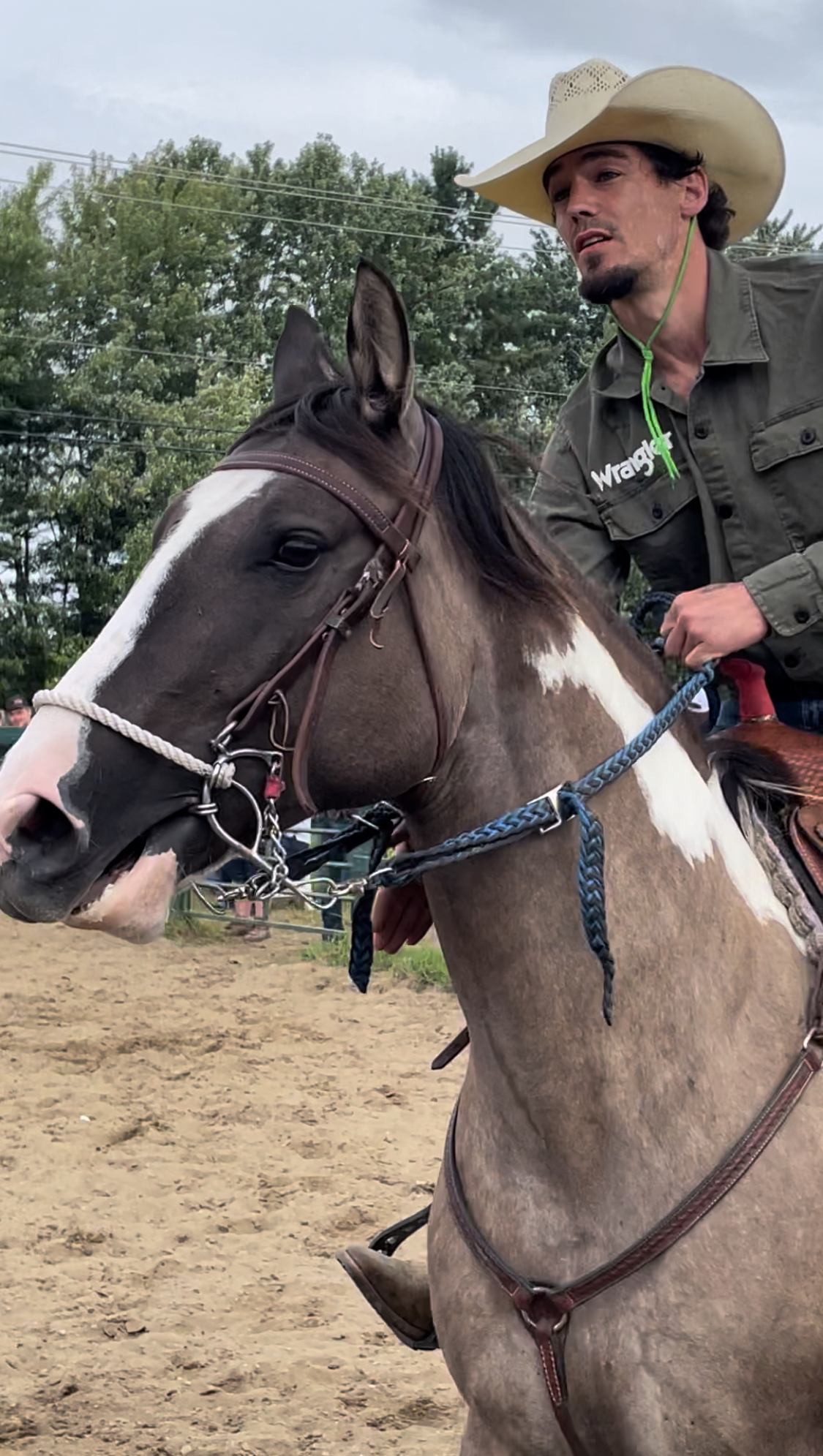
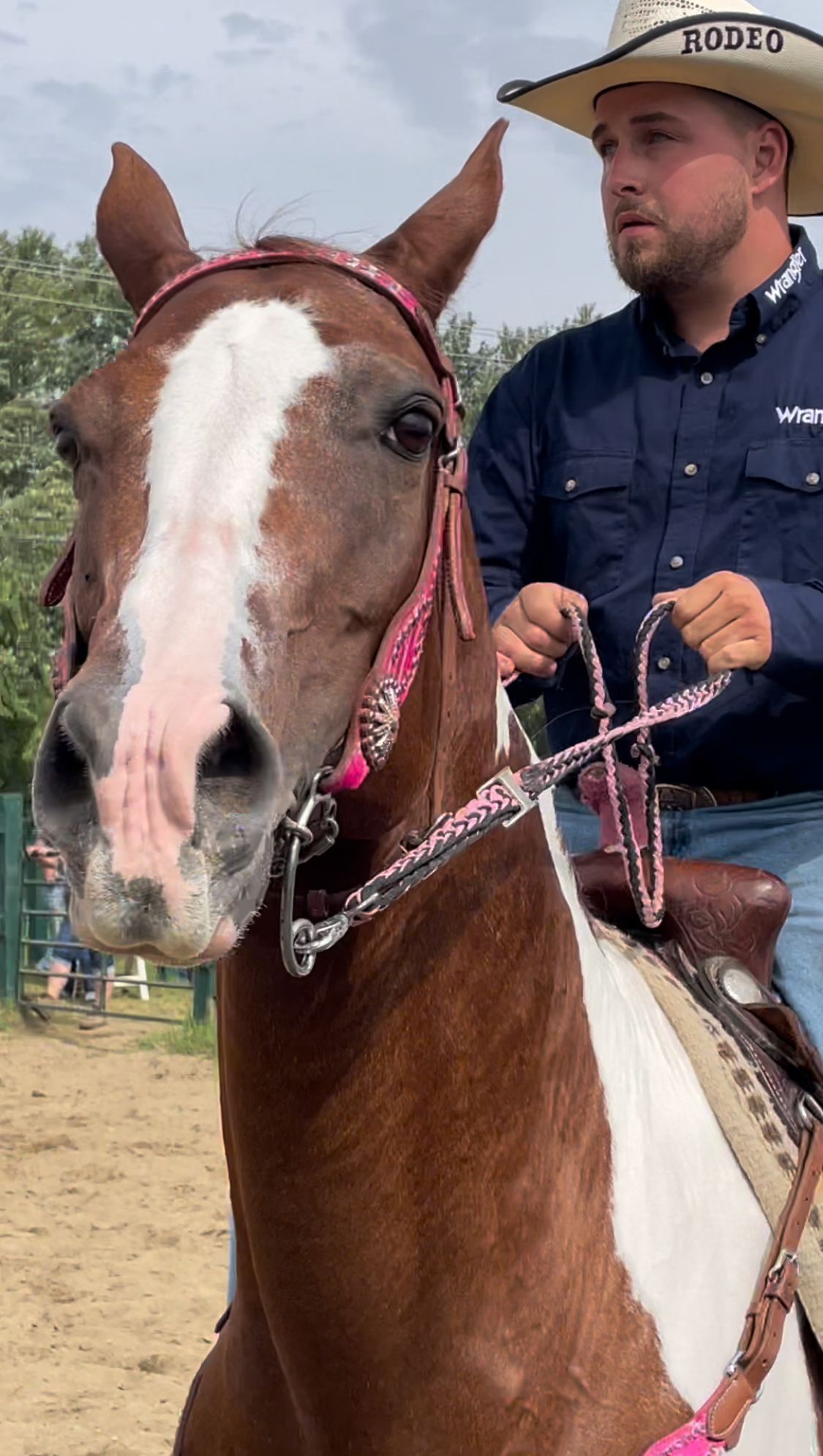
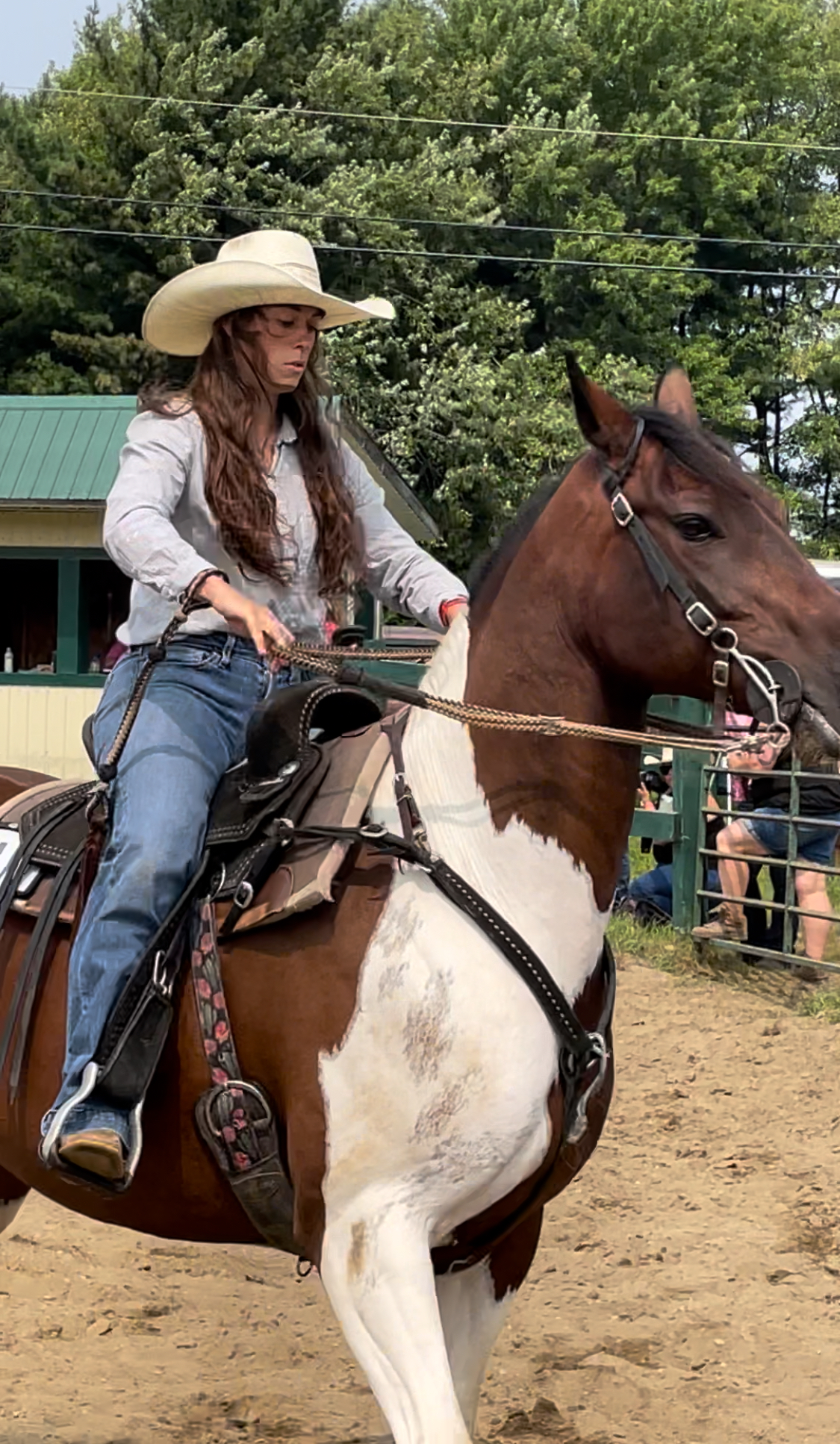
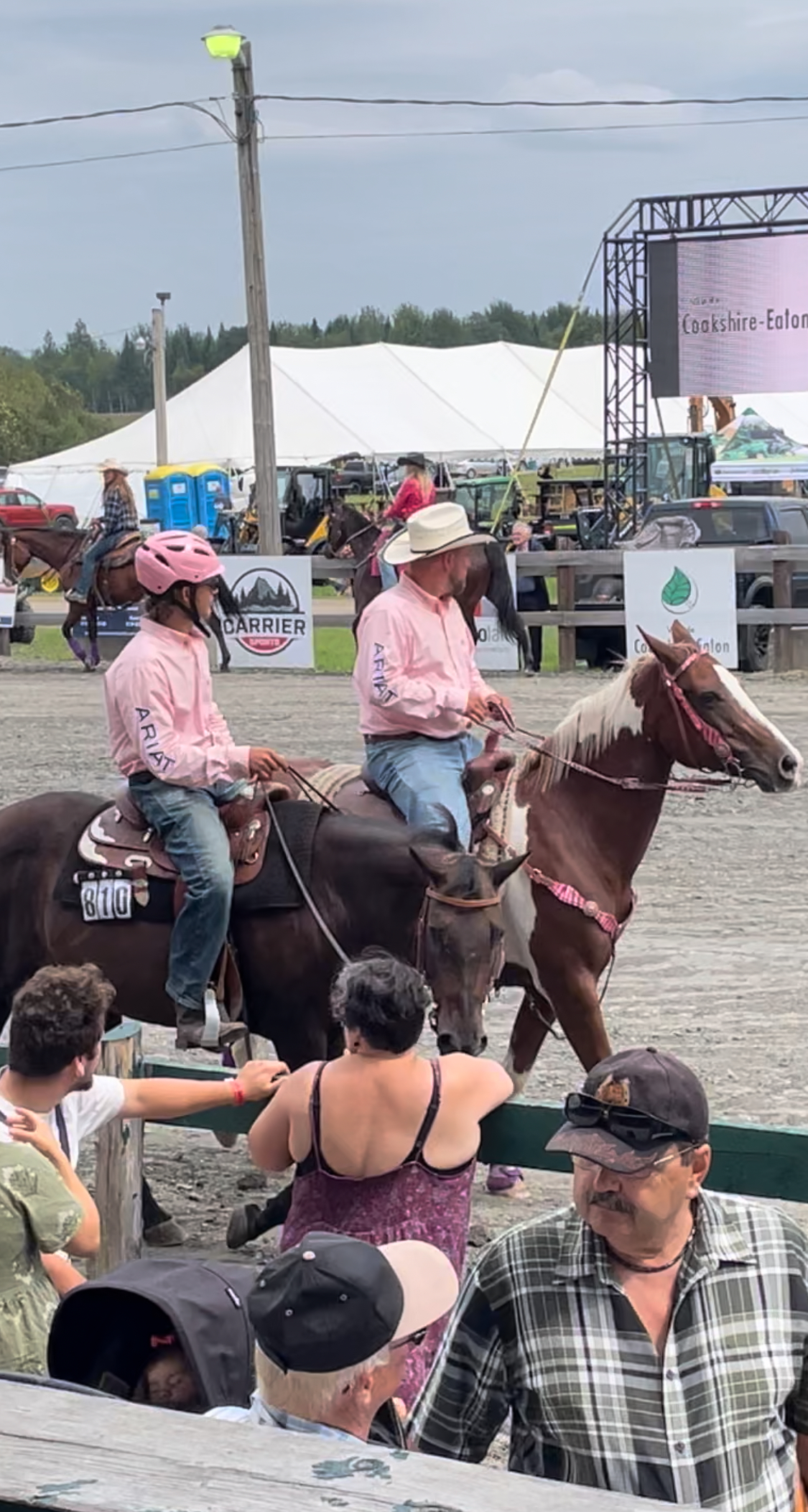
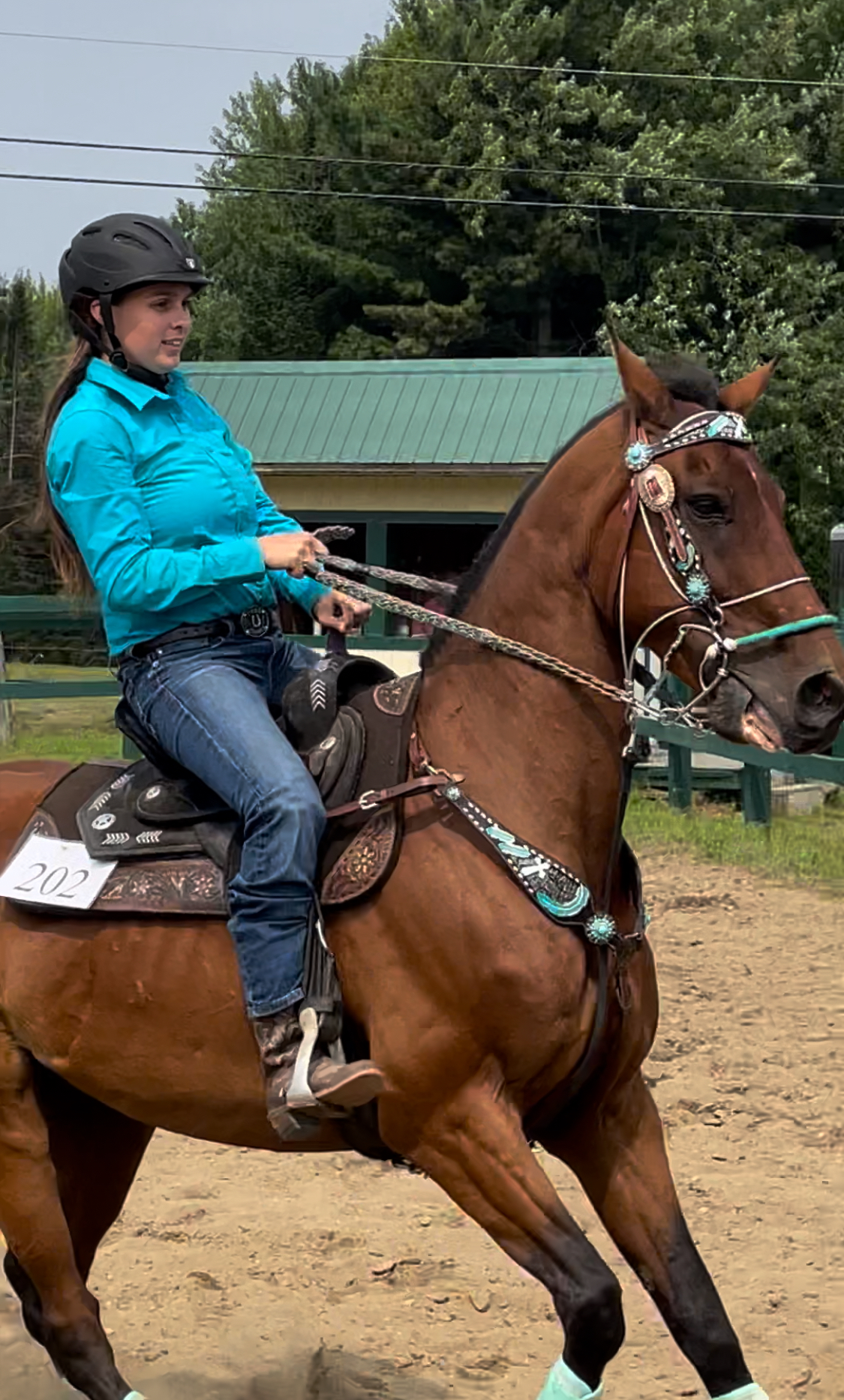
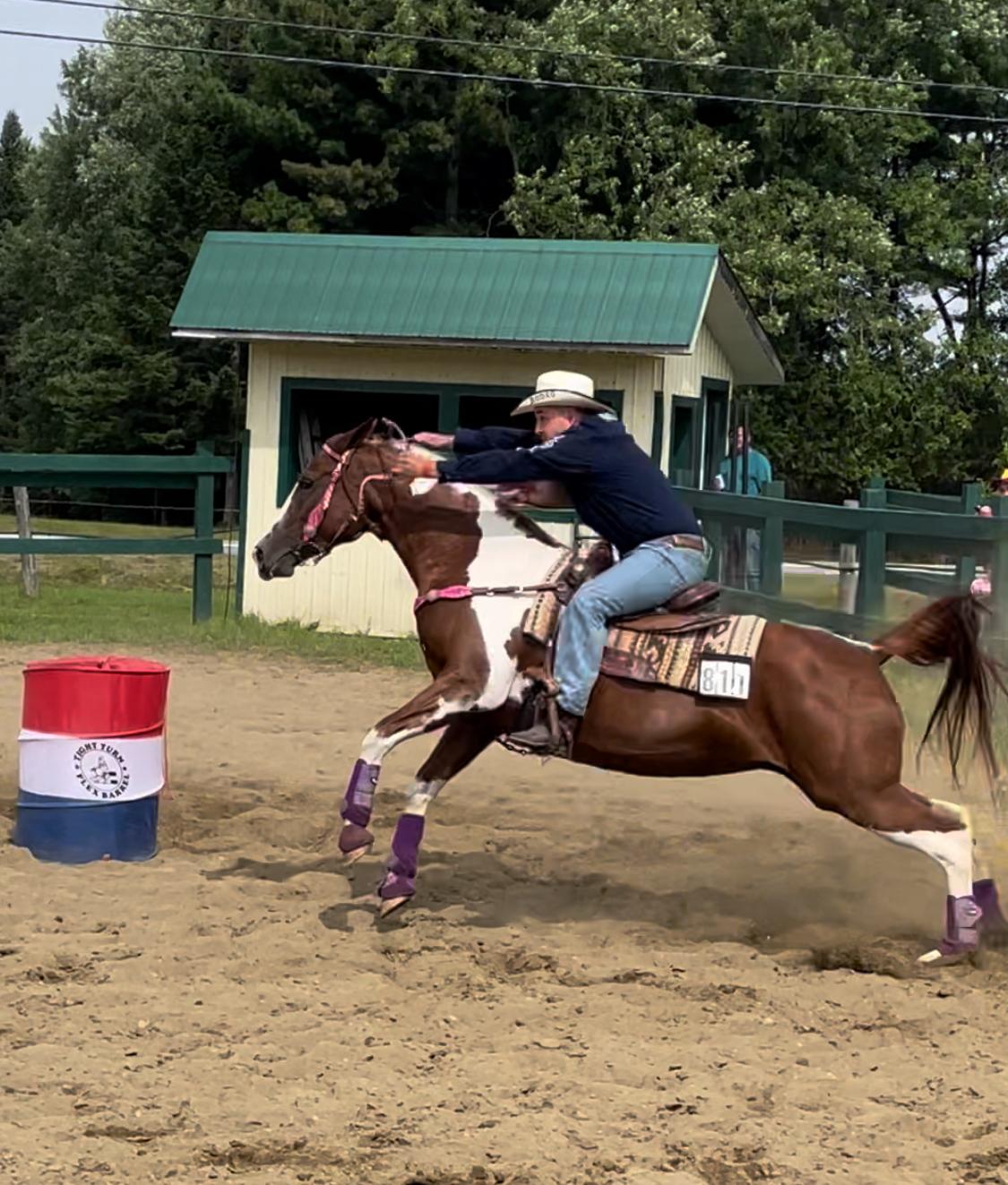
Whispering in the ears of their horses were the women and men whose relationships with their animals are so close you could see that at times they are one. Dressed to the nines, draught horses, sometimes four abreast, trotted their proud partners – also all dickied up – before the grandstand for show upon show during four days of the fair. In the light-horse arena, the whispers could sometimes be heard as spectators were briefly hushed in awe and anticipation – then, the beauty of the quiet, intense performance occasionally so great that we would erupt in cheers and clapping.

And the bangs, oh, the bangs and the roars! Country line dancers had their music cranked to the max as they shuffled and spun under the Winslow Dancers’ tent, the largest I’ve seen at the Cookshire Fair. Their finale in front of the grandstand Sunday, moving to the groove around the horse droppings from the parade just moments earlier, featured a one-man flip as they all danced their reach for the stars.

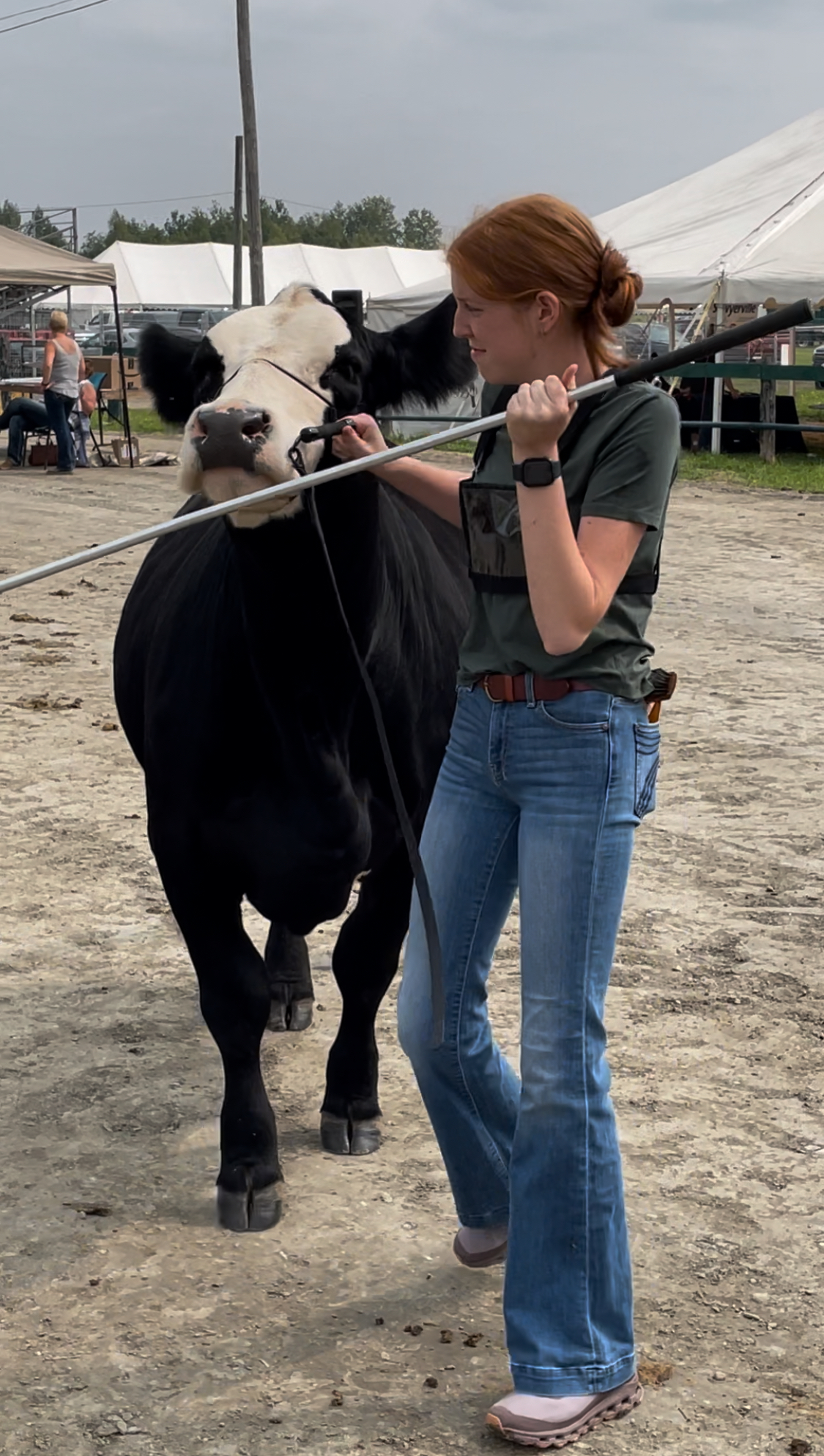
I watched all of this mostly as sideline observer, the local newspaper reporter taking in the sights, the smells, the sounds… and the great lunches put on by the Quebec Farmers Association, Bulwer Branch. I tried an awkward dance lesson, chatted with a few truck and tractor pullers, filmed as horses and cattle sidled right over to me at the fence, curious about my camera or perhaps the way I was jaw-struck at their presentation and husbandry. But after a few truck and tractor pulls, I would retire to my quiet road in Newport. There, hearing the engines still roar, I could swear I also got a whiff of diesel, as if it too had drifted ten crow miles, beckoning me back to the fairgrounds and fun.

“So take from the lessons and be glad for the memories,” Lund also wrote. The Cookshire Fair was a success by our modern standards, at certain times filling the parking fields and the grandstand, when just down the road some folks had no inkling a fair was even going on. But as the years go by, the numbers of farmers and animals dwindle. The lineups for the rides aren’t as long. The grandstand often has too many empty benches.

The contrast between the quiet morning farm-animal shows and the evening orgy of diesel engines couldn’t be greater—kind of like the difference between reading a newspaper and scrolling through social media feed.

Each has their place now, inevitably. There is a time to nurture and cultivate. And there is a time to dance, roar, and celebrate. Balancing opposite ends and bringing together vast differences is no small feat.
Kudos to the folks at the Cookshire Fair this year for pulling that off, with flare!

Eglise_St-Peters

CHURCHES GALORE

Religious Heritage has grown BIG. The Bury Historical & Heritage Society used to organize an annual one-day open house of churches in the area. Now it’s a three-day affair, the weekend of September 7-8, and 180 churches across Quebec are participating in the seventh edition of the Religious Heritage Days.


In the Haut-Saint-François, 11 churches, many that have turned museum or cultural centre, are participating. They offer a variety of tours, exhibits, and other activities. Admission is free. So here’s your tour, starting down east, then arcing back to Sawyerville.

CHALMERS OF GOULD
Chalmers Church, built in 1891, was named after Thomas Chalmers, famous Presbyterian preacher of the Free Kirk of Scotland. In the 1970s, it was moved from Route 257 to 17 Route 108, in Gould (Lingwick). Unusually clad in red brick, it is now one of three venues of the Oscar-Dhu Cultural Centre. Visitors are welcome Sunday, September 8, from 1 to 4 p.m.
CANTERBURY CENTRE
Canterbury Centre, 1095 Victoria Road (Route 214), Bury. This little white church-turned-cultural-centre with flying buttresses was built in 1896. This jewel in the crown of the Bury Historical & Heritage Society is open Saturday 12 to 4 p.m. and Sunday 11 a.m. to 3 p.m., exhibiting watercolours and drawings―landscapes, portraits, and more―by painter John Ward, born in England and residing in Lingwick.
UNITED CULTURAL CENTRE
In downtown Bury at 560 Main Street, this erstwhile church is open Friday, Saturday, and Sunday from 1 to 5 p.m. and offers guided tours, English tea, and on September 6 at 4 p.m., a musical show by Chloé Fortier. It was built in 1897.
SAINT JOHN’S
This ancient little Anglican church known as Brookbury Church, at 170 Route 255 N., in Bury―now called Batley Road―was built in the 1840s by architect John Baxter. In the cemetery surrounding it is a tombstone dated 1845. The church is open for visits on Saturday from 10 a.m. to 2 p.m., and has a Sunday service on September 8, at 10 a.m.
BISHOPTON UNITED
Built in 1899 by Milan Bishop, builder, and Oscar A. Bishop, engineer, this church at 203 Main Street, Dudswell, is in a Victorian neo-gothic style and has a distinctive bell tower and wood-panelled interior. It is open to visitors Friday and Saturday, 7 to 10 p.m., with a soloist singing at 7 p.m.
SAINT-ADOLPHE
Built in 1897, once a Catholic church, now a museum, Saint-Adolphe at 191 Principale East, Dudswell, is open Friday, 2 to 6 p.m., and Saturday and Sunday, 10 a.m. to 4 p.m. Besides the exquisite building and artefacts, it also exhibits wooden models of historical rural scenes by Louis-Emile Beauregard of Dudswell.
SAINT-LOUIS-DE-FRANCE
This imposing stone Catholic church at 166 Saint-Jean East in East Angus, built in the 1920s, has gorgeous stained-glass windows. It is open Saturday, 1 to 3:30 p.m., and Sunday, 1 to 4 p.m., with an organ concert on Saturday at 2:45 p.m. and Sunday at 1 p.m.
SAINT PETER’S
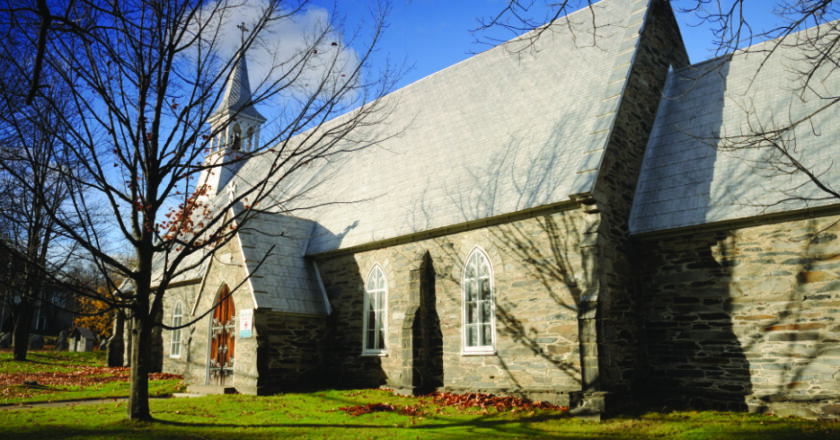
Built in 1869, this intriguing stone structure at 45 Principale West, Cookshire, is an Anglican church. Visiting hours are Saturday and Sunday, noon to 4 p.m. A Sunday service is on September 1st, at 9 a.m.
TRINITY UNITED
Built in 1860 at 190 Principale West, Cookshire, by Albert Haseltine, the Trinity United Church is open for visits on Saturday, 1 to 4 p.m. The September 1st Sunday service is at 10:30 a.m. (A Sunday service on September 8 will be 10:30 a.m. at the Sawyerville United Church.)
Also on September 8 at 2 p.m., the Trinity United Church celebrates its 161st anniversary with a concert by Jim Robinson, Sue Fowler, and Ronnie Hazeltine. Refreshments are to be served at the intermission, and, Rev. Tami Spires says, “Donations are gratefully accepted at the door.” Finally, on Sunday, September 15, the Trinity United Church’s 161st Anniversary Worship Service is planned for 10:30 a.m. Info: 819-889-2838. For pastoral care, call Rev. Spires at 819-452-3685.
EATON CORNER
In a former congregationalist church, built in 1840, the Eaton Corner Museum at 374 Route 253 offers a permanent exhibit recounting the history of Compton County. It is open Friday, September 6, from 1 to 4 p.m.
SAWYERVILLE BAPTIST
In downtown Sawyerville at 33 Cookshire Street (Route 253), the Sawyerville Baptist Church was built in 1889, and is open for visits on Saturday and Sunday from 1 to 4 p.m., with an exhibit of historical photos and refreshments. Sunday services are in French at 9 a.m. and in English at 11 a.m. Info: Pastor Michel Houle, 819-889-2819.
This Quebec-wide event is organized by the Quebec Religious Heritage Council. Info: journeesdupatrimoinereligieux.ca.
A FOOT IN TWO WORLDS
Relation entre deux mondes (Relationship Between Two Worlds) is the title of an exhibition by artist Sylvie Cadorette that offers 16 artworks inspired by experiences of six persons who immigrated to Quebec from Rwanda, Colombia, Cameroon, Italy, and Croatia. A jury selected this show as part of the International Association for Intercultural Research at Université Laval in June 2023. Now Cadorette’s art has come to the Cookshire-Eaton Art Gallery, 125 Principale West, where it is on exhibit in the Salle Suzanne-Genest until October 6. The Gallery is open Sundays from noon to 4 p.m.
BROOKBURY HALL
Brookbury Hall hosts a garage sale on Saturday, September 14, from 9 a.m. to 2 p.m., at 571 Brookbury Road (aka Route 255). Info: Brenda Bailey, 819-884-5984.
VIACTIVE
The season for Viactive is at hand, including the two bilingual groups, meeting Wednesdays in Sawyerville and Newport. Starting September 18, France Demers and Lyne Maisonneuve will lead the Newport Viactive group at 1:30 p.m., at the Newport Municipal Hall, 1452 Route 212, Island Brook. Info: 819-889-1340.
Viactive Sawyerville recommences next week, on September 4, at 10 a.m. Gérard and Denise Nault facilitate the sessions in the basement of the Saint-Rosaire Catholic Church, 4 Randboro Road, Sawyerville. Info: 819-889-2630.
Do you have news to share? Call 819-640-1340 or email rawrites@gmail.com by August 29 for publication September 11.

Eaton Corner : feu de maison / house fire [ENG/FR]

English version follows 

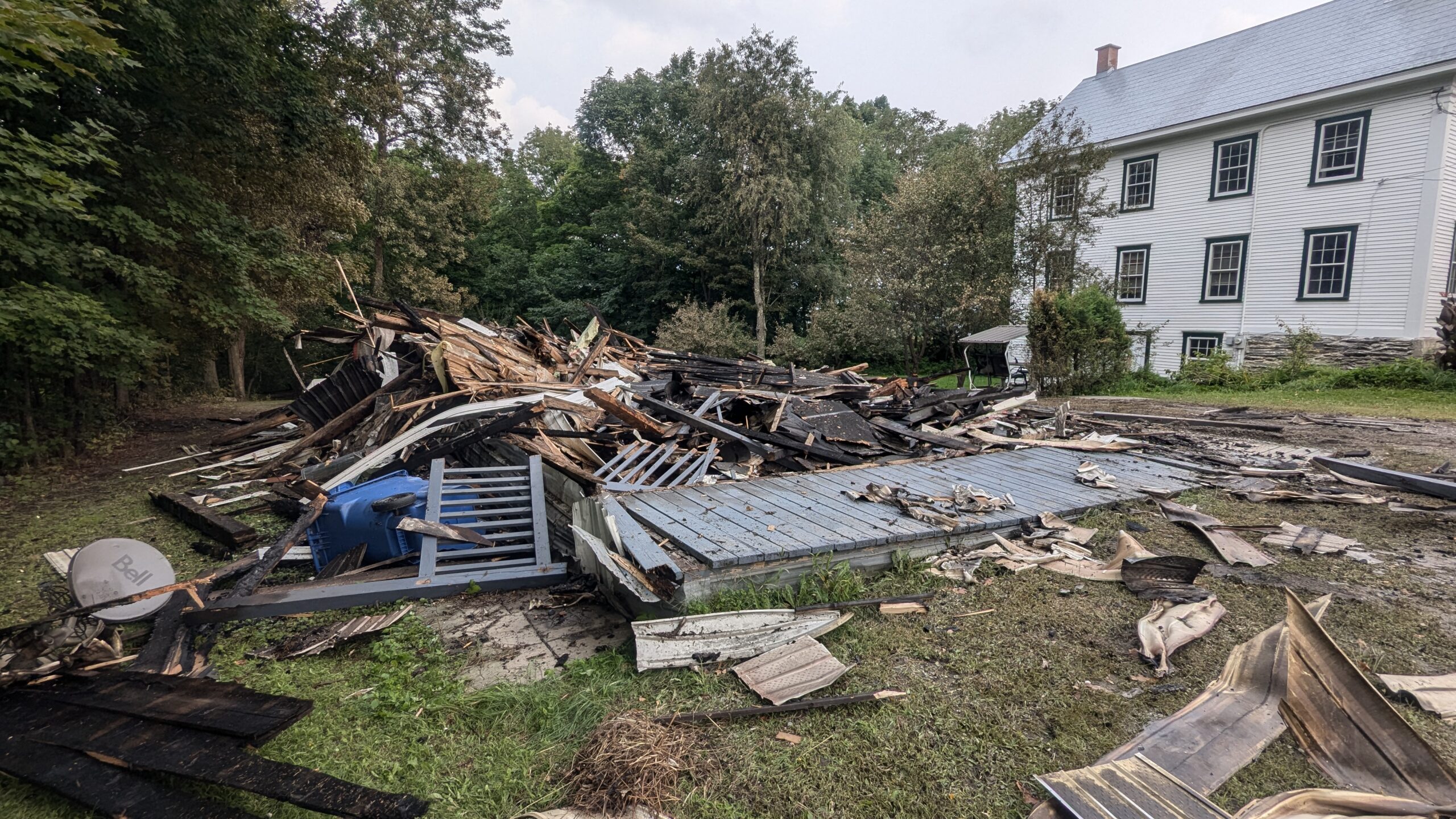
Un feu a détruit une résidence du secteur Eaton Corner, à Cookshire, ce jeudi 15 août en avant-midi. Le bâtiment était sis au 377, route 253, tout juste à côté du Musée Eaton Corner. 

La maison centenaire était entièrement sous l’emprise des flammes lorsque les pompiers en provenance d’East Angus, de Bury, de St-Isidore-de-Clifton et de Cookshire-Eaton sont arrivés, selon le photojournaliste Corey Bellam. “Il ne semblait pas y avoir personne sur place sur le coup », ajoute-t-il.

La résidence était habitée par Marie-Sylvie Loiselle. Cette dernière se retrouve à la rue et est à la recherche d’un logement, le temps de la reconstruction.

L’ancienne Académie Eaton, qui fait maintenant partie du Musée, n’a pas été touchée. La cause du brasier reste indéterminée confirme Sylvain Dusseault, directeur adjoint de la Sécurité publique à la Ville de Cookshire-Eaton. Aucun blessé n’a été signalé.  

A fire destroyed a house late Thursday morning August 15 2024 at 377 Rte. 253, Eaton Corner, next door to the Eaton Corner Museum Academy building. 
 
The centuries-old house was fully engulfed in flames when the fire departments from the municipalities of East Angus, Bury, St.-Isidore-de-Clifton, and Cookshire-Eaton arrived, according to local photojournalist Corey Bellam. « There didn’t seem to be anyone home at the time, as far as I know », he says.
 
Marie-Sylvie Loiselle was living there. She now has to find another place to live, while waiting for her future home to be built.
 
The former « Eaton Academie, » now part of the Eaton Corner Museum, was undamaged. The cause of the fire has yet to be determined. No injuries were reported. 

By John Mackley
Traduction : Jean-Marc Brais

Stuart Main

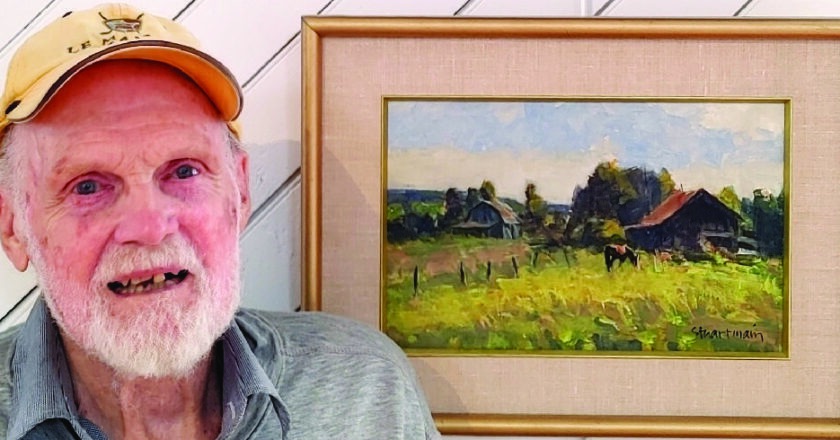
Stuart Main, plein-air painter par excellence

Mountains, fields, barns, and especially horses figure prominently in his work. He paints in nature, and has nature in his pocket.


I’m talking to artist Stuart Main in the Cookshire-Eaton Art Gallery, where he and his colleagues Chantal Julien and Pauline Boudreau are wrapping up a three-person exhibition. They’ve been painting together for 25 years, more or less.

“He has a horse in his pocket,” jokes Julien. Indeed, Main confirms, “horses don’t do what you want them to do. I find it’s much better to just make them up.”
But then he’s had quite a few years of experience painting them. He recently had his 90th birthday, and he had an early start as an artist.


When he was five years old, his father, Cecil, age 29, died of tuberculosis. Stuart had TB too, first in his lungs, then his hip. “The doctors fused my hipbone so I could walk.” He flourishes his cane.
In those days, TB was not easily treated, and he spent eight years in the Montreal Children’s Hospital. “I started doing artwork in the hospital because there was nothing else to do. If it weren’t for that, I’d probably be a great athlete instead of a so-so artist,” he laughs.
Julien scoffs. She finds that statement excessively modest, as would many others.
After a 30-year career as an illustrator in Montreal, using a wide range of styles, Main began painting landscapes in 1975. A two-inch-thick book created by his daughter Wendy displays some 100 of the more than 2000 works he’s painted. His work is available online. Artmagazine.ca features Main’s art among that of only five artists. It’s at Canadianclassicfineart.com and Galeriedartyvondesgagnes.com, too.


Main paints mostly outdoors, in oils. His works measure less than 16 by 20 inches, but are solid in stature. His brushwork is deft and painterly, blending colours, sculpting forms rather than sketching lines. A lone horse often provides a focal point in his landscapes.
Some 10 times a year, he goes out on day-long painting forays with Julien and Boudreau. They leave at 9 a.m. and come home at about 3:30 p.m. He has taken painting trips to the Charlevoix and other regions, but these days he frequents the Stoke mountains.
“Sometimes it takes longer to find a landscape than to paint it,” he says. “Often we’ll go back to the same place, but it’s never the same. It’s different seasons, different lighting, a different time of day.”
Main is a painter for all seasons. “I like them all,” he says. “But winter is easiest.”
I ask him about painting greenery. “Everything is so green here. Whatever shall I paint?” Georgia O’Keefe once said about upstate New York.


“Yes, May and June can be tough to paint, because everything is so green,” he admits. “But it does simplify things. I like green.”


A native of East Angus, in 1972 Main returned to the Townships with his wife Violet Bennett and their three children. They bought a farm in Bishopton, where they still live, and he continues to paint.
“I’ve had a few hitches along the way,” he summed up,” but I’ve been very fortunate my whole life.”

©2026 Journal Le Haut-Saint-François