St Peter's

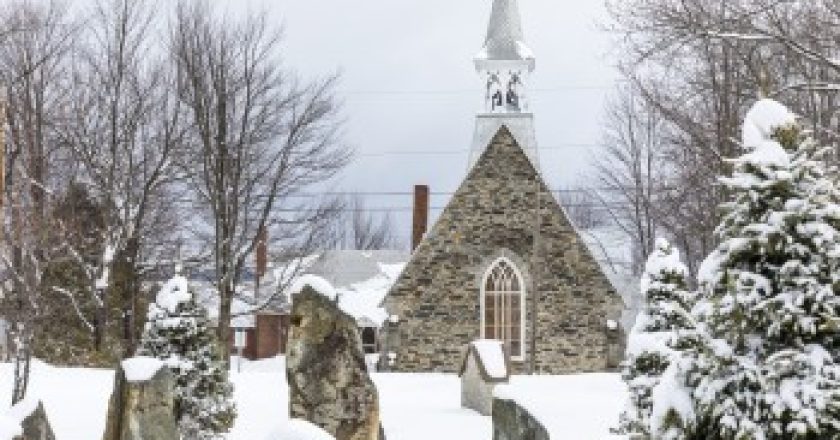
Letter to the editor : Is Saint Peter’s Church protected?

Dear editor, and readers of the Journal.


Did I read that Cookshire’s historic Anglican church is not protected from demolition? I live outside the region but visited this breath-taking stone piece of history during an open house recently. What a gem! With a new owner on the horizon, it seems incredible to think demolition is possible.


I know there is a housing crisis and so many other reasons a developer could use as arguments for building a new structure there. Would Council, the MRC, or even the province permit the destruction of Quebec’s history? Say it ain’t so!

Lily Ryan, Gatineau

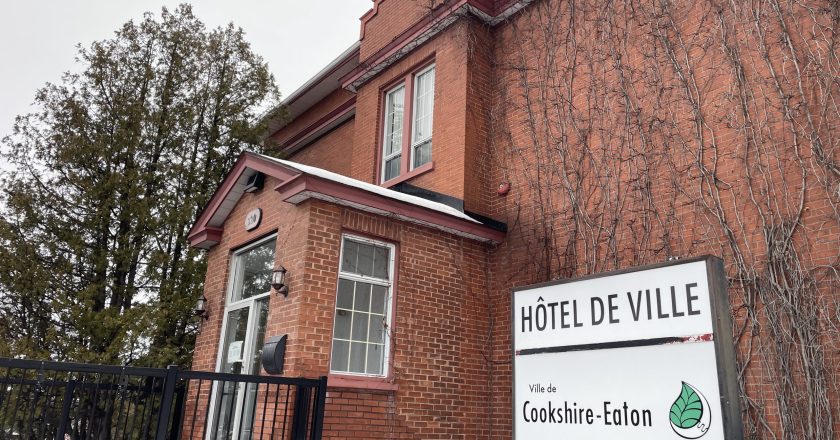
Cookshire-Eaton: Provincial investigation and special council meeting 

A majority of Cookshire-Eaton’s municipal council appears to be rushing to hire its general manager on a permanent basis, according to the new mayor, Daphné Raymond, in an interview yesterday, November 25. She was criticized on Monday and Tuesday in Sherbrooke media by four councillors for not explaining her decision to suspend the interim general manager, Jean-Charles Bellemare. 

Councillors Marcel Charpentier, Jean-Marc Dickenson, Nancy Laliberté, and Josée Pérusse expressed their concerns publicly about the suspension on Monday, after requesting a special council meeting on November 17. The special meeting, which is open to the public, will be held this evening, November 26, at 6:30 p.m. at Cookshire-Eaton’s town hall. 

The agenda has three items: “1. Review of the mayor’s allegations of ethical breaches; 2. Follow-up on Resolution 2025-08-0387; 3. Appointment of a general manager.” 

Wrongful acts 

Since the four council members requested the special meeting, an “Investigation Report” dated November 21 by the Quebec provincial government’s Municipal Commission concluded that “wrongful acts have been committed against the Town [of Cookshire-Eaton]” in recent months (in translation). 

“[The Town] is facing poor management of its senior staff, particularly due to the lack of supervision of a senior employee on maternity leave and her involvement in a contractual process in which she had an interest… This situation is part of a conflictual and constantly deteriorating organizational climate,” (in translation) according to the Municipal Integrity Investigations and Prosecutions Branch of the Municipal Commission (Direction des enquêtes et des poursuites en intégrité municipale de la Commission municipale). 

Ms. Raymond stated that she wants municipal council to review the report and her concerns before considering the hiring a general manager on a permanent basis. 

Follow this developing story on our Web site at www.journalhsf.com and in our December 4 print edition. 

November 8 to 11 : Remembrance Day ceremonies

Remembrance Day is commemorated at several locations in the region: in Bury, Scotstown, and Weedon on November 8; in East Angus on November 9; and in Sawyerville, Saint-Isidore-de-Clifton, Cookshire, and Island Brook on November 11.

Saturday, November 8

Weedon
1:30 p.m. at the cenotaph
Scotstown
11 a.m. at the cenotaph
Bury
1:30 p.m. at the cenotaph
Sunday, November 9
East Angus
11:30 a.m. at the cenotaph

Tuesday, November 11

Sawyerville

11 a.m. at the cenotaph
Saint-Isidore-de-Clifton
11:30 a.m. at the cenotaph
Cookshire
1 p.m. at the cenotaph
Island Brook
2 p.m. at the cenotaph

Dialogues Concert Dazzles in Cookshire

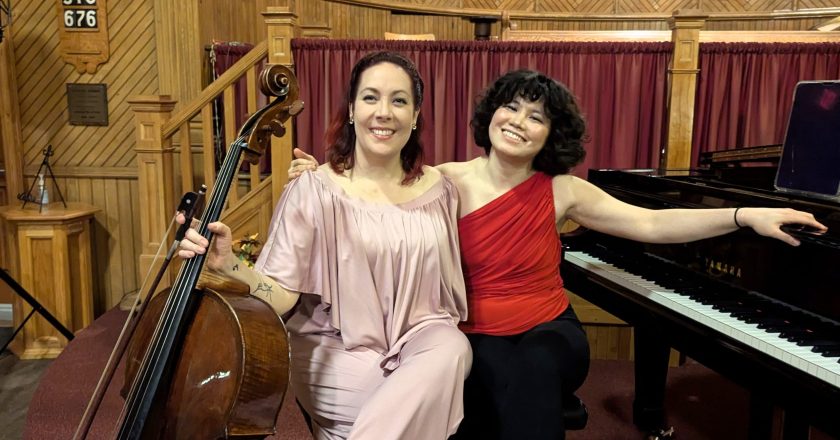
Noémie Ramond & Zhenni Li Cohen. Photo : John Mackley

Music lovers were in for a treat on October 4th at the Trinity United Church, thanks to Gilles Denis, the driving force behind the Espace Culturel Cookshire-Eaton. The Dialogues concert presented an evening of sonatas performed exquisitely by Noémie Raymond on cello and Zhenni Li-Cohen on piano.

Dialogues evokes an exploration of musical and artistic exchange between various composers from different eras, a musical conversation between the musicians, the audience, and their shared art.

The opening Sonata for alto and piano (cello and piano version) composed by Rebecca Clark (1886-1979) immediately drew this listener into the experience of the conversation.

Centuries-old interactive call and response musical dialogues that originated among sub-Saharan African cultures found their way into African American, Cuban and modern music, with ties to what is referred to as Slave Christianity. Call and response can also be heard as part of various Protestant church services as a way of encouraging more active participation among the congregants.

Christian Thomas, composer of the sonata The Secret Voices, made an in-person appearance at the concert. The audience applauded his charm and witty comments that led the conversation naturally into his musical composition.

Raymond and Li-Cohen masterfully wrapped up the evening with the 20th-century masterpiece Sonata for Cello and Piano in G minor by Sergei Rachmaninoff (1873-1943).

The concert venue was the Trinity United Church sanctuary, constructed in 1863 in the Greek revival (neo-classical) style, with a beautifully crafted stained wood interior. It provided unparalleled acoustics, ideally suited for intimate small-to-medium-sized gatherings of listeners.

Future concerts sponsored by Espace Culturel Cookshire-Eaton include a benefit concert on November 22nd for Les Étincelles de Bonheur du Haut-Saint-François. The Duo Beija-Flor concert features Marie-Noëlle Choquette on traverse flute and Charles Hobson on guitar. On December 7th is a Christmas concert with vocal artists Odéï Bilodeau (soprano) and Pierre Hénault (tenor), accompanied by Julien LeBlanc on piano.

Tickets and more information are at www.espaceculturelcookshireeaton.com.

The inmates

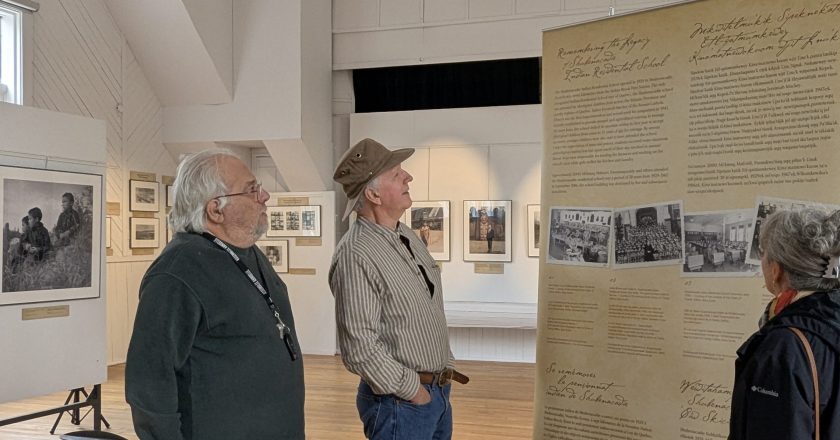
Gilles Denis, Denis Palmer, and Diane Dugal at the “Where are the children?” exhibit. Credit : John Mackley 

“Daily service is held morning and evening, at which all inmates of the institution are expected to be present.” 

It sounds like a prison, but its name was the Calgary Industrial School, and the “inmates” were Indigenous children. Where are the children? is an exhibition by the Legacy of Hope Foundation, exploring the history and impacts of Canada’s Residential School system. It’s now on at the Cookshire-Eaton Art Gallery. 

Viewing it is full of little shocks of new awareness or recognition, such as this one. It’s a bit like climbing through an electrical fence. Not fun, but unforgettable. 

Walking into the luminous gallery filled with more than 70 photos and displays is a sort of spiritual experience. A tour of the room discloses multiple views, both through a wide-angle lens of the overall system, as well as a close-up look at individual Survivor stories. Both deliver shocks. 

Revealed is a religious obsession with how people dress as a major aspect of destroying “the Indian.” How do you reconcile that with the sight of the deputy superintendent of Indian Affairs dressed in full Indian Costume for a historical ball on Parliament Hill, Ottawa, in 1869? 

What do you make of this instruction to teachers? “The unnecessary use of textbooks to be avoided.” 

In 1879, Prime Minister John A. Macdonald sent an envoy to Washington D.C. to learn about the American government “policy of aggressive civilization.” 

“The day-school did not work, because the influence of the wigwam was stronger than the influence of the school,” the report noted. Residential schools were established across Canada, 139 of them. More in the west than in the east; but then—hey!—so many Indigenous people had moved west to escape the civilization of aggression that pushed them off their lands. Still, Quebec had six residential schools. 

There is also healing. The exhibit displays a Personal Bill of Rights. Positive role models among Indigenous elders. Thoughts on healing as not only a personal process, but a collective action. 

I encourage you to take in this exhibit, to reflect on the shocks it delivers, and how they relate to our lives today. This is an important experience, and I highly recommend it. 

The Legacy of Hope Foundation is an Indigenous-led charitable organization. The exhibition is bilingual and open weekends from 12 to 4 p.m. at 125 Principale West (upstairs). It ends October 5. 

$ 202,000 in grants : Centre de Loisirs de Bury spreads the love

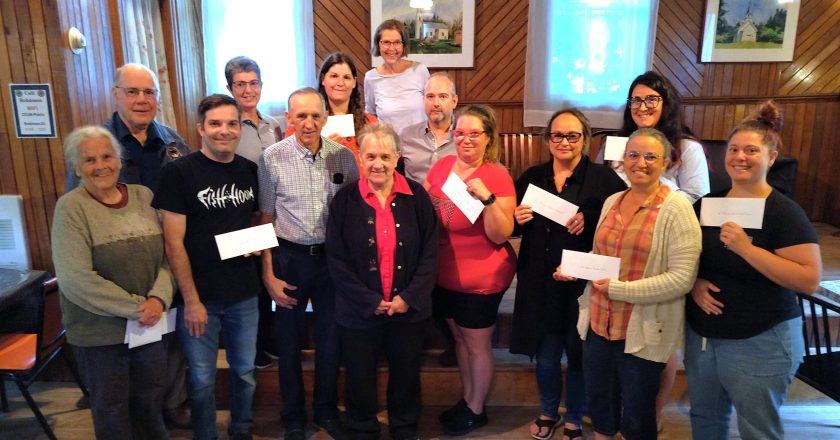
On the verge of closing, the Bury Centre de Loisirs granted a total of $202,000 to 11 community groups last month. About 20 people attended an announcement of the gifts on August 26 at the Bury United Cultural Center as Adrien Girard, the Centre’s president, and Florence Fréchette handed out the cheques. 

The largest grant was $50,000 to Moisson Haut-Saint-François for food purchases to benefit needy families. La Relève du Haut-Saint-François was given $20,000 for its My Backpack project providing children’s school supplies. 

Four of the recipients are headquartered in Bury: the Bury United Cultural Centre received $20,000 for building improvements; the Bury Historical and Heritage Society was granted $17,000 to translate (into French) Gordon Parson’s book, The Community of Canterbury, Quebec; the Brookbury Community Centre was awarded $12,000 for community activities and building maintenance; and the Bury Athletic Association got $10,000 for community events and youth sports. To help finance Bury’s Sunrays services and activities for the elderly, the Centre d’action bénévole du Haut-Saint-François received $5,000. 

Several other Haut-Saint-François groups received grants of $17,000: the Haut-Saint-François Collective Kitchen, for activities to improve culinary skills; La Méridienne, for various projects to help victims of domestic violence and their children; Étincelles de Bonheur du Haut-Saint-François, for the management of a multisensorial room and an adapted washroom for handicapped individuals; and Virage Santé mentale, for diverse services and activities for individuals facing mental health challenges. 

The Centre de Loisirs de Bury was a non-profit organization providing free social activities for Bury youth, established in 1973 by Sister Lucille Bellavance and other Nuns of the Sisters of Charity Order in the Parish of St-Raphaël de Bury. For 38 years, the Sisters coordinated activities from the building they inhabited at 529 Main Street. 

They soon expanded their reach to include services for the elderly, the handicapped, and otherwise vulnerable residents of the community. The Centre de Loisir’s collection and distribution of second-hand clothing and housewares evolved into the well-known Comptoir Familial. 

By 2011, members of the Sisters of Charity had become fewer and older, and they handed the reins over to a committee of local volunteers. They continued providing services until recently, but a lack of new volunteers has forced the Centre to close its doors. 

Well, well, well

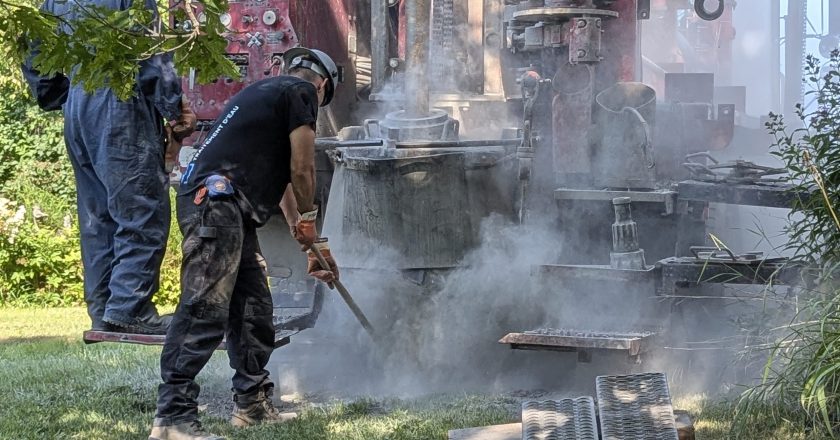
Rock dust billows up around the drill. Photo: John Mackley

It’s 7:35, eventide, and getting dark. The chickens will be heading to bed soon. But he is still out in the shadows, wrapping insulation around 150 feet of water pipe leading from our new well to the basement. 

This has been a rocky summer. We learned our well water was contaminated. The well was an ancient one, inconveniently located under the veranda steps. Also inconveniently, its location was illegal―too close to the septic tank. 

We found a spot for our new well about 12 feet east of the house. 

It took weeks to study the options and choose a well-drilling company whose proposed contract matched its estimate. We figured it could cost somewhere around $15,000―a well less than 100 feet deep, a trench and water pipe 12 feet long, a new pump, new electrical wiring. 

We got the drilling permit, and I have only accolades for the personnel at the Municipality of Newport―the inspector, the office staff, the mayor, everyone! One driller told us we’d probably have to wait three weeks and pay $200. We waited less than three hours and paid $25. (I love living in Newport.) 

Drilling day came, and the surprises began piling up. The truck could not handle the crazy terrain at our chosen spot. Another legal location (more than 100 feet from neighbouring fields) was chosen, 150 feet west of the house. About five feet deep, the drill hit solid rock. Water came in at 320 feet, enough for a family of five, they said. 

Our neighbour with his backhoe dug the five-foot trench in a few hours, extending across both wings of our driveway. Another surprise: in two stretches, he hit solid rock less than three feet below the surface. We learned we’d have to thoroughly insulate the pipe before filling in the trench. 

The new pump was installed, the water pipe laid, the electricity connected. Eureka! Water! 

After the requisite treatment, it’s as chlorinated as a swimming pool, and we’re still hauling drinking water from generous neighbours. It seems we have guardian angels all around us. 

The cost? Almost twice our guesstimate. And about 40 feet more of pipe to insulate before filling in the trench. Tomorrow is another day. What a summer! 

Quatre générations à la cantine [FR/ENG]

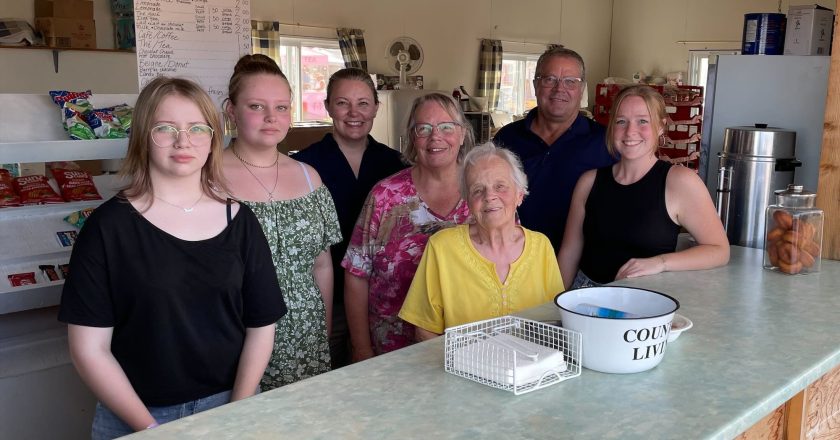
La famille de Theda Lowry compte quatre générations : Nora and Raya Gerard, Jody Robinson, Christine Robinson, Garth Lowry et Alexandria Lowry. Photo : Scott Stevenson

Ce n’est pas seulement que la bonne bouffe qui nous attire à la cantine de la Quebec Farmers’ Association de Bulwer à l’Expo Cookshire à chaque année, c’est les gens qui nous l’offrent. 

La famille de bénévoles de Janice Lowry compte trois générations; celle de Theda Lowry quatre générations. 

La fille de Theda, Christine Robinson, 66 ans, raconte qu’elle travaille à la cantine depuis aussi longtemps qu’elle se rappelle. La cantine est une institution de l’Expo depuis probablement 70 ans ou plus. Elle est exploitée pour amasser des fonds communautaires. 

En entrevue, Mme Robinson dit que la cantine réussit bien financièrement avec son offre de cheeseburgers et autres pour le dîner, de déjeuners, de boissons, et du très populaire shortcake aux fraises avec la crème glacée Coaticook.  

Les fonds amassés bénéficient à plusieurs besoins et organismes dans la communauté agricole, incluant des bourses pour les élèves qui étudient l’agriculture dans les cégeps et universités de la région et ailleurs. 

« C’est de l’argent qu’on remet dans la communauté agricole », dit Mme Robinson. 


Good eats, great families, a grand tradition 

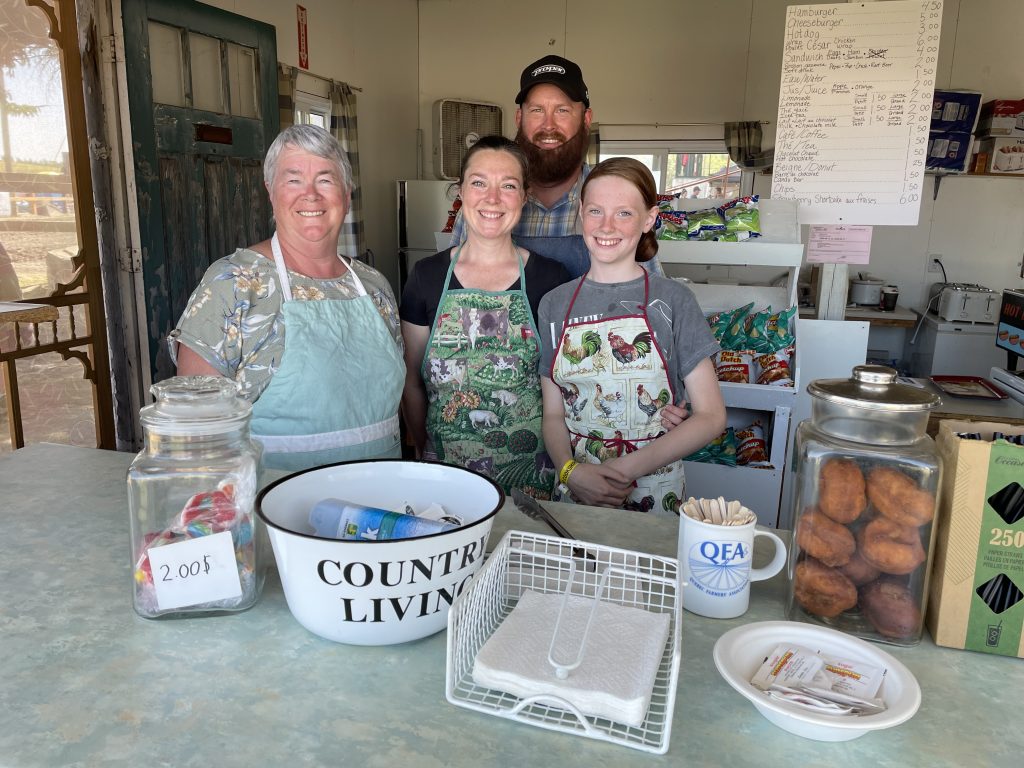
Three generations of the Lowry-Hartwell-Aubin family at the Cookshire Fair’s Bulwer QFA canteen: Janice Lowry, Caitlin Aubin, Adam Hartwell, and Abigail Hartwell. Photo : Scott Stevenson

It’s not just the burgers that make a visit so appealing to the canteen of the Bulwer Quebec Farmers’ Association at the Cookshire Fair. It’s the people serving them.  

Janice Lowry’s family of volunteers spans three generations, and Theda Lowry’s four. 

Theda’s daughter, Christine Robinson, 66, said she’s been helping at the booth for as long as she can remember. That would make the fundraiser canteen an institution of the Fair with likely a 70-year history or more. 

Robinson said the booth does well financially, with its offering of not only cheeseburgers and other lunch items, but also breakfast, drinks, and its popular strawberry shortcake with Coaticook ice cream. 

Funds raised go toward various organizations and needs in the farming community, including bursaries for students in Agriculture programs at many local and other cegeps and universities.  

“It’s money that we put back into the agricultural community,” Robison said. 

Filthy Lucre

I have a friend who has taken into hand the little bag of silver US coins that was a legacy from my father. My friend wants to check its value. She is into buying and selling silver. 

Great, I say to myself, a diversion to soothe me while the US Congress passes Trump’s “big beautiful” monstrosity. Alongside the US-Canadian exchange rate, it is wreaking havoc on my retirement. 

When my father died in 1993, my brother, the executor of his will, sent me a small bag of US coins. Each of us eight children got one. I’m sure my brother counted fairly. 

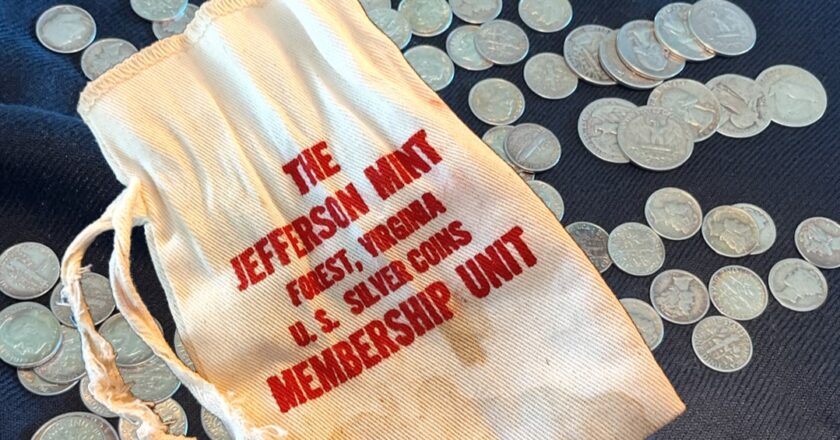
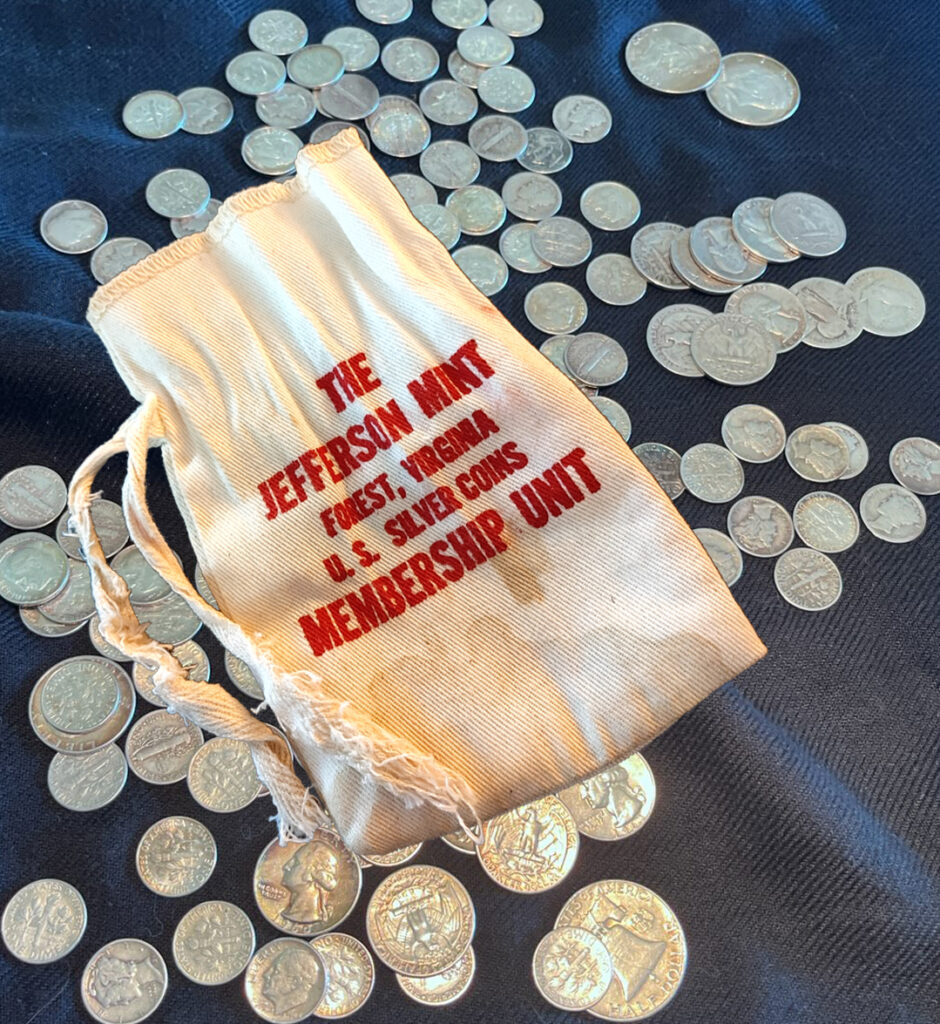
Mine came in a little canvas bag labeled “The Jefferson Mint,” the name of a scheme that sent my father a handful of silver coins each month. 

In my bag were three half-dollars, 20 quarters, and 121 dimes. My brother said the coins were then worth about two cents more than their face value, with a quarter coming in at 27 cents. 

But that has changed, my friend says. 

The price of silver has been going up by peaks and valleys. On October 23, 2005, it was $9.61 per Troy ounce. On August 25, 2022, it was $25.64. On July 4 this year, it was up to $50.33. 

We go to a local money shop, where the agent offers 22 times the face value of the coins. He offers to buy a US half-dollar for $11 Canadian, no matter whether it sports JFK’s face or that of Benjamin Franklin. The little bag of coins would net me $410. 

That, he says, is the “spot” price, the on-the-spot value based on the current market price of silver, quick ‘n’ easy pricing for coins with silver content, or “junk silver.” The term covers US coins dated before 1965 (90% silver), and Canadian coins dated before 1968 (80% silver). 

My friend is seriously into these things. She says that, considering the current market price, he should have offered 25 times the face value, or $465. But more than that, some of the coins could have numismatic value and be worth a lot more. 

I owe a little money to my friend, but she wants to be paid in silver rather than with that worthless plastic stuff. So we make an agreement that she will take the coins back to her home in the big city and check their value with a coin dealer there. Then she will keep the silver she is owed, and cash in the rest for me. 

She wants to hang onto her silver for awhile, hoping it will get up to $100 an ounce, where it seems to be heading. 

By the way, “filthy lucre” is mentioned four times in the Bible, instructing that church deacons eschew dishonest financial profits. They must not abuse their office to make money. 

Now who in the world would do something like that? 

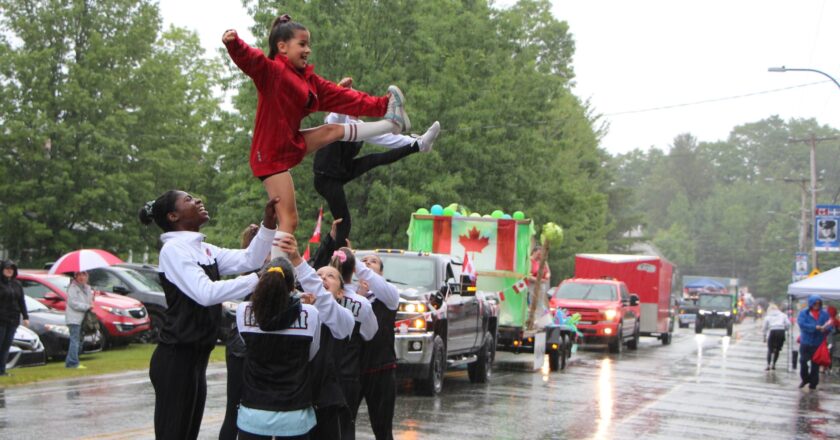
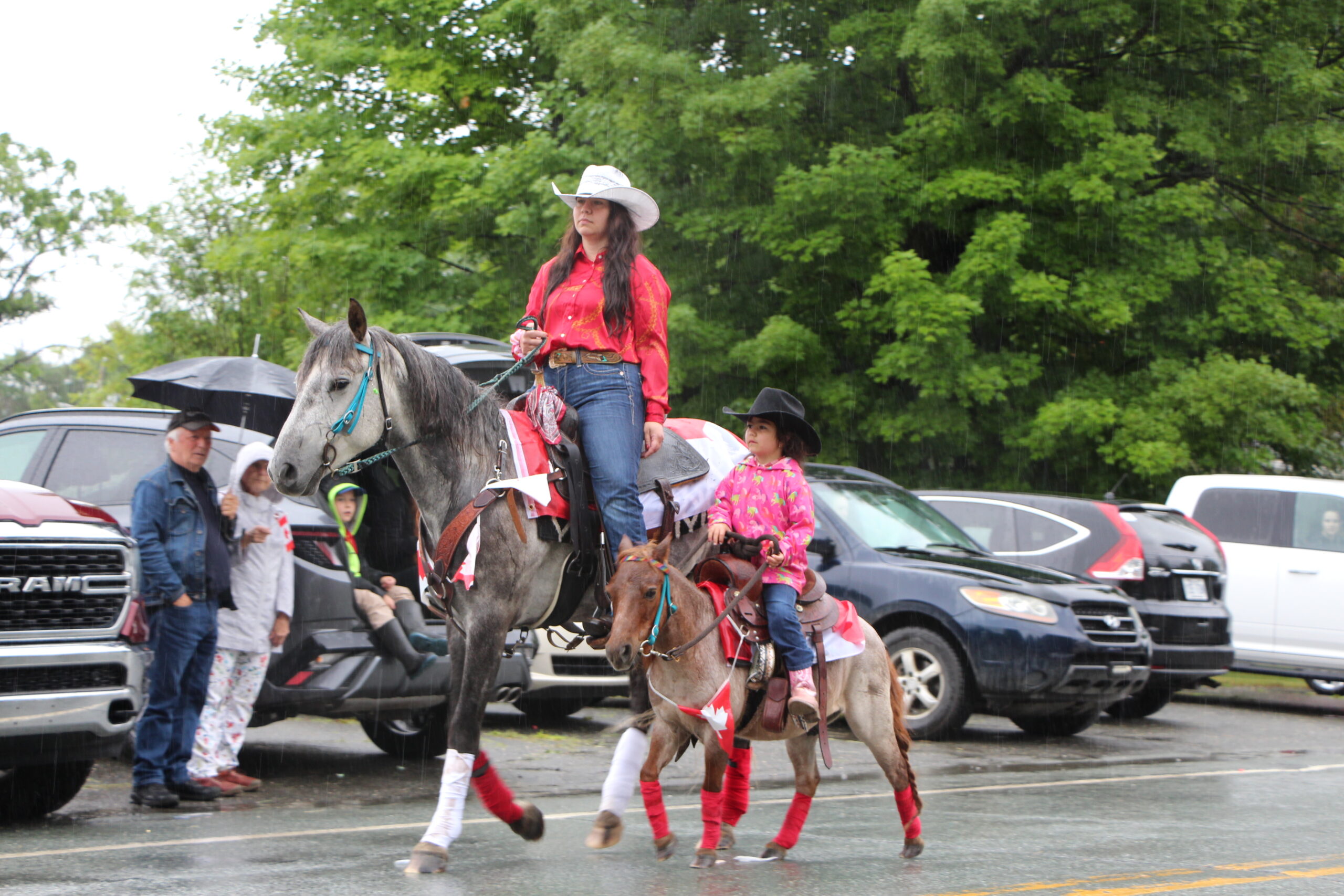
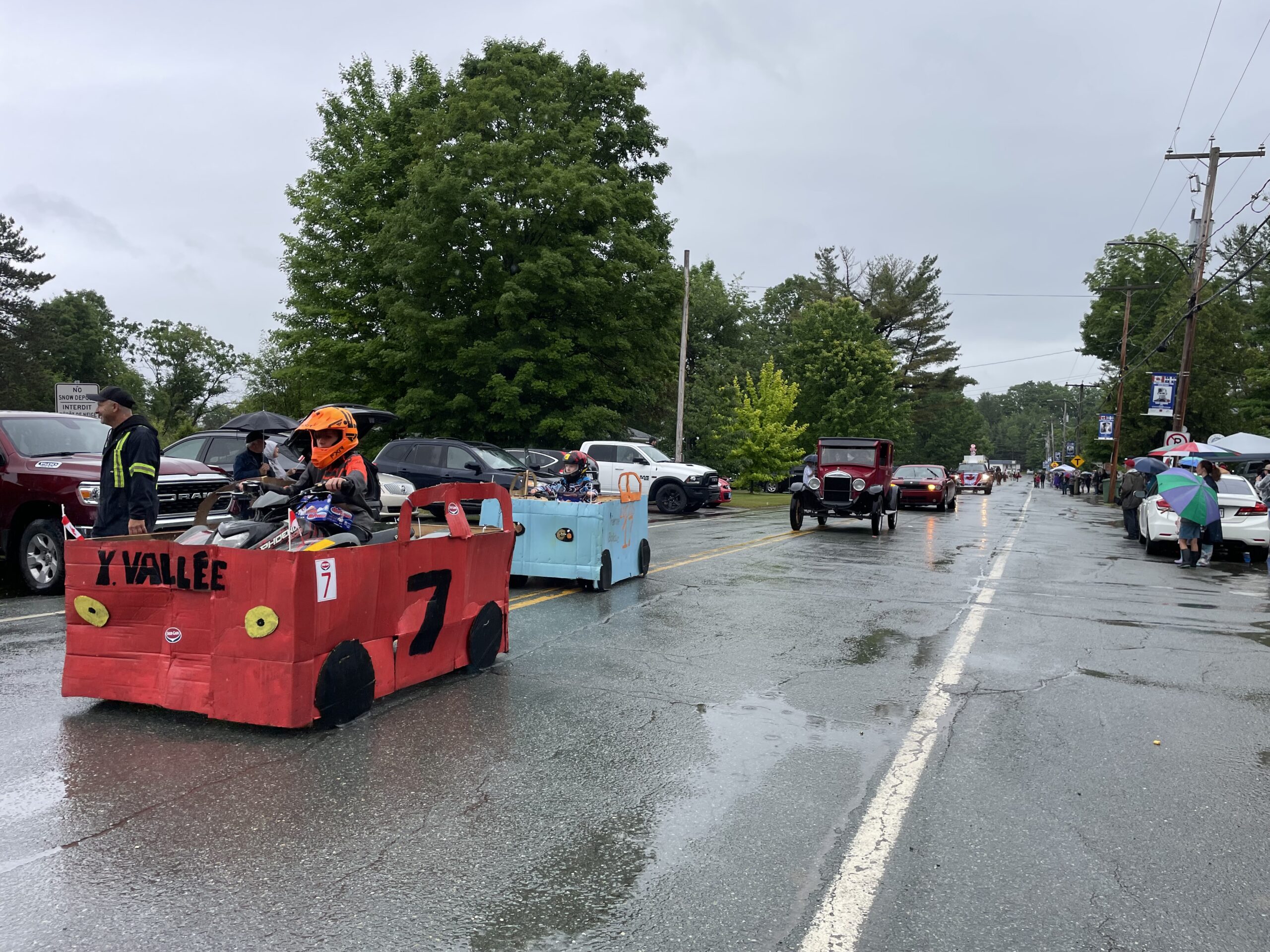
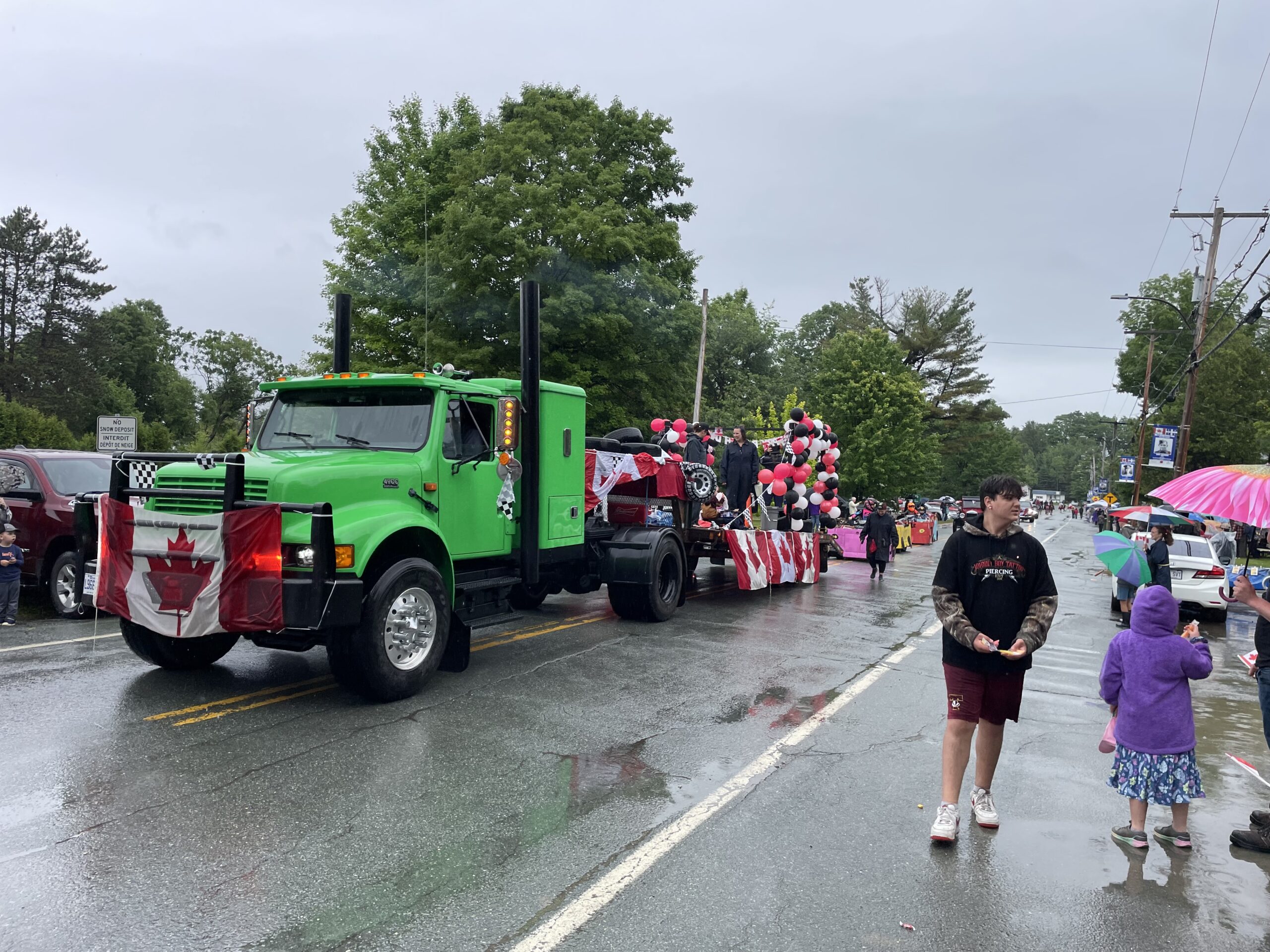
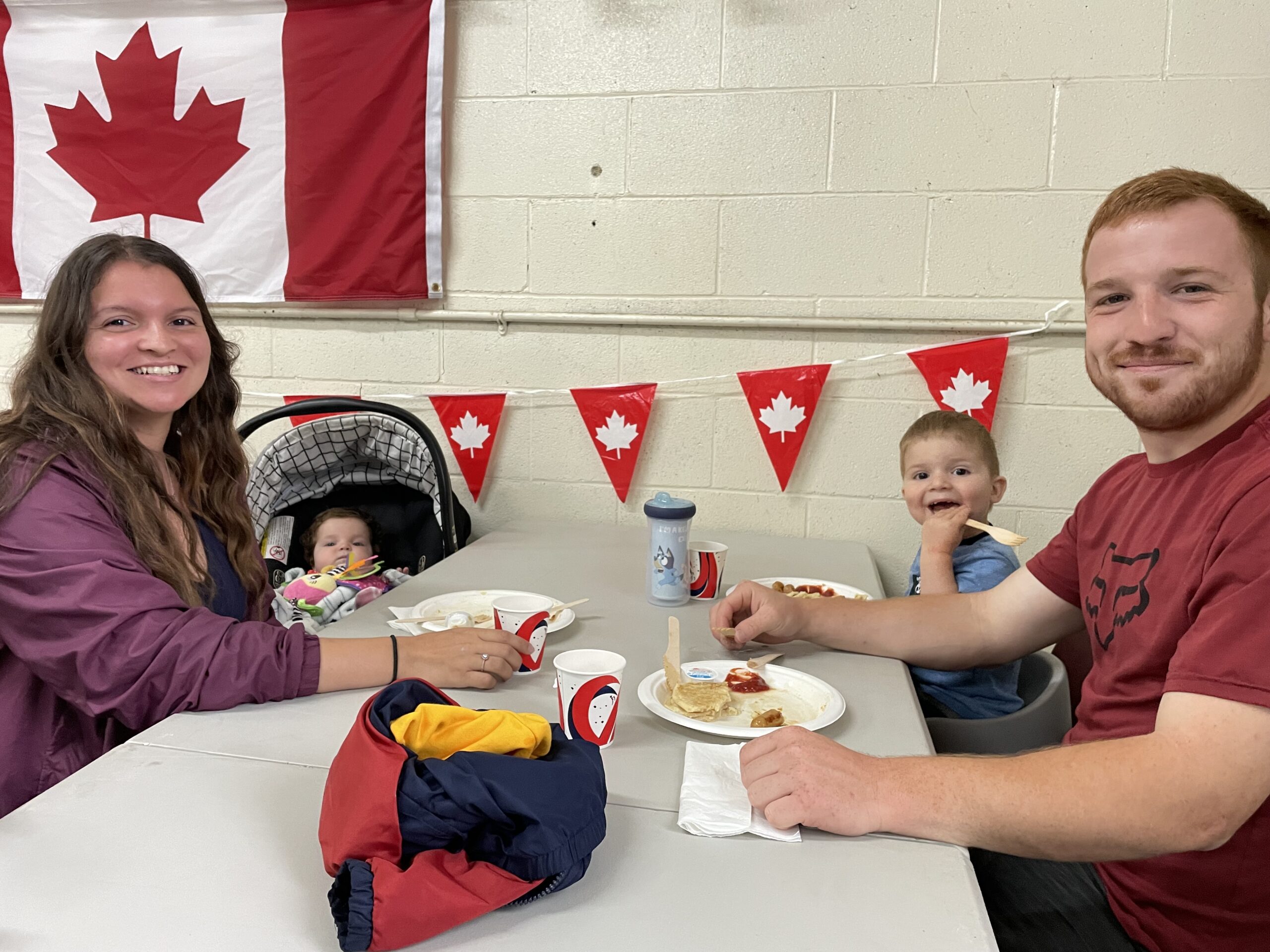
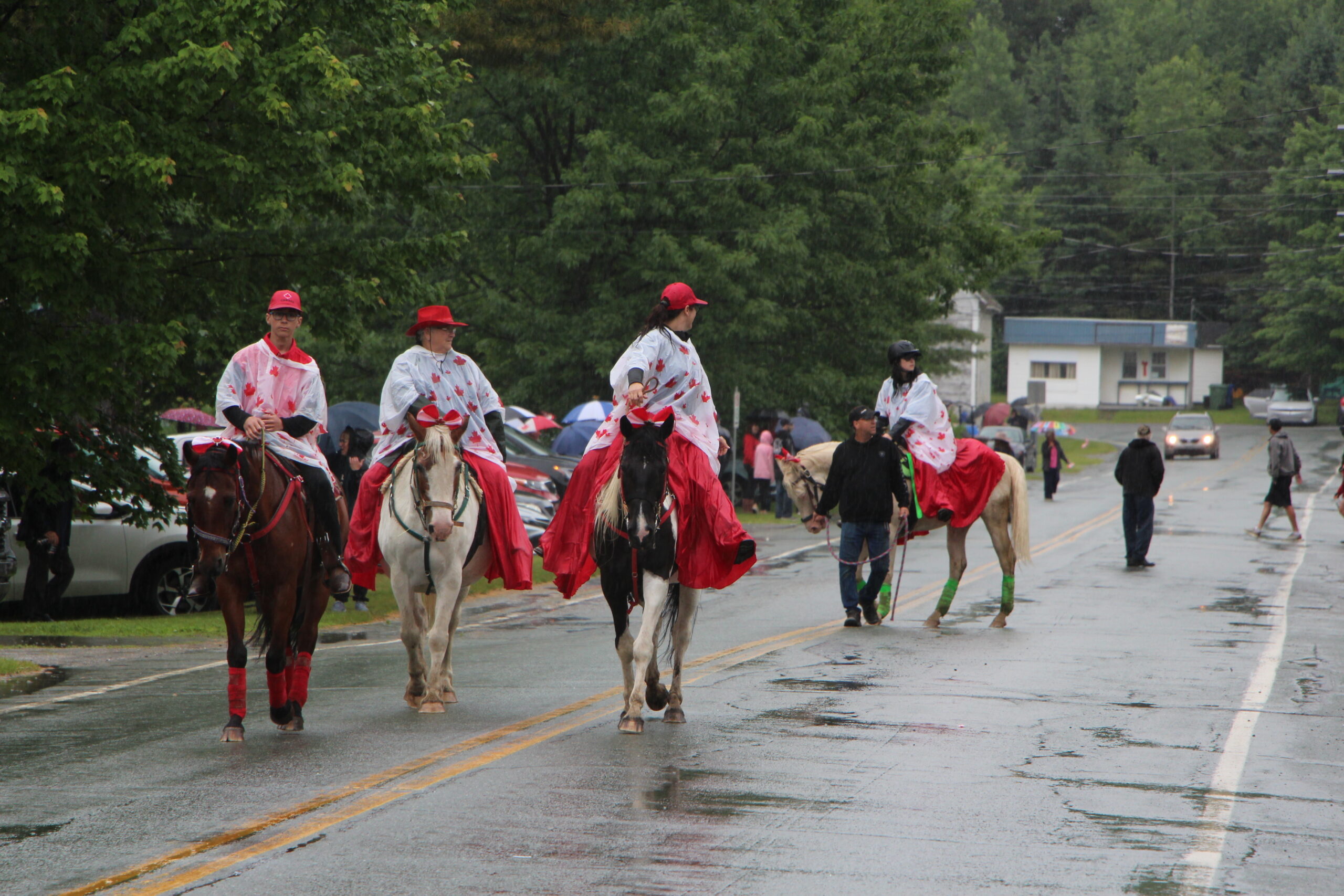
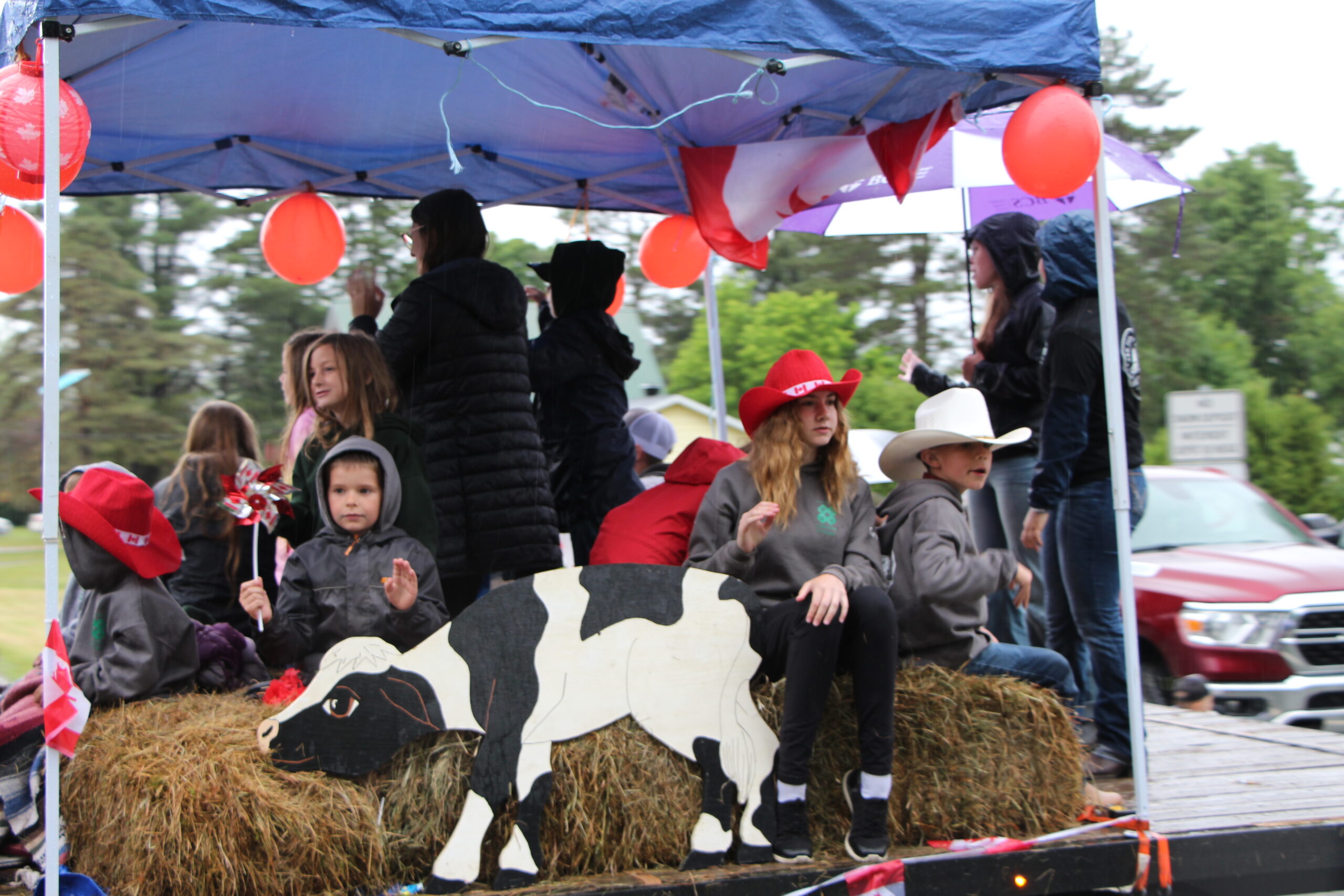
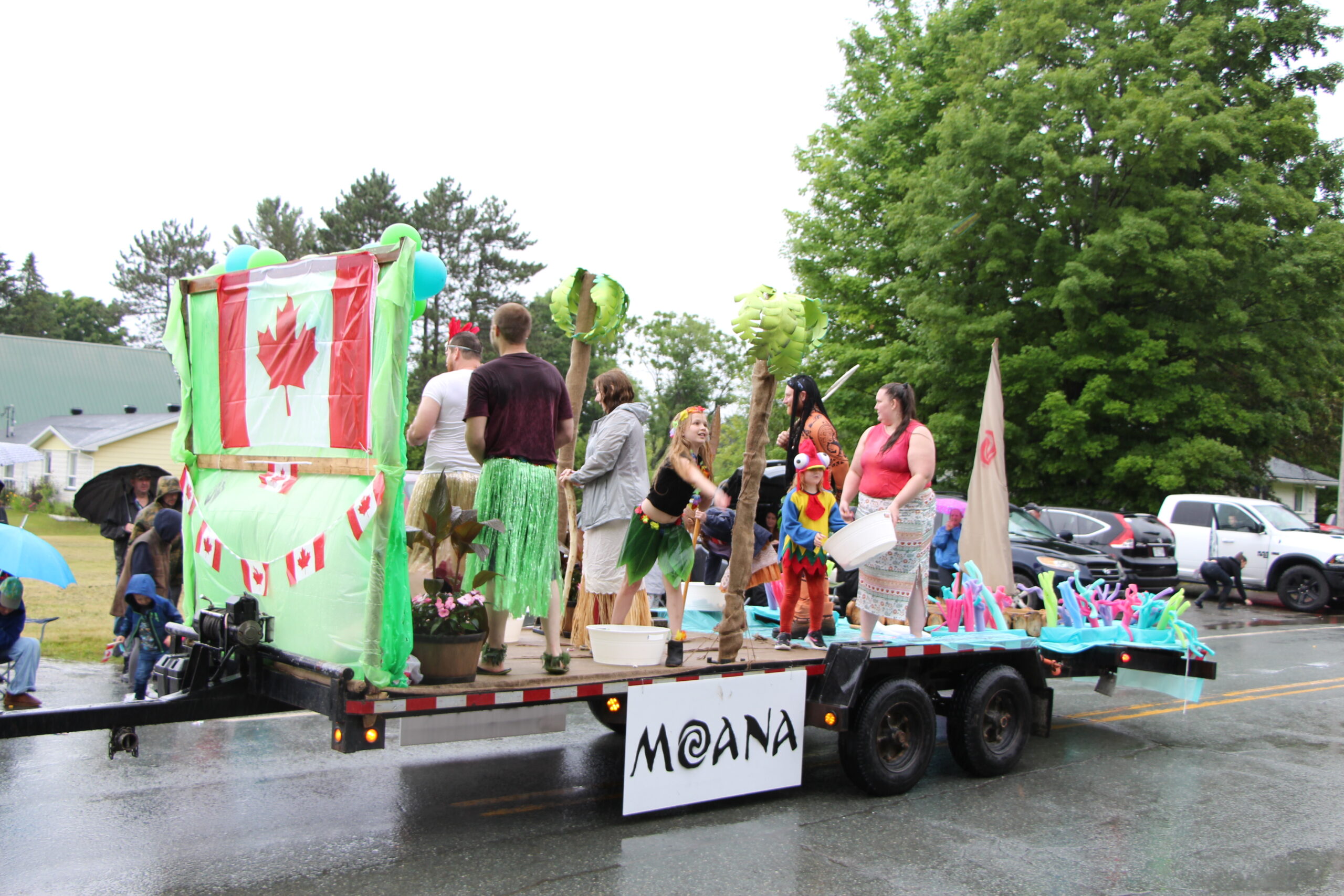
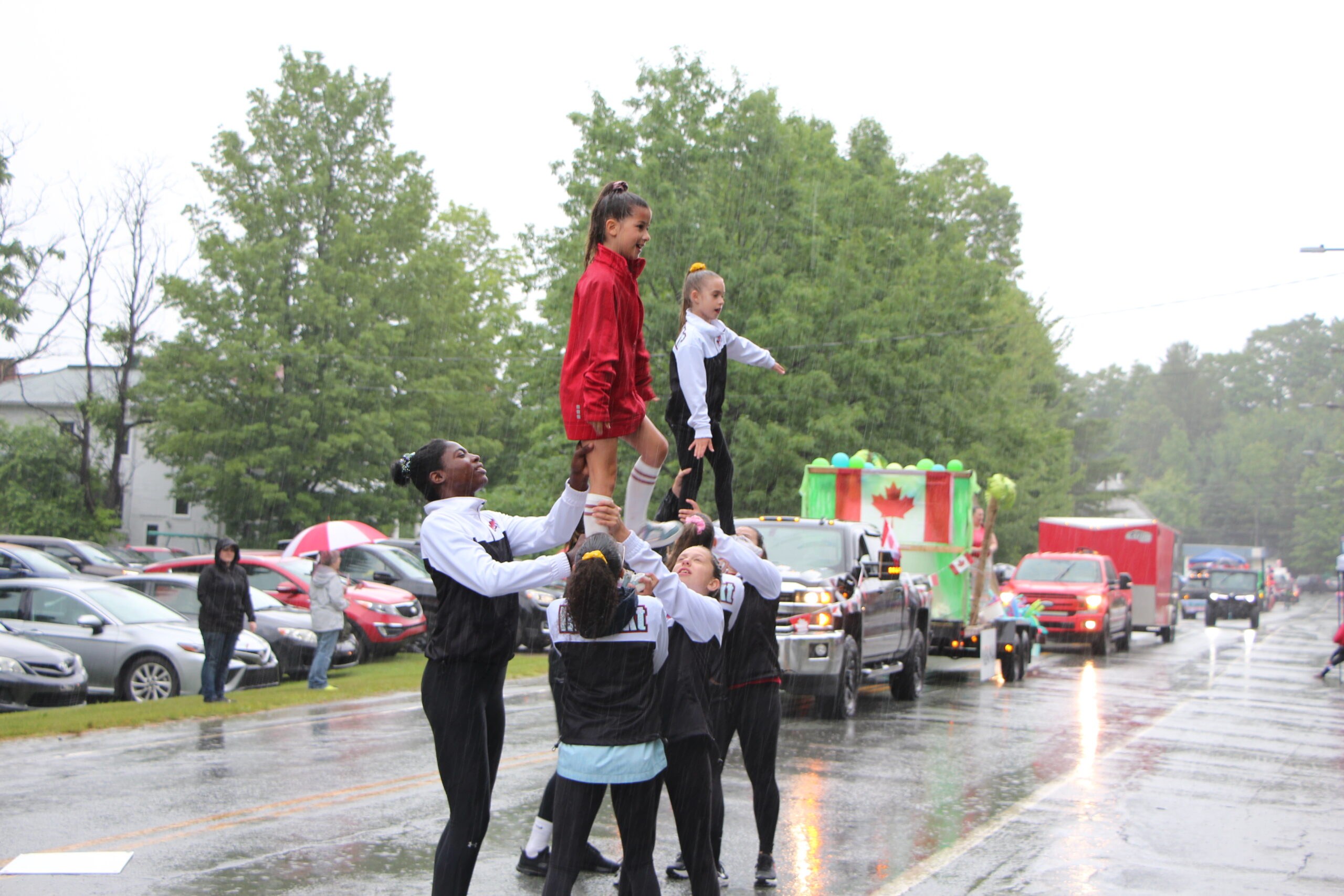
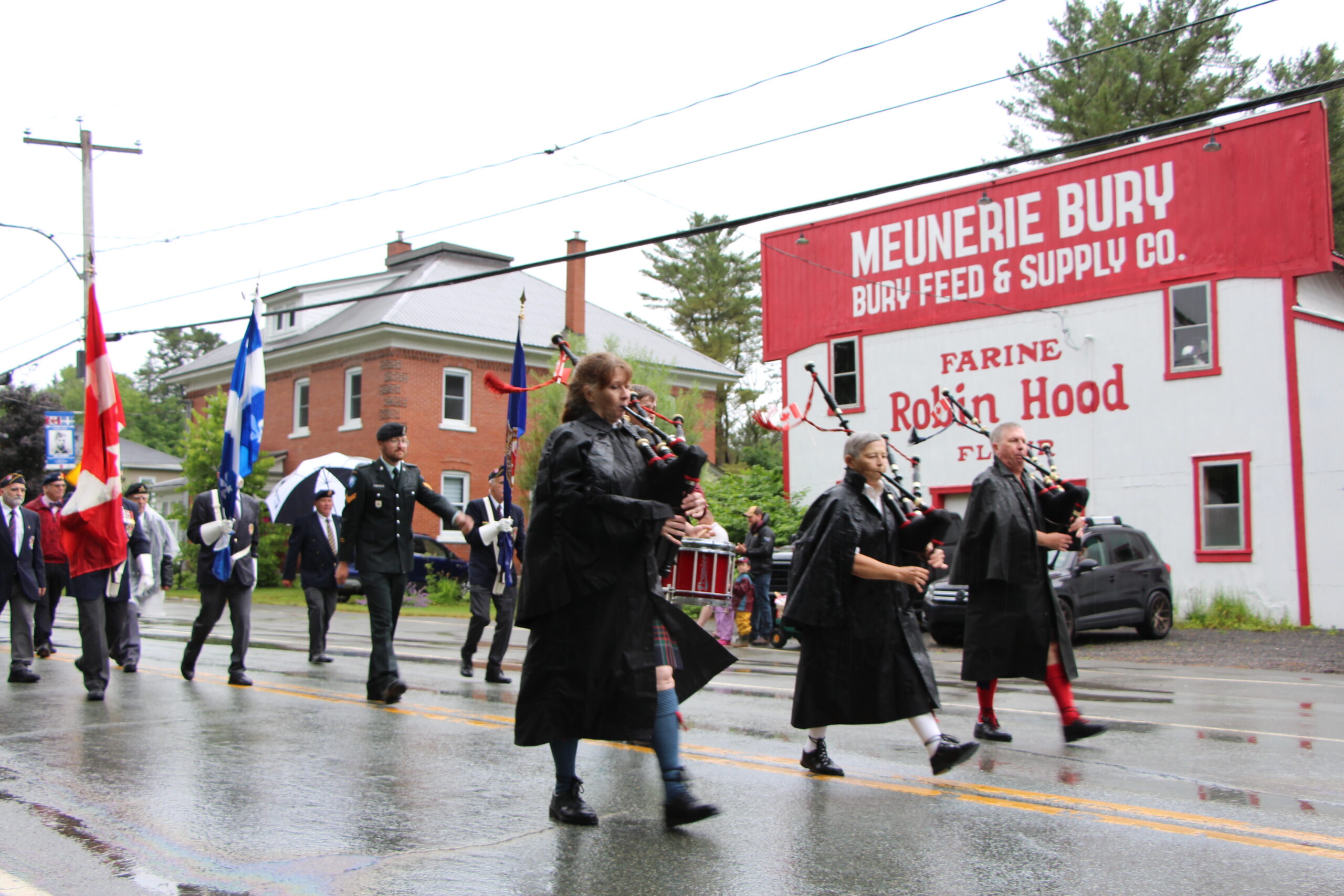
Canada Day in Bury : a little rain on our parade

It rained so much we forgot to put our elbows up.  

Anyway, if American friends were in the waterlogged crowds, they were just that: friends. And the Bury hockey rink had no more corners to elbow in: it had been converted into a stage, auditorium, and dance hall. It was under the big tent, but so much rain fell outside, the water ran in and covered the concrete floor, making it look like an ice rink again. 

Canada Day in Bury, like the Fête nationale in Quebec City, was kind of rained out. But our spirits were not. 

“I can’t believe how loyal people are,” said food-truck chef Marie Gourmet of Dudswell.  

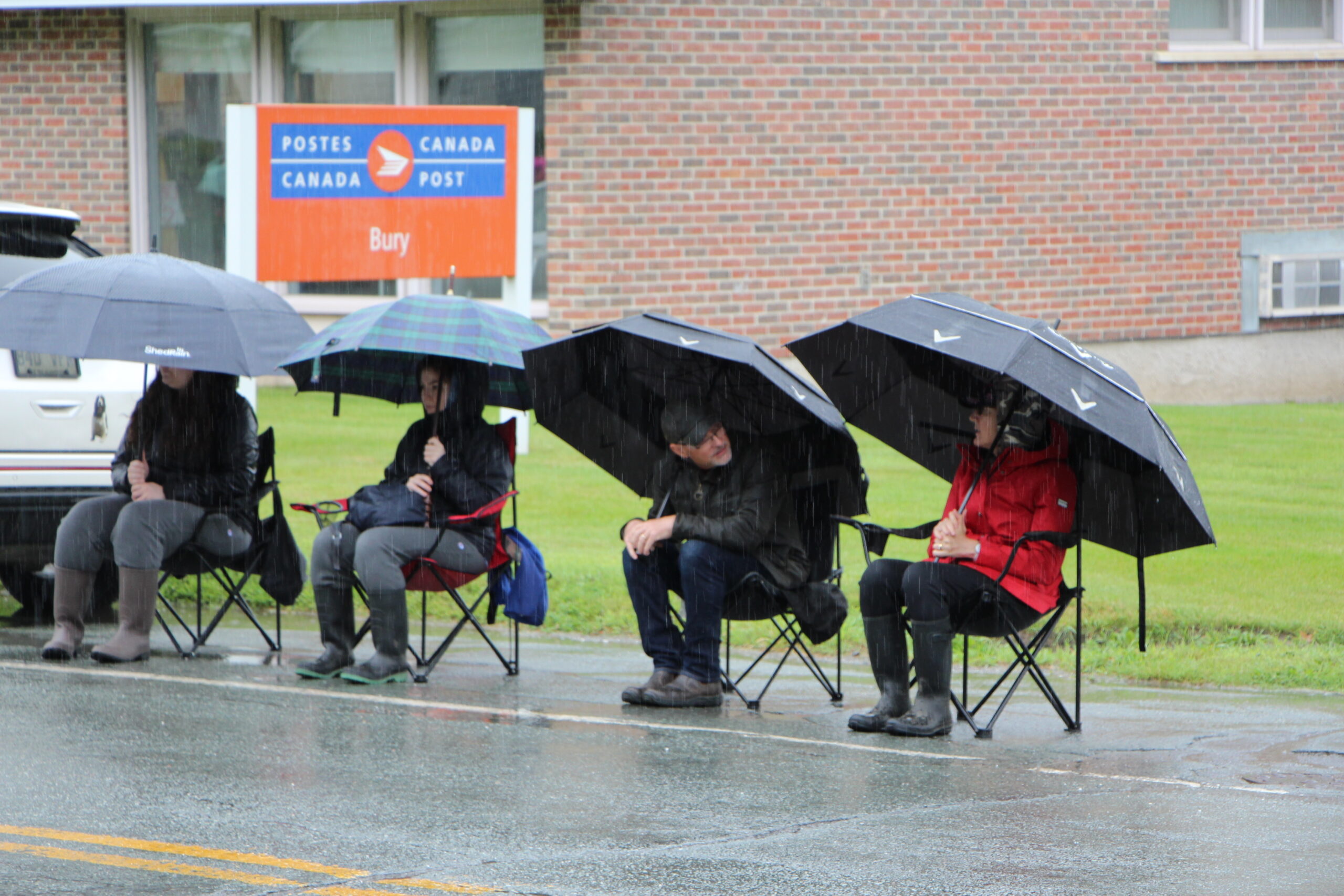
It was pouring rain, but the crowds showed up anyway. 

And Bury was proud. “It’s so nice to see the return to a traditional Canada Day celebration,” said East Angus resident, Randi Heatherington.  

The red and white of Canadian flags were all over town, hanging from poles and walls, and prominently on front lawns.  

Was it more than usual? No doubt. Wet elbows may not have been up, but fiery spirits were. 

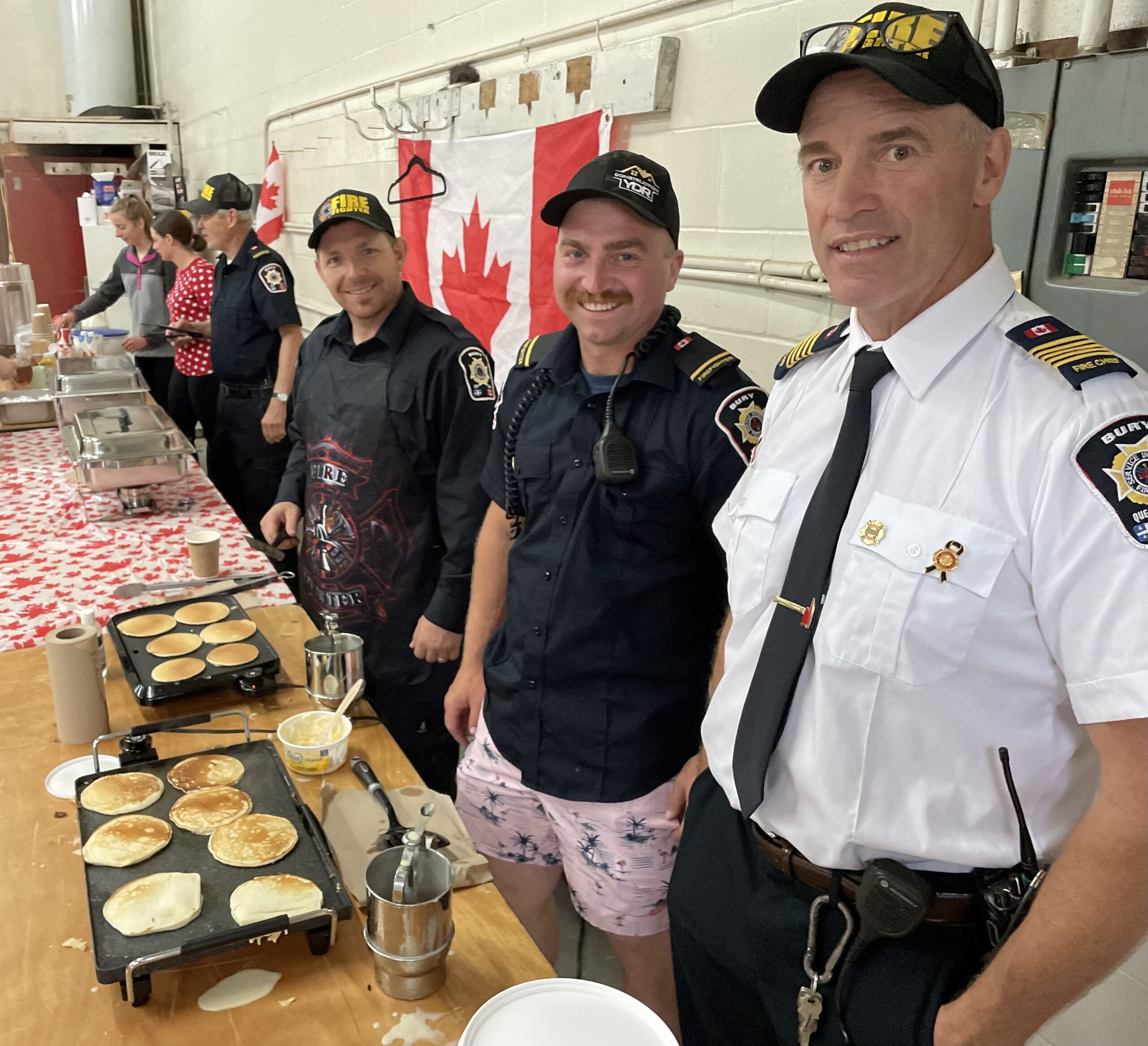
The Bury Canada Day program featured new events all over: the pancake breakfast then bingo on Saturday morning, a farmers’ competition Saturday afternoon, and a golf tournament on Sunday morning.  

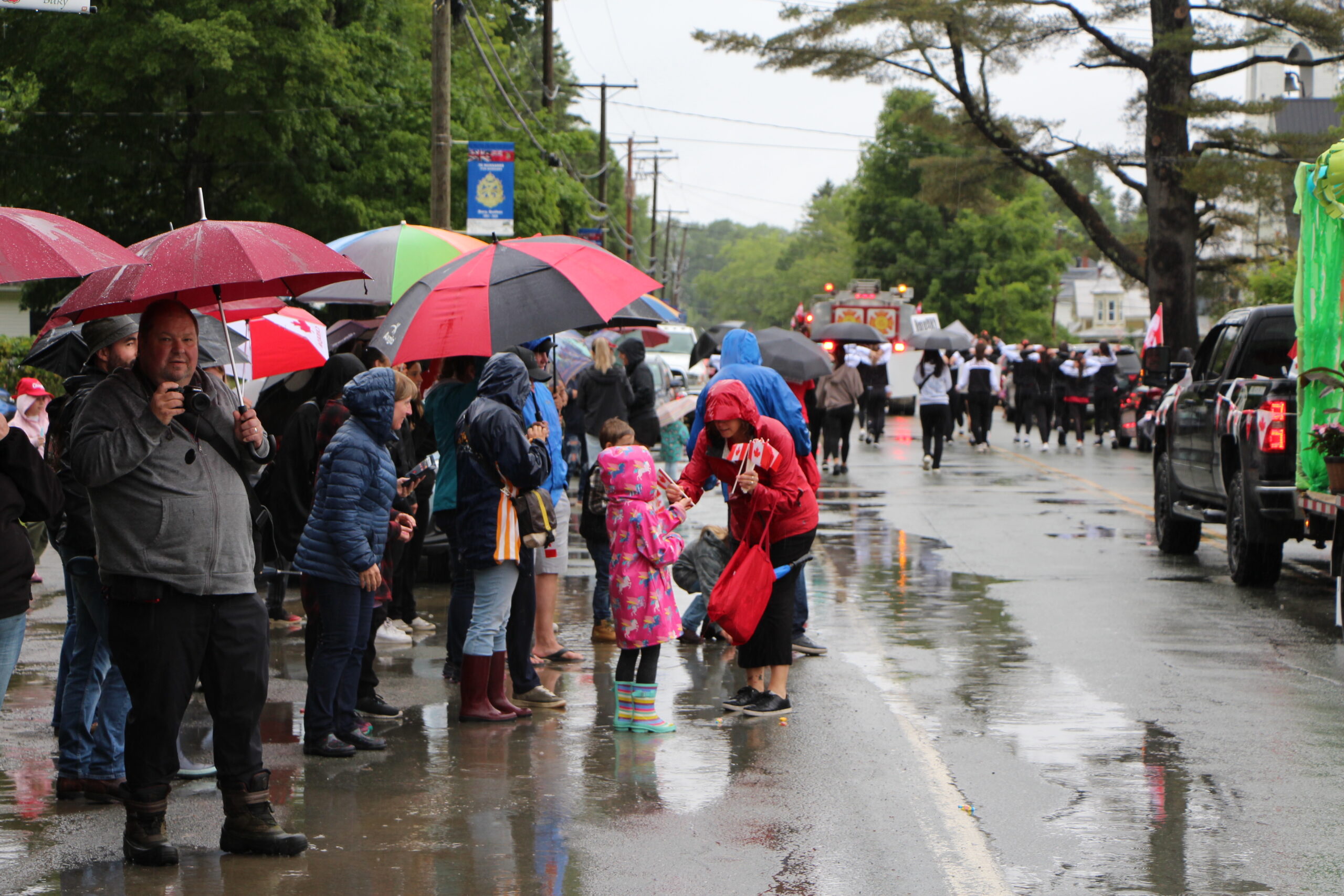
Folks came from far and wide. Once member of Parliament (MP) for Compton-Stanstead, David Price, and his wife Helga, came from North Hatley. Our current MP, Marianne Dandurand, and her team were walking the parade route, handing out more flags.  

The umbrellas were everywhere, but so were the smiles, the reunions, and the jokes about the weather. 

You can rain on our parade, but you can’t take our parade away. 

By Saturday evening, the sun was shining again. 

Short, strange life

Crédit : Adobe Stock

A young buck peered into our side door, his two points resembling sturdy sausages. 

Shakti, shy kitty that she is, crouched low a few feet from his nose. 

Our minds went to nature films from Africa. 

“She’s getting ready to pounce on him and sink her teeth into his neck!” 


This is our Door to Wildlife. 

It’s where Pepe encountered his first wild animal. 

He had just moved with us from Montreal. A stranger had begged us to adopt him. 

A middling-big fellow with longish honey-brown fur and floppy ears, Pepe had apparently never gone outside during his first six months of life. When we took him for walks, he took care to “hold it in” until we got home and he could pee in the kitchen. Trees were scary. Stumps, even more so. When he met his first one, he yelped and jumped high in the air like Bugs Bunny’s first cousin. Every scrap of paper, every pebble, was an existential threat. 

Pepe was in constant motion. So, when friends visited, we put the gyrating, yapping dog out the side door. We counted on his agoraphobia to keep him close. 

A moment later, the yelping took on an unprecedented intensity. We looked out the door and almost leapt out of our skins. Nearby, on the lowest branch of the old oak tree, was an adolescent bear, three times bigger than Pepe. Bear clung to the branch as Dog bounced up and down, inches below, excited to meet a long-lost friend. 

How his mind worked still mystifies me: A tree stump or a scrap of paper scared him silly, but he saw a bear as a playmate? 

Sometimes I feel like Pepe, like I’m on a strange planet where danger can take any innocuous shape. A playmate, a thing of joy, or an object of ridicule, can in fact be life-threatening, and I won’t even realize it. 

I’m not alone, I think. So many threats surround us. So many voices tell us, so incessantly, what to fear. Often, they warn us against phantoms. How to discern real dangers from fake news? 

How to see clearly what to do about raging wars-upon-wars? Can we even dream of solving climate change? Can we save ourselves from pollution? How to fix the economy gone haywire? Can we rescue the health-care system? How to depose the oligarchies of the world? 

It’s unnerving, so we find relief by focusing on something like Bigfoot, contrails, or vaccines. 

Pepe got himself hit by a car. Did he have one moment of clarity as he died? I wonder. He had such a short, strange life. 

Shakti, on the other hand, wisely came back inside, and the young buck lived another day. 

Dowsing rag

How well is your well water?

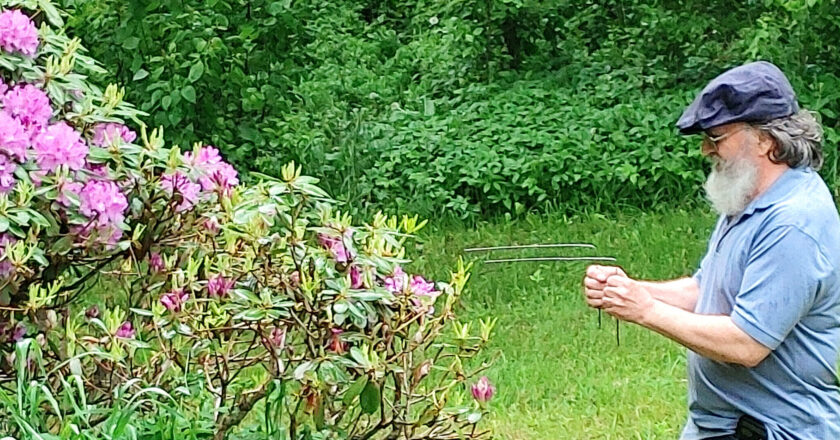
John’s first try at dowsing.

The well-drilling contractor sitting on our veranda burst into laughter.
I’d just told him how we learned our well water was contaminated. For a sidebar to an article on chemicals by Dian Cohen in the current Townships Sun, we were researching how to test well water for bacteria, pesticides, and PFAS compounds.


Why not test our own well water, and report on it?
We got a test kit from Eurofins Environex in Sherbrooke for $99. A sterile bottle for microbiological analysis and an ice pack came in a nifty insulated bag. (We couldn’t afford the test for glyphosate at $270. Not being a business, nor could we test for PFAS compounds, those “forever chemicals.”)
The test results came back a day after the magazine went to print.


Moderately bad news: 22 coliform bacteria per 100 mL of water, a bit more than twice the criterion of 10 maximum. Dr. Google told us these bacteria are not likely to cause illness, but their presence indicates that other pathogens could be in the water.


Sighing in relief at the absence of E. coli, we began following the three-step instructions: evaluate the source of potential contamination, disinfect our well, and then test the water again.


Yikes. Investigation of our very old surface well involved crawling under the veranda and lifting off a wooden lid. Below it was a mouldy wooden frame. A rodent had apparently chewed through it about three feet down. Lower down, the sides of the well seemed to have collapsed in, and the surface was covered by dirt.


The test results did not advise us to boil our water, but eye-balling our water supply did! The certificate of analysis did not tell us to put in a new well, but logic did. This time, an artesian well, drilled, not dug. One that goes down to bedrock.


So, there we were, sitting down with the first of three contractors, exploring the ins and outs of an astonishingly complex project, starting with finding the best spot to drill. The legal parameters did not leave us much choice: at least 100 feet from a farm field, an unsealed septic tank, or drain field, and 50 feet from a sealed septic tank. The eligible area near our house was about 6 by 12 feet.


Next, out came the dowsing rods. On this topic, Wikipedia is categorical: “Scientific evidence shows that dowsing is no more effective than random chance. It is therefore regarded as a pseudoscience.” Yet there we were, identifying a spot near our Rhododendron bush where the copper rods whispered the likelihood of a water vein deep below.


The exact cost of drilling depends on the depth of that vein. Maybe $15,000?
So that is the dearest little piece of writing I’ve ever done! No wonder the contractor had such a good laugh at our expense.

Rachel Garber writes from her home in the old hamlet of Maple Leaf, in Newport. (rawrites@gmail.com)

Rachel Garber - en-tête chroniques

F—!

Now there’s a word to raise hackles. At least among English speakers.
(I’m told the equivalent in Québécois, in terms of emotional impact, has more to do with religion than sex. But that’s another story.)

I’ve observed that F— is bandied about these days quite freely. I pass a roadside banner almost daily: “F— Carney,” recently updated from “F— Trudeau.”

What the f—?! Why am I subjected to this spurt of poison, posted on private property but plainly polluting the public view?

Our friends and neighbours in local government, more and more often, are targeted by abusers. A spate of “F” posters went up recently around Bury, singling out one particular municipal employee.
The abusive language toward municipal workers, both elected and hired, goes beyond signage. In the news this past year are women in municipal office who are leaving politics because of harassment, including the mayors of Gatineau and Sherbrooke.

Last year, Quebec’s Municipal Affairs Minister reported that since 2021 a growing number of elected officials have quit or left politics because of intimidation and harassment, about 10% by December 2024. Quebec has even set up a helpline for municipal politicians.

The abusive climate also affects municipal employees; several in the Haut-Saint-François have privately said they left their jobs because of intimidation from individuals in our communities.

The “F” word and other epithets tell us mostly about the mud slinger’s own state of mind: stressed, no doubt, as many of us are. We’re living in a time when SNAFU (Situation Normal: All Fucked Up) applies. But relieving our distress by throwing verbal stones only helps upgrade our SNAFU status to FUBAR (Fucked Up Beyond All Recognition).

Next door to Canada is a great big bully with a nasty tongue. We seem to have given ourselves licence to emulate or tolerate his behaviour. But we have reason to reject abuse, and to do so openly when we see it happening.

I’m reading a tiny handbook by a historian on surviving our times. It’s called On Tyranny: Twenty Lessons from the Twentieth Century, by Timothy Snyder. The 9th lesson surprised me: “Be kind to our language.” Snyder writes about how propagandists use catch phrases and epithets to limit language and thought. He cites Ray Bradbury’s Fahrenheit 451, in which the regime burned books and limited language “by eliminating ever more words with each edition of the official dictionary.”

He summarizes the 9th lesson like this: “Avoid pronouncing the phrases everyone else does. Think up your own way of speaking, even if only to convey the thing you think everyone is saying. Make an effort to separate yourself from the Internet. Read books.”

Hmm. Back to the Internet: Wikipedia offers a detailed history of the “F” word and cites research suggesting that eating processed foods puts less wear and tear on our teeth. In adults, this leads to an overbite which facilitates producing “f” sounds, “and humorously, cleared the way for words like ‘Fuck’.”
Well, okay. Let’s eat local, fresh food. But, really, a lot of different words begin with “f”―our overbites don’t really explain the tyranny of intimidation.
Freedom!

Rachel Garber - en-tête chroniques

Paws up!

The federal election is just over, and in tiny Maple Leaf, here’s one befuddled voter.
In the privacy of this confessional, I admit this is the first time I ever voted other than NDP. In our riding, the party I voted for won; it’s only the second time in history I’ve voted on the winning side. (The first was during Jack Layton’s orange wave.) I never anticipated I would feel so bad, the morning after.
I’ve always supported the New Democratic Party. A little before the election, I invested in an NDP “Resist” T-shirt modelled by a cute little “good boy.” Beyond his cuteness, I was attracted to the poetry of his message, “Paws Up!”

In 1974, I returned to Canada after living three years under a dictatorship, where one’s every word, every action, was ruled by fear. The gap between rich and poor was excruciating, on a daily basis. And “desertification” threw sand in your teeth whenever you stepped outside your door.

So how could I not support a party that fights for environmental stewardship, economic equity, personal rights, international peace, and expanding our universal healthcare system? Starting with Saskatchewan Premier Tommy Douglas in 1947, the NDP led the provinces and the Canadian government to finally establish medicare based on need rather than wealth. It has never wavered in its values. Jagmeet Singh’s effective promotion of dental coverage and pharmacare, and his eloquent compassion expressed on so many occasions, have carried this heritage forward.

I too have never wavered in my values. But then an economic assault by Canada’s nearest neighbour muddied the pot. “They want to break us, so they can own us,” Prime Minister Mark Carney said. He seems capable of handling this existential threat, so that’s how I voted.

But now I am questioning what will happen on this side of the border―we put up our elbows and stopped buying American, but will we put up our paws to protect and promote our Canadian values?
In the election aftermath, I feel bad that the orange wave has so ebbed, and Jagmeet Singh has resigned. I wish I had stuck to my guns and voted NPD, as my son did. Paws up!

Frankly Speaking

Until June 29 at the Cookshire-Eaton Art Gallery, a collective exhibition, Franc-Parler, offers a dialogue between diverse artistic approaches, both in style and form. The works of Do Lessard, Mephisto Bates, Étienne Plante, Marie Ève Richard, Émile Algue, Vincent Arnold, and JRD include paintings, sculptures, installations, and live painting performances. The Gallery, at 125 Prinicipale West, Cookshire, is open weekends from noon to 4 p.m.

Inspired by Nature

Works by Randboro artist Denis Palmer are at the Uplands Cultural and Heritage Centre alongside landscape paintings by Sara Peck Colby and ceramic creations by Lucy Doheny. The works of all three artists are inspired by nature.

Colby has been painting Townships landscapes for more than 50 years. Doheny, who presents original and delicate ceramics, says “To work with clay is a wonderful thing. Imagine; the material is as old as the earth. There is a connection to the earth and its beginnings.” Palmer shows works created from life, with a focus on “trees, forests, waterways, and natural places.” He is showing ink drawings, watercolour sketches, and woodcut prints, often accompanied by stories.

Uplands, at 9 Speid Street in Lennoxville, is open Thursday to Sunday, from 10 a.m. to 4:30 p.m.

Paper, Poetry, Cards

The Bury United Cultural Center extends an open invitation to “come make paper and turn them into cards with poetry for Mom.” The free activity is from 1 to 4 p.m. on Saturday, May 10, at the Center, 560 Main St., Bury.

The Center also hosts a poetry workshop on Sunday, May 18, at 2 p.m., and card parties on Thursdays, May 15, 22, & 28, at 2 p.m.

Bilingual Viactive

The Newport Viactive group takes a summer break after Wednesday, May 14, at 1:30 p.m., at the Newport Municipal Hall, 1452 Route 212, Island Brook. Info: 819-889-1340.

The bilingual Sawyerville Viactive group meets for the last time this season on Wednesday, May 22, at 10 a.m. in the basement of the Saint-Rosaire Catholic Church, 4 Randboro Road, Sawyerville. Info: 819-889-2630.

Canterbury Flea Market

The Canterbury Cultural Centre’s annual Flea Market and Farmers’ Market is in the works for May 17-18. Tony De Melo is looking for antiques, books, DVDs, dishes, pots and pans, stemware, jewelry, tools and other hardware, small electric appliances, and more. “Old, new, used, vintage or antique items in good condition are welcome,” he wrote. “We do not accept large pieces of furniture, appliances or clothing.” All proceeds are for the restoration and regular maintenance of the Canterbury Centre at 1095 Victoria Road (Route 214), Bury. Info: Tony at 819-872-3400.

Brookbury Potluck & Silent Auction

The Brookbury Hall is open for business! The first event of the season will be a potluck supper and silent auction on Saturday, May 24, at 5 p.m. “Anything goes” for the potluck, said Brenda Bailey. “People who come can just bring an item to go into the auction. Sometimes baked goods, some books. Whatever!” All are welcome. The Hall is at 571 Brookbury Road (aka Route 255). Info: 819-884-5984.

CHURCHES

United. Sunday services are at 9:30 a.m. at the Cookshire Trinity United, and at 11 a.m. at the Sawyerville United Church. Info: 819-889-2838. For pastoral care: Rev. Tami Spires, 819-452-3685.
Baptist. Sunday services are in French at 9 a.m. and in English at 11 a.m., at the Sawyerville Baptist Church, 33 rue de Cookshire. Info: Pastor Michel Houle, 819-889-2819.

Anglican. A Sunday service is on May 18 at 10 a.m. at the St. John’s Church, 170 Batley Road (erstwhile Route 255 N.), Brookbury. Schedule: check deaneryofstfrancis.com/calendar/. Info: 819-887-6802, or quebec.anglican.ca.

Do you have news to share? Contact 819-640-1340 or rawrites@gmail.com by May 12 for publication May 22.

“The Fall of Happiness” dubbed locally

Diane Grenier, Betty Rowland and Trudy Tincare lent their voice to the English version of the project.  

The Centre d’action bénévole (CAB) du Haut-Saint-François presented its film The Fall of Happiness at the Bulwer Community Center last April 22. It is the English-dubbed version of a movie about elder abuse released three years ago
CAB’s executive director, France Lebrun, said : “I wanted to make this movie in English for the community because it was so important to me.” It is not an easy subject, but the goal remains to stop elder abuse. 
The dubbing was made possible through a grant from the New Horizons for Seniors Program from Employment and Social Development Canada. In the French version, all the actors were local volunteers, and the same was accomplished for the voices heard in the English version.  

The whole movie can be watched on the Centre d’action bénévole HSF YouTube channel :

Rachel Garber - en-tête chroniques

Ed Pedersen, Champion of History

The news is just out: Edward Pedersen is to receive a 2025 Marion Phelps Award for his outstanding long-term contributions to “the preservation and promotion of Anglophone heritage in Quebec.” The annual award by the Quebec Anglophone Heritage Network recognizes the significance, quality, and personal dedication of his volunteer work over the past 10 years with the Bury Historical and Heritage Society.

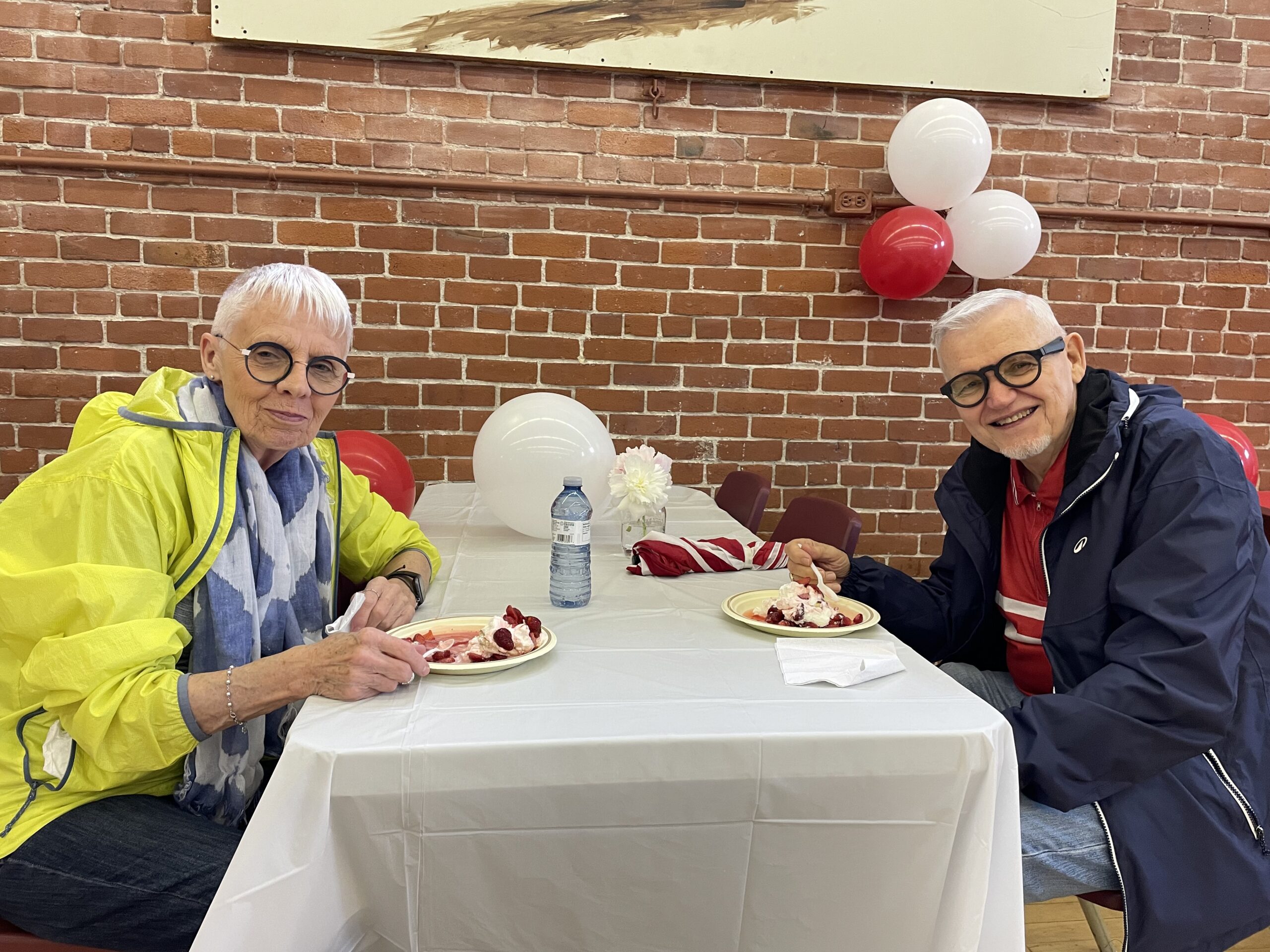
President of the BHHS from 2015 to 2019, Pedersen’s contributions began much earlier, and continue to this day. Among them are the purchase and restoration of the Christ Church Canterbury, and its transformation into a cultural centre. Then there was the annual Church Heritage Tour featuring up to 12 churches in the Haut-Saint-François, volunteer appreciation suppers, fundraising community events such as the annual Strawberry Shortcake brunch at Canada Day in Bury.

Under his leadership, the BHHS organized a series of compelling conferences on local history, featuring forestry, transportation, military, and food and cooking. These were accompanied by booklets painstakingly researched and written by Petersen himself.

A retired music teacher, Pedersen is known for his gracious leadership and mentoring skills, creating a convivial experience for his fellow volunteers in the BHHS, and for the larger community.
Congratulations, Ed! And thank you for enriching our region!

Eaton Corner Museum

Volunteers sought for events and upkeep

The former Eaton Academy

William Stone’s leg had to come off. That was the assessment of the good Doctor Edward Dagge Worthington in Eaton Corner on March 10, 1847. Poor William, a shoemaker, had broken his ankle in an unfortunately severe fashion. Doctor Worthington would have to amputate. But the doctor had a way to lessen the pain. It was called sulfuric ether. William would not feel a thing during the operation.

It was the first time in Canada that major surgery was performed with the use of general anesthesia. This procedure had been tried for the very first time just five months earlier by a Boston dentist, William T.G. Morton.

Established in the 1790s, Eaton Corner was among the first villages in the region settled by Europeans, following close behind Sawyerville and the very first settlement of Pleasant Hill.

In the following decades, Eaton Corner was larger than Sherbrooke, known then as Hyatt’s Mills. This all changed when the railway was built through Cookshire instead of Eaton.

These are just a few of the many fascinating historical tidbits one can learn on a visit to the Eaton Corner Museum.

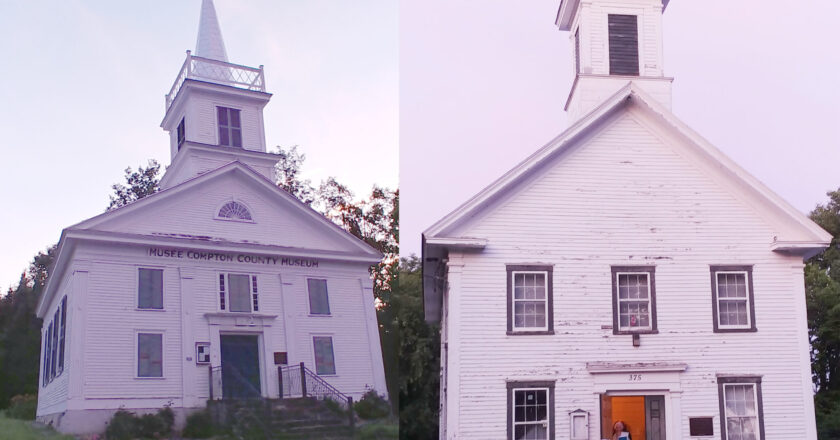
Today’s Eaton Corner is a collection of some of the oldest houses in the region, dating from the early 1800s. The Museum is housed in the former Congregationalist Church and the historic Eaton Academy at the intersection of Laberee Road and Routes 253/210.

The Church is a beautiful white clapboard building on one side of the road, and the equally attractive Academy is on the other.

Museum President Marc Nault and Secretary Sharon Moore said the board of directors is always looking for new ideas for projects and activities to attract public participation and interest in the rich history of the Cookshire-Eaton and Newport areas. In the past, the Museum hosted an ‘‘Old-Fashioned Day’’ when volunteers dressed in period costumes and demonstrated 19th-century woodworking and construction techniques. Museum board members are particularly looking for people with historical skills to demonstrate.

Volunteers Denis Palmer and Royce Rand focus on keeping the buildings in pristine condition. When dealing with centuries-old buildings, this is a full-time occupation, particularly for volunteers with other demands on their time, said Palmer. Painting is high on the agenda this year.

A permanent exhibit in the museum is divided into sections to tell the region’s storied history, beginning with the Abenaki Indigenous presence as well as early European settlers, advances in transportation, commerce, industrialization, and onward.

Plans are in the works for a possible series of Sunday afternoon workshops this summer, including «Music on the Lawn» events with local musicians. Rothney also said the Museum is working with the Cookshire Fair to set up a display of antique farm equipment on the fairgrounds.

The Museum’s annual general meeting is planned for Saturday, May 24, at 1:30 p.m.; members and the public are invited. The current board of directors has seven members. ‘‘We are actively looking for more volunteers’’ said Nault. ‘‘Please come!’’

Rachel Garber - en-tête chroniques

Chickens are fun

Preparing to climb out of the car, I told my son in the back seat, «I’ll leave the key in the car, so it doesn’t yell at you when I leave.» I was referring to the panicked beeping my car emits if the key leaves the car while the motor is still on.

An accusatory voice at my elbow made my hair stand on end. «It is not recommended to leave your keys in the car because it could lead to theft!»

As the verbal finger-wagging continued, I located its source. My cell phone! Opening it, I saw the little screen flashing, proudly announcing that Gemini, Google’s AI chatbot, was speaking to me.
I felt the more unsettled to realize that Gemini had also been eavesdropping on my conversation with my son.

Not seeing any button, icon, or means of finger-stroking Gemini into submission, I tried a commanding tone, the kind I’d use to reprimand a bad dog.

«Gemini, I don’t want to hear anything more from you! Stop listening to me. Go away and go to sleep! Shut down!»

Mercifully, the screen went dark, and the phone went quiet.
Later, at home, we performed surgery on my phone. It involved googling «gemini.google.com.activity,» touching a little hamburger menu in the corner (a little stack of horizontal lines), and then selecting from the menu, «Turn off and delete activity.»


Our chickens give me respite from the netherworld of artificial intelligence (AI). Sometimes I check out «Backyard Chickens» for news from the feathered world. Today, I read, «Hello. I’ve just joined because I don’t have a clue about chickens, and I now have two of them.

«They belonged to a neighbour,» wrote the new chicken owner. «They escaped soon after he got them. I am guessing they are six or seven months old and have just started laying eggs. For reasons I do not know, they picked me to live with.»

The pair of hens, Thelma and Louise, follow their new benefactor around and sleep in the neighbour’s trees. Louise lays an egg almost everyday in the nest box of their new little coop, but Thelma decided to lay her eggs in the tiniest flowerpot in the greenhouse.

I laugh as the story unfolds. I hear my hens cluck outside the window.
Chickens are good for my blood pressure. May bird flu stay far away!

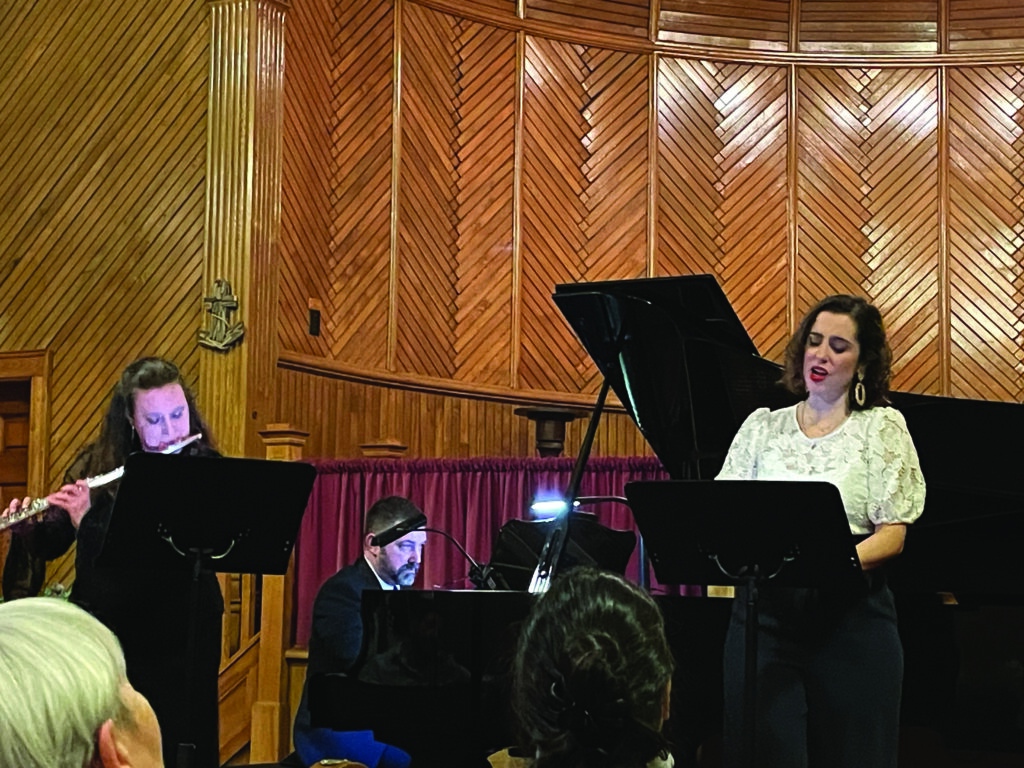
Bouquet de Femmes : tribute and music at Trinity Church 

The 162-year-old Trinity United Church in Cookshire came to life on March 8 as about 100 people gathered inside on a cold and blustery Saturday evening to celebrate music, community, women’s rights, and a hopeful new future for one of the region’s architectural jewels. 

The classical concert was organized under the theme of Bouquet de Femmes on International Women’s Day. It also coincided with the transfer of ownership of Trinity Church from the United Church of Canada to Espace Culturel Cookshire-Eaton, a non-profit group under the leadership of local businessman, Gilles Denis, a frequent buyer of heritage properties in Cookshire. 

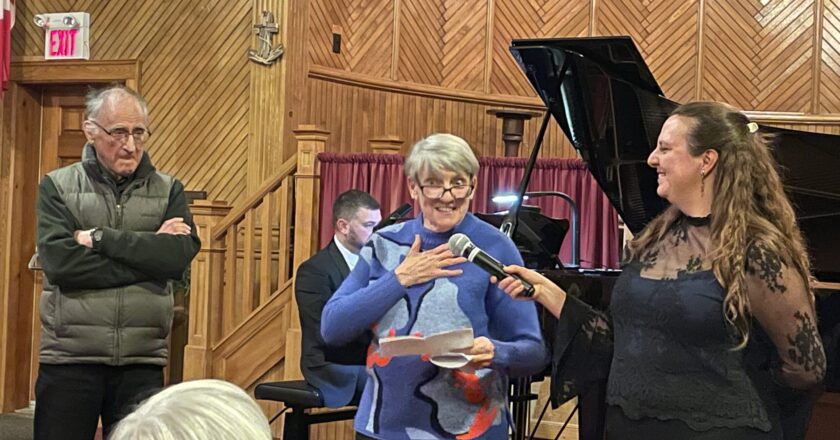
His daughter, flutist Myriam Genest-Denis, emceed the event and welcomed the audience, with subsequent speeches by Cookshire-Eaton mayor Mario Gendron and La Passerelle women’s centre representative Marilyn Ouellet. 

Beyond the music devoted to women composers, the church’s amazing acoustics, and the awe-inspiring wood craftsmanship, the event’s highlight was perhaps the homage to community leader Chantal Ouellet. 

“Community activism and municipal politics became the foundations of her social militantism,” said Cookshire-Eaton resident Jean-Paul Gendron about Ouellet during his intermission tribute. “The library, cultural activities, the Cercle des fermières, the arboretum, promotion of Scotstown’s natural attributes, the environment… here was a political drive that led her to municipal council, first as a councillor from 1978 to 1982, then as mayor from 1986 to 1994. 

“And as a member of the MRC’s council of mayors, which at the time covered 24 municipalities, the femme de Scotstown was not the type to be intimidated by a boardroom of mayors… all men. From 1978 to 2012, she held seven municipal mandates! That’s called a career that’s as inspiring as it is exemplary in municipal politics!” 

Gendron went on to list the region’s 10 women mayors of the past 15 years or so, and noted that the Haut-Saint-François currently has 35 women municipal councillors out of a total of 84 elected officials. “That gives us optimism during these troubled times,” he said. “They deserve our full confidence.” 

Special recognition also went to the former custodians of Trinity Church in Myriam Genest-Denis’s introductory address. It was the event’s only words in English, spoken directly to the row of audience members who have cared for the church for so much of their lives.  

The Bouquet de Femmes concert was billed on its social media page as a one-hour event, from 7:30 to 8:30 p.m. With such a rich and important agenda, it in fact lasted until 10 p.m. That so many people came out for so long on a cold, wintry night just before losing an hour to the time change was a testament to the organizers, musicians, women being honoured, the church, and the program. 

Cookshire Fair : 10% surplus after a sunny year

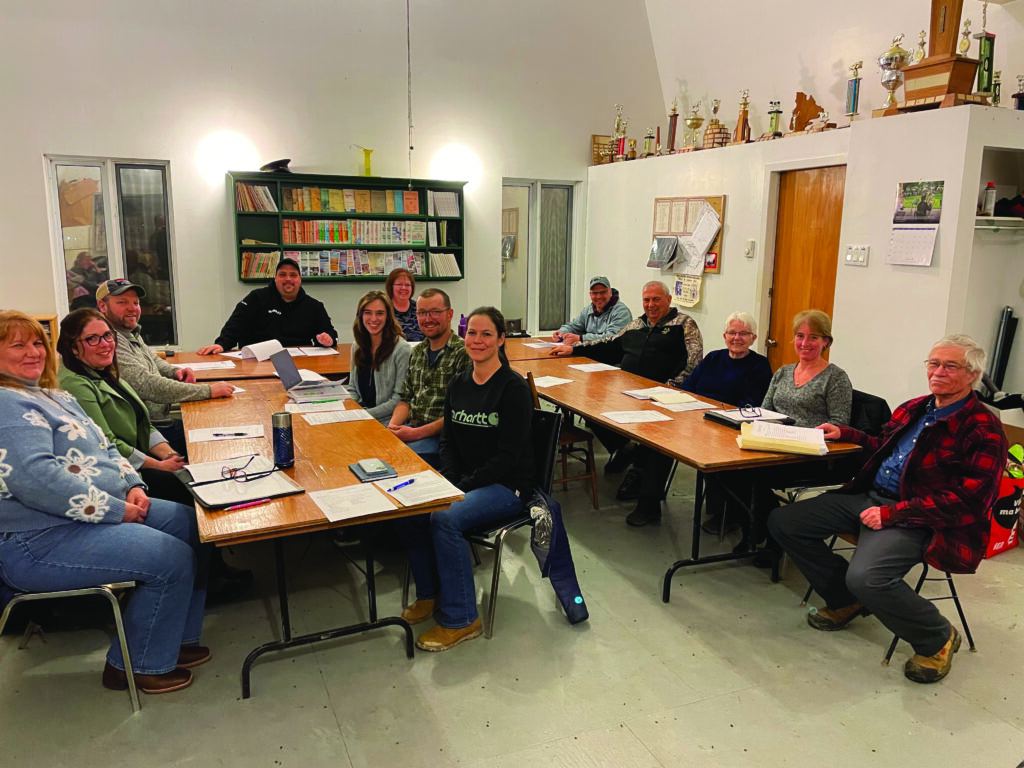
Between February snowstorms, members and directors of the Compton County Agricultural Society (Cookshire Fair) gathered at the Island Brook town hall to review a successful 2024 and start planning this summer’s fair, just six months away, which will run from August 14 to 17.  

President Brandon Ward was re-elected, along with treasurer Neil Burns and secretary Manon Corbeil. They are joined by first vice-president Shane Coates and second vice-president Troy Rothney, as well as Larry Everett and Dallas Campbell, on the Fair executive committee.  

Eight seats on the board of directors were up for re-election. Six of those were filled by acclamation, and two required elections with two candidates for each, voted by the roughly 25 members attending the Society’s annual general meeting.  

In his president’s report, Ward was especially thankful to the crew of volunteers that helped at the gate and elsewhere last year, saying they were one of the main reasons the Fair did not lose money.  

The treasurer’s report of the financial statements showed total income for the year of $315,000 and total expenses of $283,000, for a $32,000 surplus.  

“Our expenses are relatively high compared to what we bring in, which puts us at risk if we have a bad year with rain,” Ward said. “This year, who knows, it could even snow,” he added, bringing the first touch of levity to the assembly.  

Cookshire, the Eastern Townships, and much of northeastern North America did, in fact, get snow every month of the year in 1816, known as the “year without a summer,” due to dust in the atmosphere from a massive volcano in Asia.   

The Cookshire Fair had not yet started then, though. It celebrates its 180th anniversary this year. Last year, good weather also contributed to the Society’s positive bottom line, compared to rain the previous year.  

At February’s assembly, much of the discussion among members focused on controlling expenses, particularly the rising cost of the midway rental. David Grey recommended cooperating with other fair boards in the Townships to strengthen Cookshire’s negotiating position. Someone else in the room wisecracked about trying tariffs, but the idea gained no traction, unlike Grey’s more promising proposal. 

The new board then held its first meeting at the fairgrounds office on March 17. 

A winter on the watch and roads for Cookshire-Eaton

Photo : Bruno Bergeron

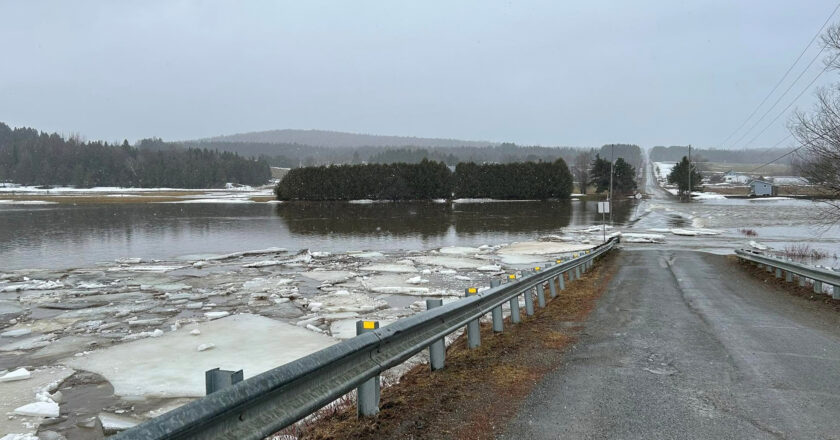
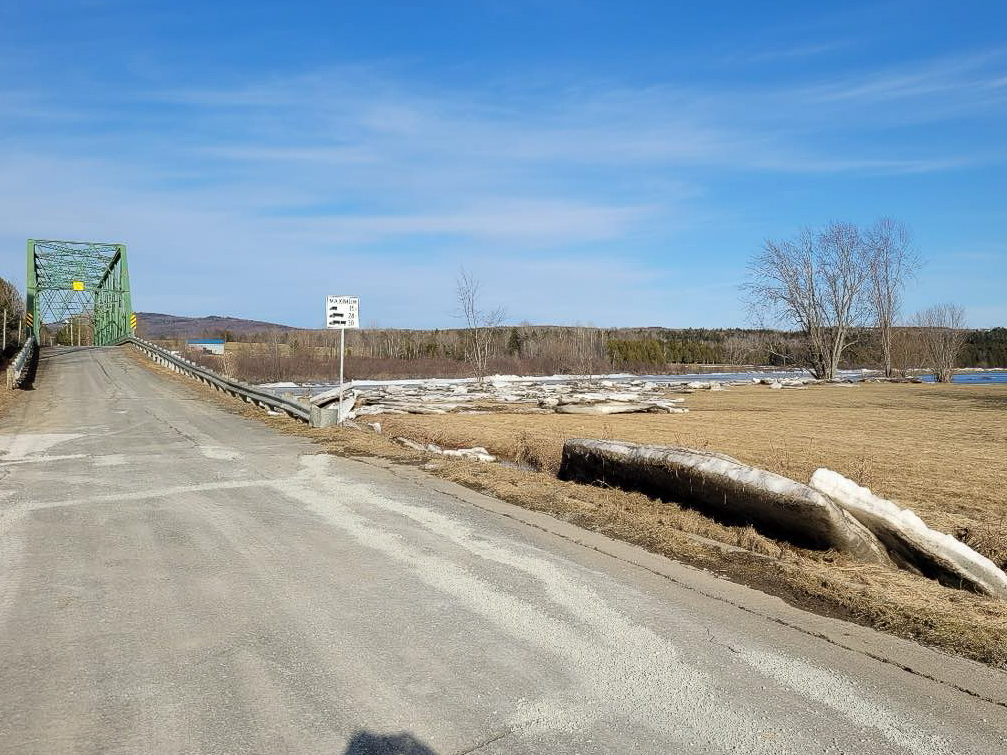
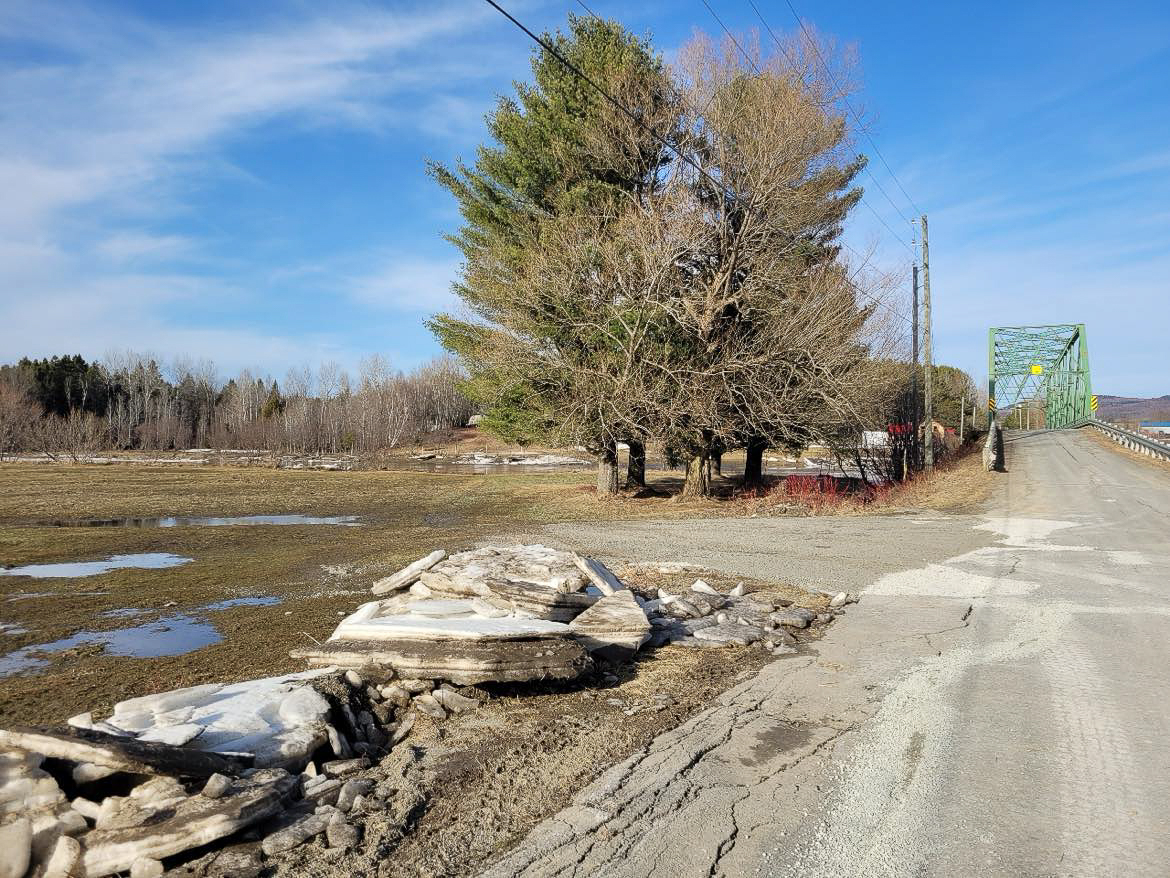
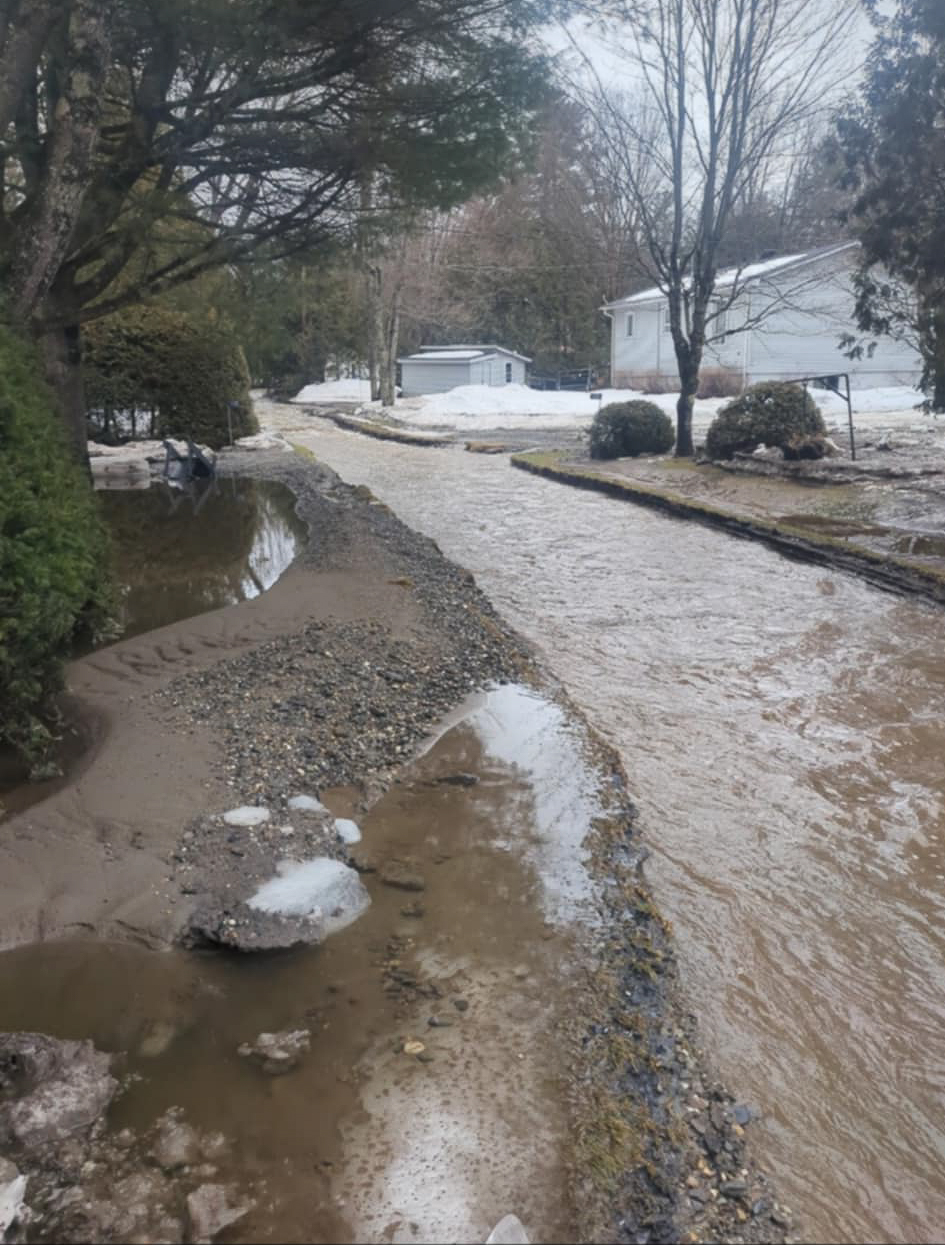
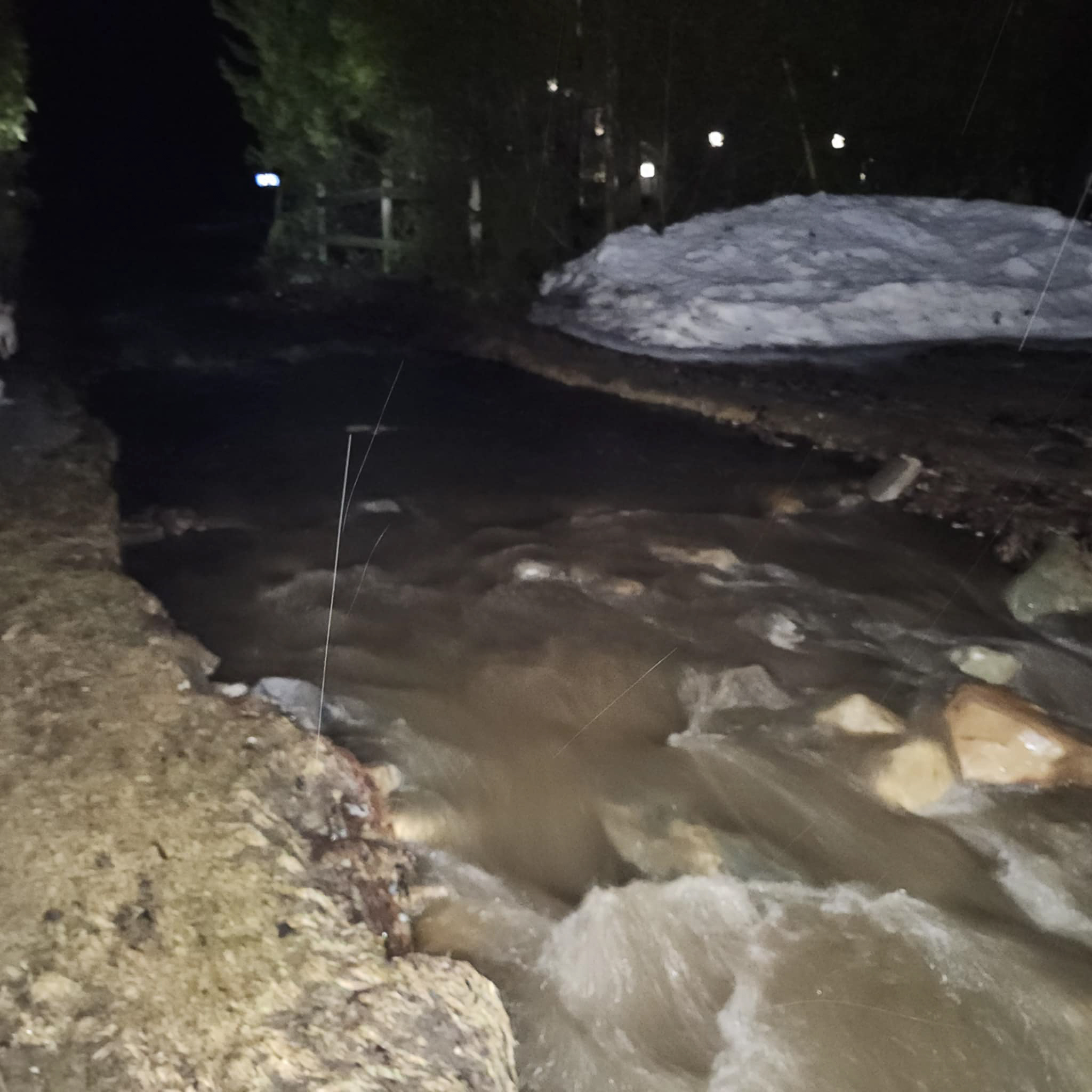
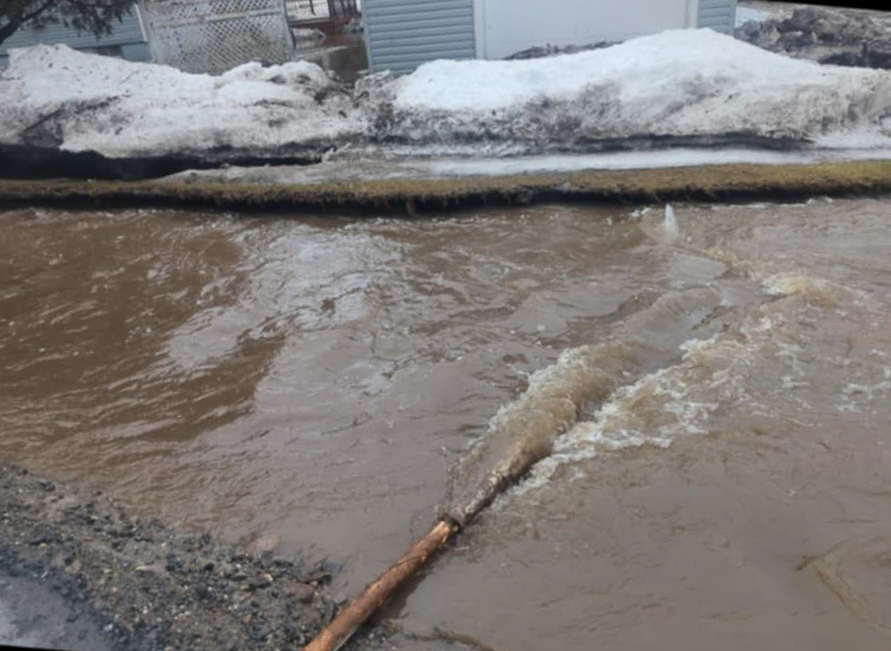
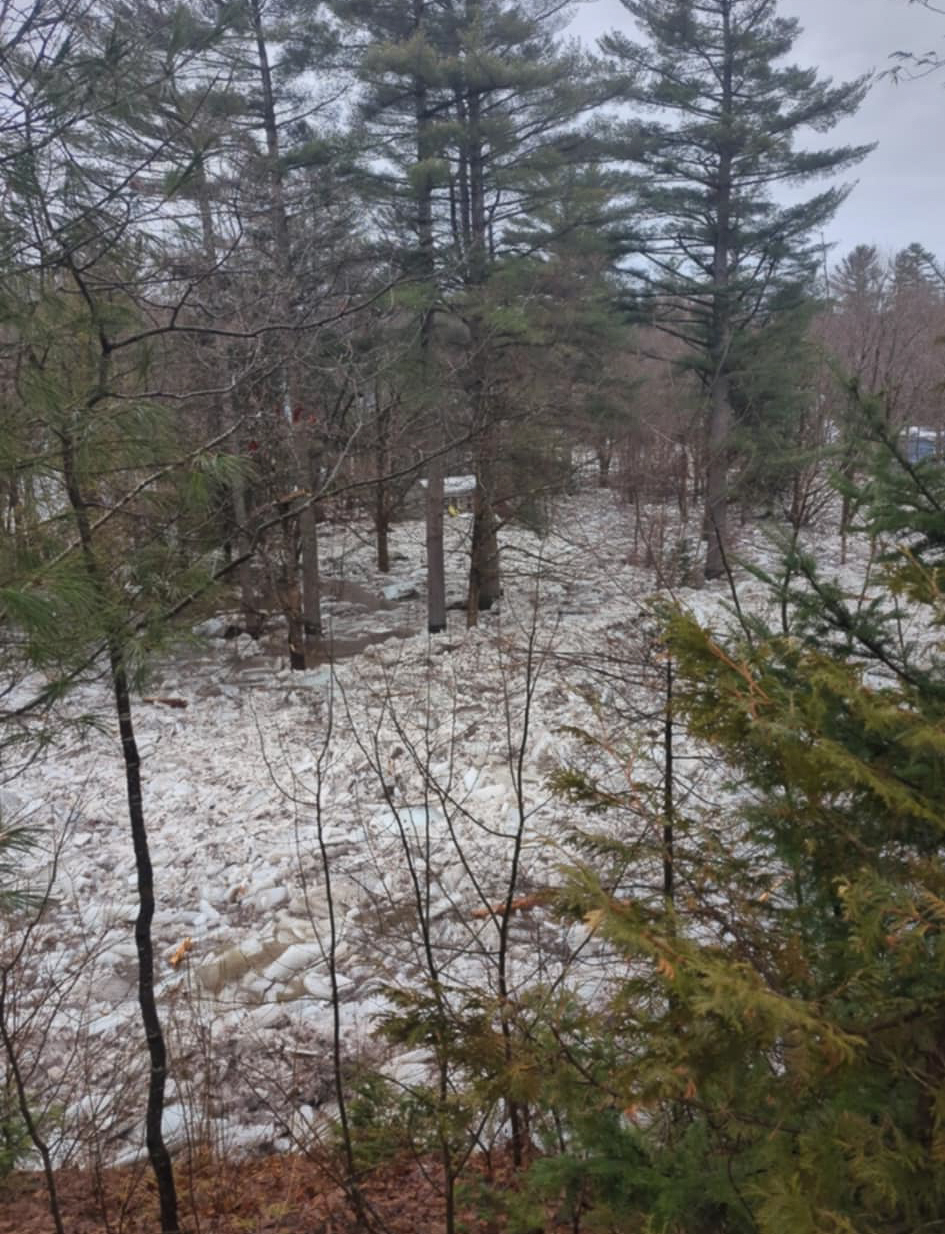
As the mid-February snowstorms melted one month later, Cookshire breathed a collective sigh of relief when the Eaton River started to recede, as if Saint Patrick and the luck of the Irish were gracing the town.  

Firefighters were on standby from midnight to 8 a.m. Sunday morning, March 16, before that bit of weather relief came in on the nonetheless heavy winds. The river never broke its bank, although at one point it was close. 

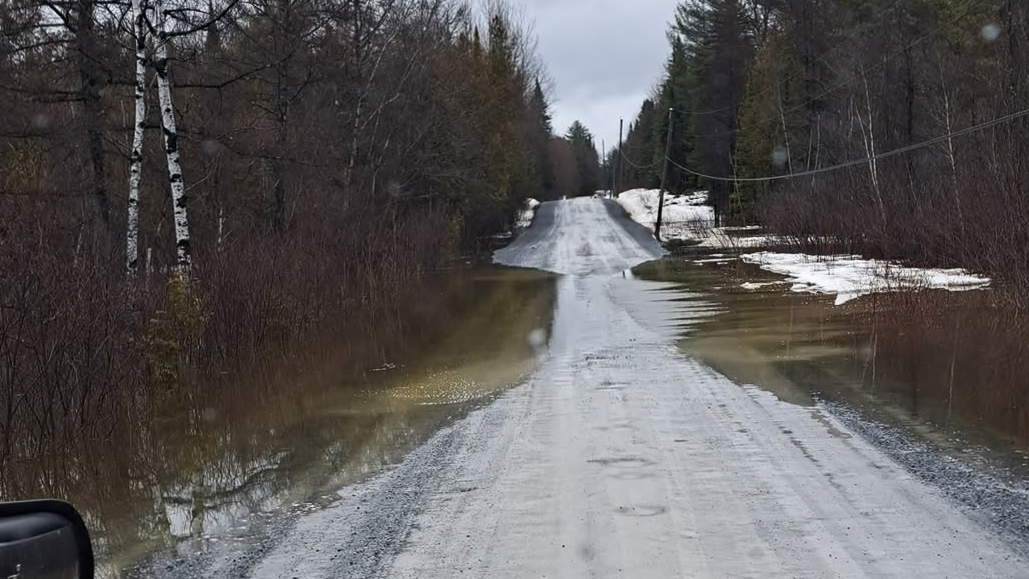
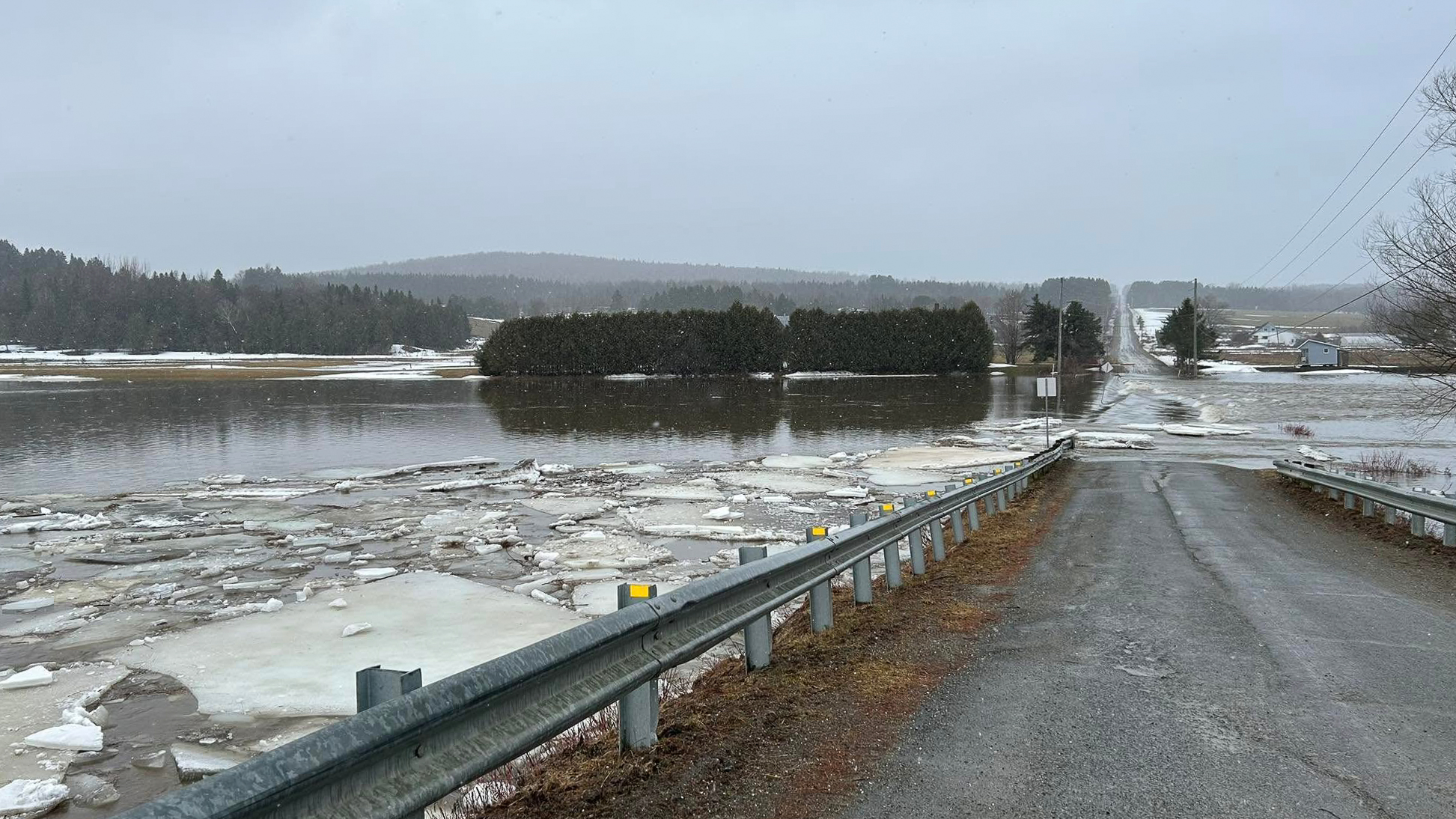
Flooding occurred elsewhere in the region, with the Salmon River crossing the road in Weedon, for example, but without significant incident. 

It was the winter winds, more than snowfall and flooding, that marked the 2025 calendar in Cookshire-Eaton.  

“Everyone was in over their heads,” said the municipality’s former public works manager, now special projects manager, René Lavigne. “The worst was in the night from Monday to Tuesday [February 17-18]” due to the wind. “On some roads, there was four feet of snow right across.” 

Private subcontractors had to be brought in with snowblowers and loaders to help with the clearing effort. 

In one case, two cars were stuck and abandoned side by side, blocking the road from snow removal. Municipal employees had to find the owners and have them come and move their cars so the road could be cleared before the morning commute. 

Cookshire-Eaton covers the largest territory within the regional county municipality (MRC) of the Upper Saint Francis region (MRC du Haut-Saint-François). The municipality has over 260 kilometres of roads to clear and de-ice in bad weather.  

Lavigne said the toughest challenge is when the storms or freezing rains start around 4 a.m., leaving the municipality just a couple of hours to make roads passable for people starting their day or for emergency vehicles to get access where needed. 

During this winter’s back-to-back storms in mid-February all town snow-clearing employees and its 10 trucks were on duty non-stop, with another 12 or so reinforcements added. 

But by 7 a.m., Tuesday, February 18, the roads were passable, Lavigne said. “It was a good one, but I’ve seen worse,” he added. 

Neither the snowstorms nor the near flooding broke the municipality’s budget, town manager Martin Tremblay said in an interview last week, a day after Saint Patrick’s. “So far, we’re okay.” The forecast from then on looked good, but these days one never knows. The winds, particularly those aggressive ones from the south, seem to change on a whim. 

Tremblay said the municipality was particularly grateful to its employees after they tackled the two winter storms. Messages of thanks were expressed in the aftermath, in person, on social media, and will continue during Cookshire-Eaton’s two days of employee recognition annually.  

“We wanted the population to know that our men and women did a good job. Because that was exceptional work.”

©2026 Journal Le Haut-Saint-François