Bury town council : Concerns over firefighter response time 

At Bury’s town council meeting February 3, the first of two public question periods focused exclusively on perceived initial inaction by the Bury Fire Department in responding to a recent house fire at 591 Main Street, Bury, on Sunday morning, January 26.  

Bury resident Nancy Desbiens reported watching the progress of the fire from a nearby residence. She noted one fire engine arrived carrying only a few firefighters, who stood and watched as the spreading fire engulfed a garage at the back of the house. She expressed deep concern over what appeared to her to be inexplicable delays in attempting to douse the fire. 

Mayor Denis Savage listened intently and later said that fire crew response is governed by strict safety and logistical protocols. 

When a fire is reported, Bury’s all-volunteer firefighters receive a call wherever they may be at the time―at home, at work, or on the road. A single individual cannot take the truck to the scene of a fire and begin fighting the fire alone. A specified number of the crew must be present when using the equipment because the heavy hoses require a minimum number to operate them safely and effectively. 

Mayor Savage said he understood the concerns, although he was not present at the time so had not personally witnessed the events Desbiens was referring to. He said he could not comment further until an incident report from Fire Chief Edward Jacklin was submitted, received, and evaluated. 

The full six members of the Bury town council assembled at the February 3 meeting, a snowy evening, along with a few intrepid town residents. 

Galt Basketball

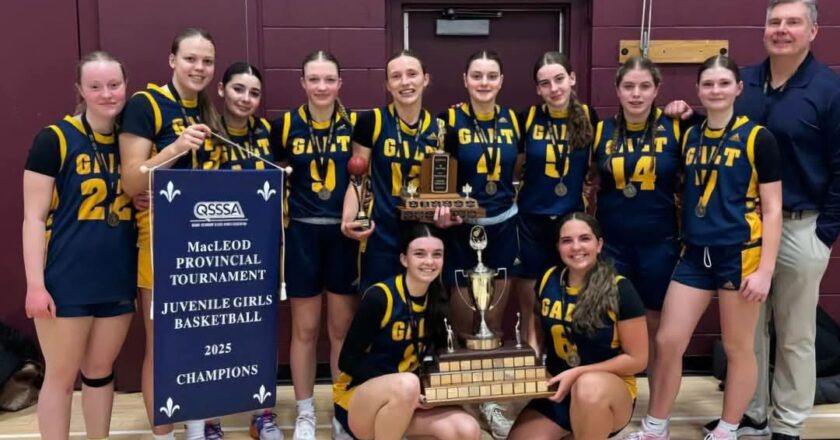
Galt girls take provincial championship

On February 28, the Alexander Galt Senior Girls Basketball Team, coached by Rod Gilpin, won the Quebec Secondary Schools Sports Association Provincial Tournament, held at Centennial Regional High School in Greenfield Park.

This only the third time Galt took the championship in the last 20 years.

Six of the eleven players for Galt live in the Haut Saint-François: Chloe LaBrie Aulis of Cookshire and Sawyerville, Lily-Raeven Barter of Cookshire (and Ayer’s Cliff), Erika Lassenba of Birchton, Emma Mayfield of Johnville (and Lennoxville), and Vanessa Rothney of Sawyerville. The tournament MVP was Lily-Raeven Barter. Congratulations, Galt! And thanks to Joel Barter for sharing the news and to Sandi Allaire, mother of Emma Maxfield, for the photo!

John Mackley

The danger of keeping family secrets

Editor’s note: This is the third in a series of articles from people who have experienced domestic
abuse or violence.

In 1979, I met Anna May in Bury and was immediately drawn in by her charm, wit, and superior intelligence.

The following year we married, and I moved onto what she called her «little fermette in the woods.» She convinced me that with its five-acre hay field and 75 acres of scrub forest, it was ideally suited for her long hoped-for experiment of living life as in the 1800s. Everything would be done by «the sweat of my brow.» I was allowed only hand tools and ingenuity. No tractor, chainsaw, or machinery of any kind.
She sent me to the woods that first summer with an ax and a wheelbarrow to begin gathering and hauling firewood for the coming winter. She set about making detailed plans for multiple large organic gardens. We obtained a family of goats for milk, a collection of caged rabbits to provide us with meat and furs, and a dozen laying hens.

Our outbuildings were too small for our little collection of livestock to keep warm through the long winters. They were much colder than they are now. We moved the animals to the basement of the house. When the heavy November snows began, I set about piling the white stuff around the foundation for added insulation.

Eventually spring arrived—mercifully, as it saw us rationing the last remaining pieces of firewood, few enough to count on two hands.

Not long after this, the waking nightmare began. I imagined that our struggling together, shoulder-to-shoulder, for basic survival would have drawn us closer, and our various strengths would have balanced out each other’s challenges. Instead, our relationship went awry. Something snapped. I could not make sense of it. I soon found myself cast as the enemy.

I was to blame and guilty for everything that was wrong in our lives. Not only was everything my fault but, according to her, it was all part of an elaborate scheme that I, in league with the devil, had cooked up to make her life miserable. She was convinced I was sent to her by unseen outside forces to take her home from her and steal all her worldly possessions.

She began isolating us from society. I soon had all contact with family, friends, and neighbours cut off. I was never allowed to leave the house unaccompanied, other than going to work in the woods. Every aspect of our life became «family secrets,» to be shared with NO ONE, on pain of death!

Some 35 years later, while visiting her in the hospital, her attending physician discretely pulled me aside into an empty room and closed the door.

Your life may be in danger, she told me. Your wife was seen and evaluated by a psychiatrist. He only had enough time to talk to her twice before she threw him out of her room and refused to see him again.

I was not particularly surprised at this. She hated psychiatrists and had refused to see any doctors for over 20 years.

She has been diagnosed with schizoaffective disorder, complicated with unspecified borderline-personality disorder, the doctor continued. As you know, her cancer is terminal. She has only months to live, but her worsening delusions could prompt her to try to take you with her.

I had been watching my back for decades. I had suffered indescribable forms of physical, psychological, emotional, and sexual abuse. I remember being sincerely loved one moment and vehemently hated the next. I could never be sure what to expect.

After speaking to the doctor, I did feel a great sense of relief that the long nightmare had an actual explanation and had not been «all my imagination» as Anna May had tried to convince me. I have since learned that it would be impossible to determine how many of her words and actions could be attributed to her illness or were her true feelings.

Please do not misunderstand. Very few cases of mental illness exhibit such extreme manifestations as I experienced. In fact, statistically, most patients diagnosed with a mental illness are more often the victims of crime than perpetrators.

If you or someone you know is struggling while dealing with the challenges of life, seek help. Do NOT try to keep those family secrets! Find someone to talk to.


Rachel

Canada is IN!

During my brief abode in Toronto some 50 years ago, I was struck by how American many Torontonians were, or aspired to be. At work I heard tales of weekend trips across the border, and trying to lose the «eh?» and other telltale Canadianisms in their speech.

Having grown up in the U.S. and then lived abroad, I valued my Canadian identity. That’s likely part of the reason I ended up in Quebec. Because, it turns out, the French fact is a major trait of that identity, more so than many realize.

Look, we waved past Flag Day two weeks ago. It’s a passage of more than usual note, as we collectively strengthen our Canadian spine against threats from south of the border. Even Premier Legault is sounding particularly Canadian these days.

But did you realize the Maple Leaf came to us from French Canada? In fact, both the flag and the national anthem have their origins in Quebec.

I used to play pétanque ― the French version of lawn bowling ― next to the Centre culturel Calixa Lavallée in Montreal. I had no idea Calixa had composed the music for “O Canada”, a poem written by Adolphe-Basile Routhier. It was first performed in 1880, in Quebec City at a banquet marking Saint-Jean-Baptiste Day and honouring the Congrès national des Canadiens français. Only in the 1900s did it acquire an English translation.

Back to the Maple Leaf. In 1834 the Société Saint-Jean-Baptiste was founded and adopted the maple leaf as its emblem; two years later Le Canadien newspaper called it the emblem of Lower Canada. After that, it was used on publications, on pennies, and in the last decades of the 19th century on all Canadian coins. It bedecked Canadian military uniforms, and finally, in 1965, after a great flag debate, it rose to adorn the official flag of Canada. This flag I always wore visibly when I travelled abroad, to make sure I was not mistaken for an American. (Canada: friendly; U.S.: domineering.)

It’s in the U.S. where I should have displayed the Maple Leaf―it seems our Canadian identity, no matter our origins or languages, needs reiterating to the elephant south of us as it stirs in its sleep.
“What will be the result of our present unsettled relations with the neighbouring republic, it is very difficult to say. The government is composed of such unprincipled men, that to calculate on it by the ordinary rules of action would be perfectly absurd” (gutenberg.org).
That quote, my friends, came from Major-General Sir Isaac Brock, hero of the War of 1812, a war started by the U.S., and which united Canada like never before.
Here we go again!

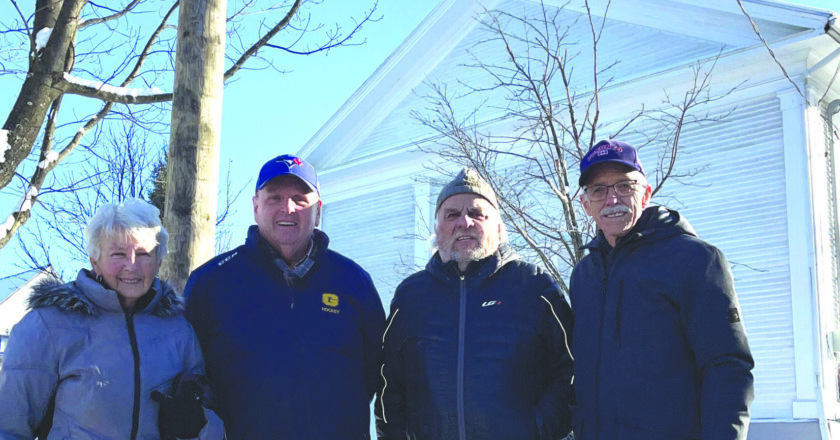
Gilles Denis acquires Trinity United church 

Another major turning point in our English-speaking community’s history is underway: the Trinity United Church building in Cookshire is sold. Local businessman and philanthropist, Gilles Denis, through his non-profit organization, Espace culturel Cookshire-Eaton, once again offered the best protection for the community’s architectural heritage, according to church custodians. 

Mr. Denis and family created Espace culturel in 2022, which is now finalizing the purchase with the United Church of Canada and local trustees Robert Halsall, Don Parsons, and Pauline Thorneloe. “We knew this was the best way to preserve the building,” said Mr. Halsall in an interview last week. 

“The people of Cookshire built it, and it’s their church,” said Don Parsons. “It’s our church to sell; it should be up to the people of Cookshire to decide.” The United Church of Canada has “okayed the sale,” according to Mr. Halsall. 

“We can still use it as a congregation,” said Mr. Parsons. “Gilles Denis is the one who offered that.” 

“It’s important to say that really we aren’t changing things”, Mr. Denis said, in terms of the week-to-week use of the church for services and for the Espace culturel concerts, the next of which is scheduled for March 8. 

Church services will continue as normal, for five years or more, under the purchase agreement. 

Mr. Denis and Trinity Church have been working together for over 25 years for the presentation of concerts and cultural activities, said Mr. Parsons. 

“They said the sound is unbelievable,” Mr. Halsall said. 

The sale had become necessary for the local community after it was forced to take out a $100,000 loan to pay for damages due to an oil spill prior to the Covid pandemic. “We only bring in about $5000 per year in donations,” Mr. Halsall said. 

Don Parsons and family had already saved the local church from bankruptcy in the 1960s, according to Mr. Halsall, paying required expenses out of pocket. 

Further renovations are now required—an interior stairway, outdoor work, and the steeple—which now become part of the new owner’s responsibilities. Not counting that work, it takes “quite a few thousand dollars a year to run [the church],” Mr. Halsall said. 

The Trinity Church building was constructed in 1863 in the Greek revival (neo-classical) style, as the Cookshire Wesleyan Methodist Church, and became part of the United Church of Canada in 1925, when various Protestant denominations across Canada merged. 

St. Peter’s as well 

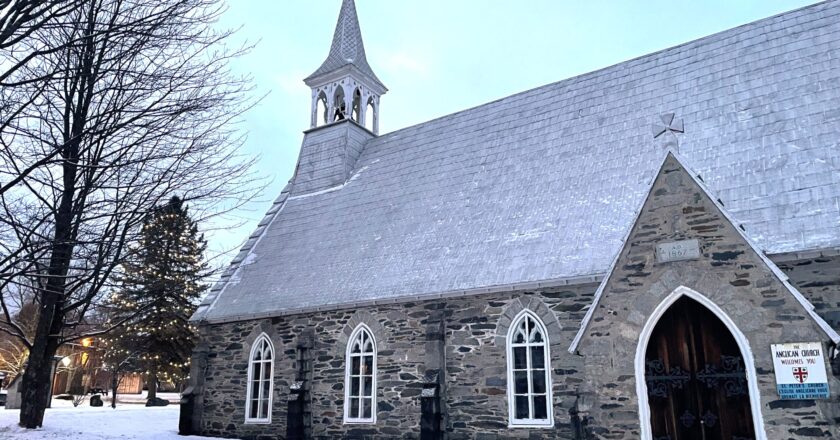
Just down the street from Trinity United is another architectural and historic jewel, St. Peter’s Anglican church, also for sale and also of interest to Gilles Denis, to preserve it and make it available to the community.  

“We’re ready to make an offer,” Mr. Denis said in an earlier interview, adding that he wants to talk with the minister in charge to make it clear his interest is not to make money from the purchase. “I’m waiting for a response from the church community,” he said. 

John Mackley

Anyone can end up homeless

Not everyone has been fortunate all their lives. I was once homeless.
Everyone’s life is unique, and I never felt that mine was necessarily unusual. Living and working on the land in Bury for 36 years afforded me a full time occupation and a roof over my head, if nothing else. My wife, all those years, insisted on maintaining control of the family finances as well as strictly determining the course of our daily lives, work and obligations.

She had never been in perfect health. All our married life she relied on me to tend to the gardens, farm animals, and woodlot. It was a lifestyle choice.
Following a terminal cancer diagnosis in her late 60s, a whirlwind of tests, operations, doctors, nurses, hospitals, caregivers, and social workers utterly and irreversibly transformed our existence. With no immediate family we were fortunate to have caring neighbours, friends, and a reasonably effective medical care system to help us through the worst of the rough patches.

It was not until near the end of her ordeal that a previously diagnosed psychological ailment came to the attention of those on the medical team, although I had been dealing with the repercussions of it for decades. To make a long story short, in her rapidly deteriorating physical and mental capacity, she came to the determination that I was no longer worthy or deserving of « her » land, house, or decades of accumulated wealth. She set her mind to give it all away to virtual strangers while she was still considered, legally, to be « of sound mind. »

What is the point of my publicly sharing such personal information?
Without warning, in spite of all those years of hard work and devoted care-giving, I was informed that I was no longer welcome in my home of 36 years and would be arrested and charged with a criminal offence should I attempt to set foot on the property without her express permission.
In the blink of an eye, I found myself « out on the street, » alone, homeless, and destitute, owning nothing more than the clothes on my back.

I discovered, in short order, that I was not alone. The road to homelessness may be long and slow, or short and sudden. The particular circumstances may vary, but the end result is much the same.
I received directions from a social worker to the only men’s shelter in Sherbrooke. I soon learned the routine of standing in line for the potential, but not guaranteed, chance to procure a temporary cot in a shared open hall to rest, if not sleep, for the night… but only until 7 a.m. when everyone would once again be turned out onto the streets to fend for themselves.

My own experience ended soon and happily, thanks to the generosity of compassionate friends, and neighbours. (They know who they are, and that I remain eternally grateful.)

Many out there are not so fortunate. It has become quite common, in the lead-up to the holidays each year, to increasingly see and hear public-service ads and impassioned pleas for donations of food, clothing, and cash to aid local and regional service organizations in their efforts to assist those in need.
In fact, they need our support year-round.

Incendie à Bury [FR/ENG] 

D’après les informations de Corey Bellam 
English will follow 

Un incendie a ravagé la résidence du 591, rue Main, à Bury le dimanche 26 janvier au matin. Le feu a pris naissance dans le garage adjacent avant de s’étendre à la maison, qui est perte totale. 

Une explosion aurait réveillé le propriétaire de l’endroit, Mike Coleman, peu après 7 h. Lui et sa famille ont juste eu le temps de se vêtir avant de devoir d’évacuer. Vers 11 h 30, une pelle mécanique est venue démanteler ce qu’il restait du bâtiment pour faciliter le travail des pompiers. 

M. Coleman venait tout juste de rénover sa résidence. Sur les trois félins qu’il possédait, un seul a été retrouvé. Dans le garage, deux véhicules à essence ont été consumés par les flammes. 

Cet incendie à Bury rappelle la série de six brasiers qui avaient secoué la municipalité au printemps 2020. Selon le porte-parole de la Sûreté du Québec, Louis-Philippe Ruel, l’enquête suit toujours son cours dans ce dossier.  

By Corey Bellam 

On Sunday, January 26, at around 7:15 a.m., a call came into the Bury Fire Department, headed by Chief Edward Jacklin, reporting a major fire at 591 Main Street. Firefighters were quick to the scene, where they found the house catching fire rapidly. Mutual aid was asked from the Cookshire-Eaton Fire Service and also Lingwick, Dudswell, and East Angus, with firefighters and water tankers. 

The house was owned by Mike Coleman, who said that he and his family were awakened by a huge explosion just after 7 a.m. When he looked out the window, his attached garage was engulfed in flames. He and his family evacuated the house with just the clothes on their back.  

The house was unable to be saved. Fire spread fast. The house had recently been redone inside and out. Mike had put hundreds of hours of work into it. In less than four hours it was all gone. 

At around 11:30 a.m., the excavator arrived to put the house down and allow firefighters to chase down hot spots. Nobody was injured in the fire, but there were three cats in the basement, one that was later found, a bit wet but doing fine.  

The cause of the fire is unknown at this time. Two cars were lost in the garage; they were not electric.  

The Bury

An adventure reborn

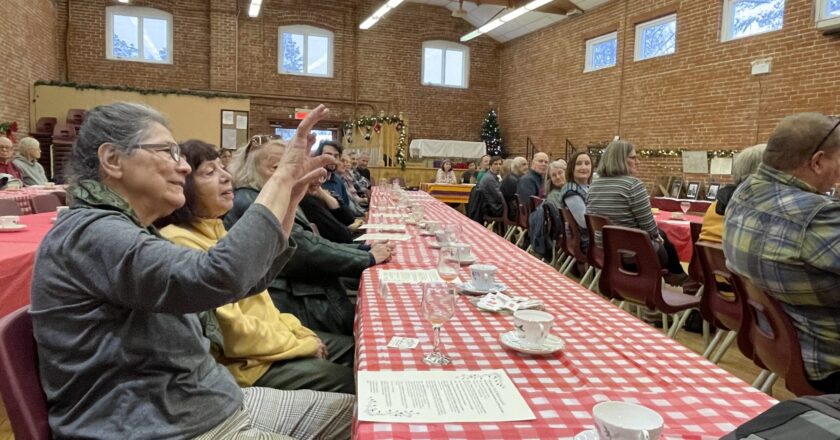
About 100 people attended a traditional Christmas tea organized by the Bury Historical and Heritage Society on December 1st, during which two publications were launched, volumes 1 and 2 of the Eastern Townships Adventure by Bury author Bernard Epps, who died in 2007. His first volume was published while he was alive, but volume 2 has now been published for the first time in a partnership between the Townships Sun magazine, Shoreline Press, and the Eastern Townships Resource Centre.

Josiah Sawyer Memorial 2013

To join or not to join : U.S. & Canada; Sawyer’s head & body

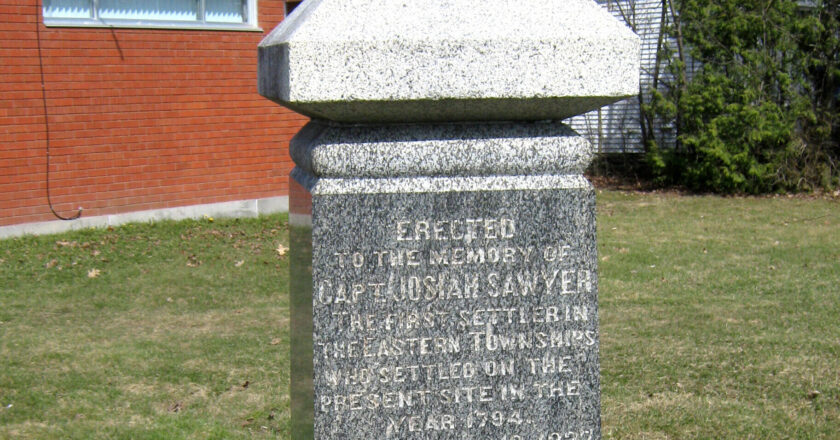
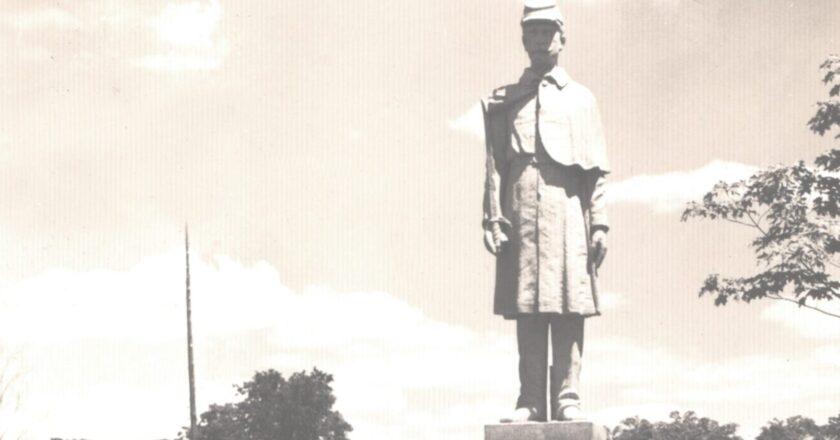
This memorial stone was originally the base of the Josiah Sawyer statue.

I received a very astute question about my last Rachel Writes piece, « Josiah Sawyer’s Head. »
Henry Musty noted, « The speech referred to ‘the union of the flags and anticipated the time when the two great countries would in reality be one.’ Did you time this article just before Trump takes over? » he asked.


In fact, I penned that column in December, not so long after Trudeau visited Trump (November 30), sparking an avalanche of Trump’s « jokes » about annexing Canada. While reading the 1901 newspaper report about the unveiling of the Josiah Sawyer statue, I noted the litany of appeals by Josiah Sawyer’s American descendants for Canada and the United States to join forces. Yes, it reminded me of the current kerfuffle.


What goes around, comes around. Not just in 1901, but other times too. When I was a high school senior in Virginia, I heard Canada mentioned exactly once. One of the students asked, « When do you think Canada will join the United States? »


The teacher wisely countered, « What could possibly motivate them to do that? »
Not much. Worlddata.info offers dozens of reasons why Canadians would want to remain « friends with benefits, » rather than moving in with the U.S. Those are the words of Mark Carney on a recent appearance on The Daily Show with Jon Stewart.

I received another intriguing response from Sawyerville history connoisseur Daniel Bousquet, about the statue of Josiah Sawyer. On some points, he agrees with Sharon Moore and Jack Garneau: The statue is not a likeness of Josiah himself, and it was vandalized twice. But he has more to say.
« Actually, the statue was moved twice before it was vandalized, » he wrote. « When the William Sawyer house was sold, the new owners did not want the statue on their property, so it was moved to the Sawyer Brook Cemetery. » He sent me photos to prove it.


As early as 1935, a newspaper clipping says that Sawyerville Women’s Institute members petitioned the town council to move the monument « now in the Sawyer Brook Cemetery » to a « more prominent place on the Town Hall lot. »


Alas, in 1940 the statue was still in the Sawyer Brook Cemetery, now quite neglected. Bousquet sent me a clipping of a 1940 letter to the editor of the Record, about « an eerie but commanding and spectacular lifesize monument high up on a wooded slope, » amidst a « terrific growth of bushes, briars, thistles and undergrowth » and among several gravestones.


Eventually, he told me, it was indeed moved to « the vacant lot where the Sawyerville post office now stands. There it was first vandalized by partyers from the Sawyerville Hotel. »
The stone that supported the statue still stands beside the Post Office, a monument in its own right, bearing the original inscription to Capt. Josiah Sawyer, « who settled on the present site. » Photos clearly show this inscription at the statue’s unveiling, across the river at the residence of William Sawyer, to the left of the United Church.


So … where exactly is the site where Josiah Sawyer settled? Likely not beside the post office.
And where is the statue’s body? Bousquet suggests it could be lying hidden in the bushes, snowbound. Come spring, I’ll be on the lookout for it!
Rachel Garber is editor of the Townships Sun magazine and writes from her home in the old hamlet of Maple Leaf, in Newport.

Josiah Sawyer Statue

Josiah Sawyer’s Head

Josiah Sawyer Statue

I read all about it in The Sherbrooke Examiner of September 30, 1901.
« GREAT DAY FOR SAWYERVILLE. A Monument to Early Settlers Unveiled. ADDRESSES WERE DELIVERED BY PROMINENT SPEAKERS. Special to the Examiner. »
This, the longest article on the front page, tells how a statue was erected in Sawyerville in honour of its first settler.


I’m on a quest for information because of a unique photo John Mackley unearthed in the Townships Sun archives. He found a tiny negative sheet measuring 2.25 by 3.125 inches, a glossy sepia print the same size, and a cropped black-and-white glossy version, 3 x 4.5 inches, with scalloped edges, indicating it was probably printed in the 1940s or 50s.

It shows a statue of a soldier, one hand holding a sword. Its inscription reads, « Erected to the memory of Capt. Josiah Sawyer, the first settler in the Eastern Townships who settled on the present site in the year 1794, who died Mar 10 1837 in the 81st year of his age. »


That’s the who, but what are all the other details. Where is the statue today?
The Examiner article describes the unveiling of the statue on the property of Josiah’s descendent, William Sawyer. First, an ode to the wonderful weather, verified by the cumulus clouds and sunny scene in the photo. Crowds from «the surrounding country,» come to pay tribute «to the first settlers of the township of Eaton, who were the first settlers in the Townships east of lake Memphremagog.»
The statue stood « wrapped beneath the folds of the Union Jack, with the Stars and Stripes close by its side, fastened to the same cord, apparently signifying the strong chord of national friendship that binds our two great countries together. »


Rev. W.P. Boshart led opening devotions. The « chairman » (William Sawyer, I presume) told about « starting the settlement of this beautiful and productive region. » Then Lyman Alger of Stewartstown, N.H. (across the bridge from Beecher Falls, VT), praised the settlers, the men’s character, their privations, « and especially to the courage and energy of the women, who feared not the difficulties of pioneer life. »


After « a most excellent lunch » in the basement of the nearby Methodist Church (on the site of the United Church which burned down in 2006), came the real business of the day: the unveiling of the statue.


Another descendent of Josiah Sawyer, The Honorable Willis Sawyer of New York City did the honours, drawing the cord to reveal the statue. The base was of St. John’s granite, measuring one foot eight inches by three feet high. A life-size statue stood on it, carved from granite from the Barrie, Vermont, quarry.


In his speech, he « referred to the union of the flags and anticipated the time when the two great countries would in reality be one. » Then the Citizens Band played « The Maple Leaf, » the « Star Spangled Banner, » and « God Save the King. »


Eight additional speeches rounded out the ceremonies.
This article tells me the Sawyer family wanted very much for Canada and the United States to be united. In fact, I recall from Bernard Epps’s The Eastern Townships Adventure that Josiah Sawyer was definitely not a Loyalist. He was born in Massachusetts and had joined the Continental Army and fought against the British at Bunker Hill and on Long Island.


But where is the statue now? I phoned Sharon Moore of the Eaton Corner Museum. She tells a horrific story of the statue’s adventures. It was vandalized twice. Once it was dumped in the pond at the bottom of the Lindsay property, retrieved and put in the old fire hall. Then it was vandalized again, and damaged beyond repair. Only the head remains. It is in storage in the Eaton Corner Museum.
But the head is not, she says, the likeness of Josiah himself. « Jack Garneau will tell you that! »
Jack Garneau confirms he’s seen identical statues in several places in New England.


Indeed, in The Eastern Townships Adventure, I read that Josiah Sawyer had « met with an accident when young which turned his nose round on one side. » I zoom in on the photo of the statue, and under the shadow of his military cap I see a perfectly straight nose and a hefty Hungarian moustache.
Happy New Year! And do join us for more photo detective adventures (See « Photo Detective Challenge » in Rachel’s Agenda.)

Boite à miel, Décembre 2024 cmyk

The local advantage

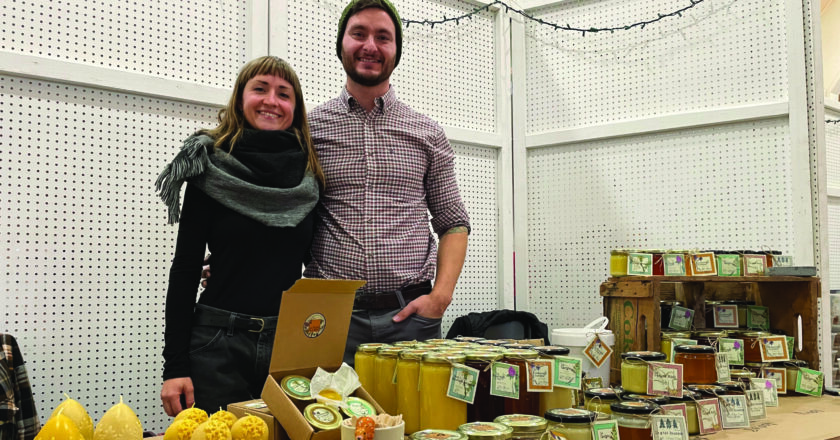
Magalie Thérrien-Grenier et Philippe Toutant de la P’tite Boîte à Miel au marché de Noël de Dudswell le 30 novembre dernier… d’autres belles idées de cadeaux.

As of this writing, the Canadian Union of Postal Workers (CUPW) strike against Canada Post gives no signs of an immediate settlement. Small businesses are among the hardest hit as many of them rely heavily on the postal service to provide them with the supplies they need, as well as affordable shipping to their customers. This is equally true for the businesses in our region.

Even if, as you read this, the strike has been settled, many observers say small businesses could have a hard time recovering from its disruptive effect.

We may not be able to affect the outcome of national labour negotiations, but we can all take one concrete step to help local businesses and at the same time help alleviate our anxiety over whether our gift orders will arrive on time

Shop local ! The Haut-Saint-François is home to many locally owned and operated businesses.
When you buy local, much of your money stays in the region. Business owners purchase their goods from other local businesses. Shopping in nearby stores saves time, energy, and fuel. It offers opportunities to meet your neighbours and perhaps make new friends. They may even gift wrap your purchases, and you can take them home right away.

Here is just a sampling of local places to shop for gifts.

Brocant VLJ in Weedon

If it’s antiques you have in mind, Brocant VLJ in Weedon might have just what you want. The quaint shop is bright and clean with a wide variety of vintage items of interest.

Savonnerie Saponaria in East Angus

Over to East Angus, where a new enterprise opened its doors last month: the Savonnerie Saponaria, owned and operated by Sonya Ann Legault and Mario Gélinas, offers personal care items such as soaps, scented candles, shampoos, and bath bombs.

Wicca Kichou in Cookshire

Abygaële-Anna Courtemanche, owner of Wicca Kichou, expressed her joy at helping people find just the right gift in her boutique, whether jewelry, herbs, teas, teapots or hand-knitted scarfs.
Many farms in the region also offer their own products directly to customers, rather than depending on the often unstable wholesale market.

Maraîchers de l’or vert in Sawyerville

For a gift that keeps on giving, the Sawyerville farm, Maraîchers de l’or vert, offers vegetable baskets by subscription, available until January, containing a variety of greens and root crops.

SAG Delapointe in Bury

At SAG Delapointe, Praxède Lévesque Lapointe has run a business from her farm in Bury for many decades. In the early days, she and her husband raised dairy cattle and transformed the milk into a high-grade cheese known throughout the region.

“I have sold many things in my life but currently it is more maple products―syrup, butter, jelly, candy, granulated sugar, chocolate.”

Experiences

The holidays can be about more than just tangible gifts. Events and activities add a special dimension to the festive season. Give an experience! The Galerie d’art Cookshire-Eaton will be holding its traditional Christmas Concert on Saturday, December 14, at the Trinity United Church. The Galerie will also have ongoing art exhibits throughout the winter season.

Or go for a meal. Many cafés and restaurants can be found in the towns and villages of the Haut-Saint-François. They offer not only sustenance but a chance to spend quality time with friends and family, while supporting the local economy and strengthening connections to our community.

Small businesses surround us, in all parts of the Haut-Saint-François. Seek them out. We’ll all be grateful.

Happy holidays!

Francais et anglais

The challenge of balancing French and English content

Earlier this fall, an English-speaking reader called me to ask about a popular series of reports our newspaper published in French about Route 112. Her understanding of French wasn’t good enough to catch the details.

Also this year, I was told by another reader that some of her English-speaking neighbours don’t read the Haut-Saint-François due to its low English content and their lack of comfort reading in French.

We’re disappointed, of course, but I get it. Despite my own high level of bilingualism, reading in French can be enough of an effort in some cases that I don’t want to pursue it. That depends highly on the quality of the written French, which is a message to all writers about how important it is to communicate well—clearly, concisely, and understandably—in whatever language.

The Haut-Saint-François was founded as a French-language newspaper but added some English over the years to also serve and be representative of the minority English-language population. The Upper Saint Francis region’s county municipality—the MRC, as it’s known in French—has a population of 23,000, with about 11% of citizens being English mother tongue. That makes our English-speaking community total about 2500 people.

Unlike the paid-subscription Sherbrooke Record, the Haut-Saint-François is delivered to every address in the 14 municipalities of the region, as well as Saint-Malo, which asked that we distribute to it as well.
The number of pages a newspaper publishes depends heavily on its income, which itself is determined largely by the amount of advertising space clients buy in the newspaper. The more advertisements we sell, the more pages we can publish; and the more pages we can publish, the more space we have for news stories and photos. Similarly, the more space we have for that editorial content, the more room we will have for content in English.

Unfortunately, newspapers have many, many more competitors for advertising space in today’s world, be they other traditional media such as radio and television or, more importantly now, new media such as the Internet, websites, email newsletters, social media and so many other digital sources. Given that lay of the land, we are limited in how much English content we can publish. We would like to publish more, and as our income grows, we will be able to do so.

Along the way, we hope you will continue to read our regular English stories with interest, in the columns and articles by Rachel Garber, John Mackley, Corey Bellam, myself, and others. When there are stories in French only that you would especially like to see in English, continue to let us know. We also encourage you to keep reading other traditional English-language media, such as the Record, the Townships Sun, and local community publications like Bury’s Image.

Postal strike

If the postal strike is still on when we publish this issue, and you happen to be reading it, we encourage you to get an extra copy and give it to a friend, neighbour, or local business. This is our largest and last edition of the year. Without Canada Post, its distribution will be difficult, but we really hope everyone gets a chance to read it and to support our advertisers.

Thank you for your own support and interest—and thank you to our advertising customers, municipalities, federal and provincial representatives, funders, community organizations, and contributors! It has been a pleasure serving and working with you in 2024. We wish you a very happy and restful holiday season, and we look forward to connecting with you again in our first issue of the new year, January 15, 2025.

ACTU-Rachel

Endings & Beginnings

The Townships Sun used to publish books under the “Sun Books” label. Some four decades later, we still get queries about long-out-of-print books. A number of them are by Bernard “Bernie” Epps, who hailed from Bury between the ‘60s and ‘90s.

For example, two books, Tales of the Townships (1980) and More Tales of the Townships (1985), were true stories told by a master storyteller, both published by Sun Books.

Other books abounded. There was Pilgarlic the Death (1967). Sheer fiction. Then The Outlaw of Megantic (1973), non-fiction, about Donald Morrison of Milan, near Scotstown, but brought to life by Epps’s extraordinary skill. He wrote prolifically, and his major source was Townships history.

“History isn’t boring; historians are boring,” Epps wrote in his introduction to The Eastern Townships Adventure. He’d likely deny being a historian himself. His books are full of stories. He was a colourful writer who was also a rigorous researcher.

“His stories of the characters and events and intrigues that shaped the early years of the Eastern Townships are anything but boring. They are lively and interesting and they help to bring the past back to life,” commented Matthew Farfan, executive director of the Quebec Anglophone Heritage Network.
So now, in the midst of a postal strike, the Townships Sun is going back to its roots, launching the newly published two-volume set of Epps’s The Eastern Townships Adventure. In mid-November, the editorial team―Jody Robinson of the ETRC, Angela Leuck of Shoreline Press, and myself―finished proofreading Volume 1 and then Volume 2, and okayed the presses to start.

We counted the days on our fingers. Would the books be printed on time for the December 1st launch? It was a rocky end of the road and simultaneous beginning of a new one.

Well, that’s also the fitting theme of the December/January Townships Sun, endings/beginnings―those of the universe, of the earth, of nature, of the year, of humans.

For example, Peter Moliner MD writes about end-of-life issues and need-to-know nuggets about navigating the health-care system. Adele Ernstrom writes about living through the creation of the atom bomb, and Noémi Blom writes about what she calls “the fourth trimester,” a new mother’s life after giving birth.

Because of the mail strike, print subscribers will receive a pdf of this issue by email. Then the print version will follow after the mail strike ends. For details, check TownshipsSun.ca. Wishing you a kind-hearted holiday season. Have courage.

Cookshire municipal library may move to St. Peter’s church

The Upper Saint Francis region is on the cusp of a turning point in its history with the likely sale of the historic St. Peter’s Anglican Church in Cookshire, an architectural jewel built of stone in 1869. 

Local businessman and property developer, Gilles Denis, is currently discussing its purchase with the Anglican Diocese. “I’m waiting for a proposal for an offer to purchase… from the Anglican property manager,” he wrote to the Haut-Saint-François newspaper on December 4. 

“There are plans to sell it, I believe,” said Jim Sweeney, former registrar and property manager for the Diocese. “I haven’t had that confirmed. But people are working on the assumption that it will be sold.” 

The Haut-Saint-François Regional County Municipality (MRC) and Ville de Cookshire-Eaton were already preparing for the eventual sale of the heritage building in 2023 and 2024. The MRC helped a group of citizens make a request to the municipality of Cookshire-Eaton that it cite the property for its historical value, which the municipality did earlier this year. 

Municipal library 

It also wrote a letter of support to Gilles Denis, indicating the municipality’s interest in renting part of the building for the municipal library, to help Mr. Denis seek financing for the purchase, should it occur. 

According to the MRC’s heritage property advisor, Chloë Southam, the church building “can never be demolished,” and the municipal citation represents “a certification of the community’s intention to preserve the building in the long term.” 

The citation also helps the building’s owner apply for grants for restoration, but is not restrictive as in the case of a provincial classification, which the Eaton Corner Academy has received, according to Ms. Southam.  

Gilles Denis owns numerous buildings in Cookshire, including several that are historic. He purchased the St. Peter’s rectory several years ago and converted it into a cultural centre, now known as the Maison John-Henry-Pope. Since then, he also acquired Victoria Hall, still in Cookshire’s historic square on Main Street, and converted it into an art gallery and exhibition hall. Gilles Denis also owns the IGA grocery store in Cookshire. 

Scotstown I, John Mackley

Young voices brighten Remembrance Day

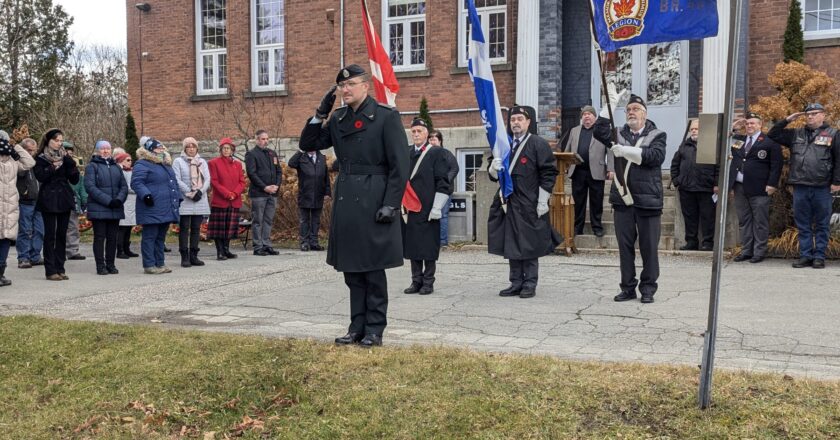
The Bury ceremony on Saturday, November 9.

Cookshire Elementary School served as a nearly 50-member choir for Remembrance Day in Cookshire on Monday, November 11, becoming the highlight of an otherwise somber, grey, and rainy day.
Emcee Bob Halsall gave the students a special thank you as the sacrifices of veterans were remembered.

“You are our future,” he said in English to the students after their performance. “You are the ones that are showing us, the way you just sang. You are our future leaders. And we thank you for doing this! We’re really glad you participated with us.”

Their participation added to the 30 or so other people attending the Cookshire ceremony, including service men and women, members of the Legion and Army, Navy, Air Force Vets, minister of the Sawyerville Baptist Church, federal and provincial representatives, the mayor of Cookshire-Eaton, and others.

The Cookshire commemoration was held in French and English and followed six other Remembrance ceremonies in the Upper Saint Francis region. The final one in Island Brook later that afternoon completed the tour for vets, dignitaries, and organizers.

Saturday in Weedon, Scotstown, and Bury, and Sunday in East Angus, participants enjoyed rarer Remembrance sunshine. In Cookshire, the rain paused just long enough for activities to take place—and for the special light brought by youth to shine through.

Grange

Sawyerville haunted barn

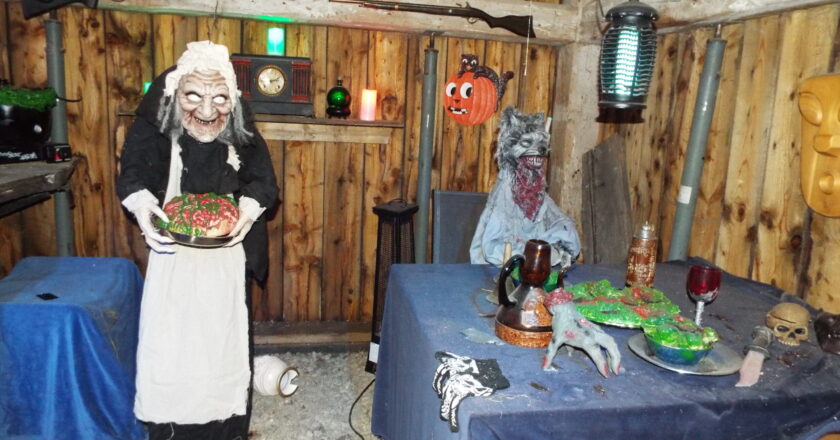
A tasty supper of brains was on the menu for Halloween.

Sawyerville’s haunted barn on Cookshire Street was opened once again for all to visit and enjoy at Halloween.

The fun kicked off around 5 pm with many children and the young at heart arriving to check out the spooky trails leading to the haunted décor. The yard was filled with ghosts, werewolves, witches, and other strange creatures. When you entered the barn, the sounds would make the hairs on your neck stand up.

Père et fils

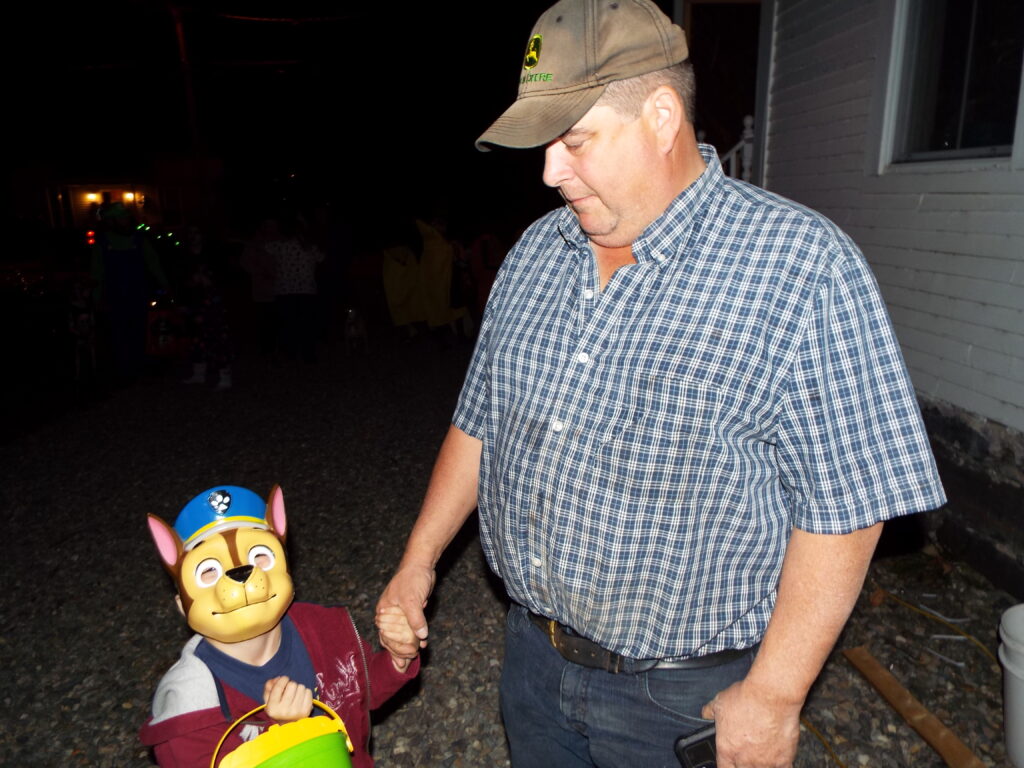
Young Joseph McConnell of Sawyerville along with his dad Tom McConnell. Joe said he wasn’t afraid as long as daddy was there.

Rachel Garber

Need to vent?

I hope you’re not too disappointed. I decided against using this space to vent about the American elections. Or Canadian politics. But if you feel the urge, read on.

Mental Health Resources, in English
A new 28-page Guide to Mental Health Resources in Estrie is now available from Mental Health Estrie (MHE), in partnership with Vent Over Tea (VOT). The free Guide is available in English, in either print form (to get yours, email projects@mentalhealthestrie.com) or in digital form (download it from mentalhealthestrie.com/Resources/). While you’re there, I suggest you check out MHE’s other resources and events, offered in English for residents of the Estrie region.

The Guide is a great idea. In community surveys, Townships English speakers have long said that one of their greatest barriers to receiving health services is not the language of service; it’s learning a service exists and knowing how to access it.

Looking at the Guide, I am surprised by the variety of services described. It lists 18 different 24/7 emergency numbers! It describes various access points for the local health care system. It identifies resources offered by local non-profit groups and Quebec-wide associations.

One that was new to me: Vent Over Tea is a province-wide service that matches persons who need to talk with a trained volunteer active listener. The two meet in a café, and the volunteer commits to listen without judgement. It’s free; you each pay for your own beverage, be it tea or coffee.
VOT was created by two students who were frustrated over the lack of accessible mental health resources. The idea is to « provide a casual, confidential and non-judgmental outlet for members of the community who simply want to talk to someone outside their family or social circle, » I read at VentOverTea.com.
Hmm. I wonder now, what would I vent about?


HUGS For Persons Who Don’t Have a Home
Mental Health Estrie has another project, the annual HUGS campaign. From November to March, MHE accepts donations of NEW Hats, Underwear, Gloves, Socks, Scarves, and other warm articles of clothing. MHE gives these new winter clothes to local resources that help people experiencing homelessness. Items can be donated at MHE’s office, 3355 College in Lennoxville, Monday to Thursday, 9 a.m. to 4:30 p.m. Online donations are also accepted at mentalhealthestrie.com. For information, contact projects@mentalhealthestrie.com or 819-565-3777.

Carrefour jeunesse-emploi HSF celebrates 25 years

The CJE’s team. From left to right : Sylvain Lessard, Maxime Mainville, Diane Groleau, Nicolas Coutu, Audrey Vallée, Ginette Jolin, Stéphanie Dubreuil, Judith Olson and Isabelle Poulin-Rioux.

Around 1999, Randi Heatherington of East Angus was asked by Michel Beauchamp, then director of New Horizons Adult Education Centre in Sherbrooke, to help start a program for youth in the Upper Saint Francis region. Last month, some 25 years later, Heatherington and other founding members, along with staff, board members, and friends, highlighted the Carrefour jeunesse-emploi’s quarter century of successes. 

The 25th anniversary celebration was held on October 17 at the Café Laurier in East Angus, just across the Saint Francis from the Carrefour jeunesse-emploi (CJE) du Haut-Saint-François’s offices.  

Five short videos were presented, featuring key figures in the organization’s history, including Kasey Statton, Dominic Provost, Mathieu Drouin, Olivier Jean, and Mégane Beaudoin. Some of the videos are now published on the organization’s Facebook page

A community crosses boundaries to help youth 

Intervention coordinator Judith Olson was especially moved to point out a letter published in the Haut-Saint-François last year and co-authored by Kasey Statton, one of the CJE’s former youth clients. 

“Whether due to isolation, lack of self-confidence, or difficulty managing our emotions, we as men get stuck when it’s time to ask for help,” Statton wrote in his July 2023 letter “What is a man today?” in French. “Despite our different paths in life and our young age, we all have one thing in common, that of silence. We are now more aware of the problem, and now it’s our turn to speak.” 

Speak, he did, and ask for help, he also did, turning his story into one of the many CJE successes celebrated last month. 

Executive director Sylvain Lessard was also featured in the videos and was among the founding group 25 years ago. He spoke of his pride in those successes and in the continuing offer of services to the community in both French and English. 

Un camion percute une remorque de foin sur la 108 [ENG/FR]

English will follow. Photo by Corey Bellam.

Une camionnette a percuté un tracteur transportant du foin près de l’intersection de la route 108 et du chemin Leblanc, à Cookshire-Eaton, le mardi 5 novembre vers 15:15. La collision a fait s’éparpiller plusieurs balles de foin sur la chaussée, ce qui a amené la fermeture d’une voie de la route 108 pendant une demi-heure.

Le conducteur de la camionnette a subi des blessures mineures et a été transporté en centre hospitalier. De son côté, le conducteur du tracteur n’a pas été blessé, mais s’est vu remettre un constat d’infraction, comme ses droits d’immatriculation n’avaient pas été payés et qu’il n’avait pas le droit de circuler.

D’après les informations de Corey Bellam

Crédit photo : Corey Bellam

Tractor vs Hay wagon !! Wagon wins !!

By Corey Bellam

Around 3:25 pm November 5th, a call came into the Cookshire-Eaton Fire Service reporting a crash on route108 East. Station #1 Cookshire was quick to the scene where they found a pickup had very firmly hit the back of a tractor-drawn wagon loaded with big square silage bales going eastbound. The pickup driver was suffering minor injuries but mostly shaken from the impact. The driver of the tractor was uninjured in the crash. Hay bales were scattered everywhere.  The driver of the pickup was taken to hospital to be checked for hidden injuries. Route108 East at that point was down to one lane for approximately a half hour while crews worked . 

School board acclamations

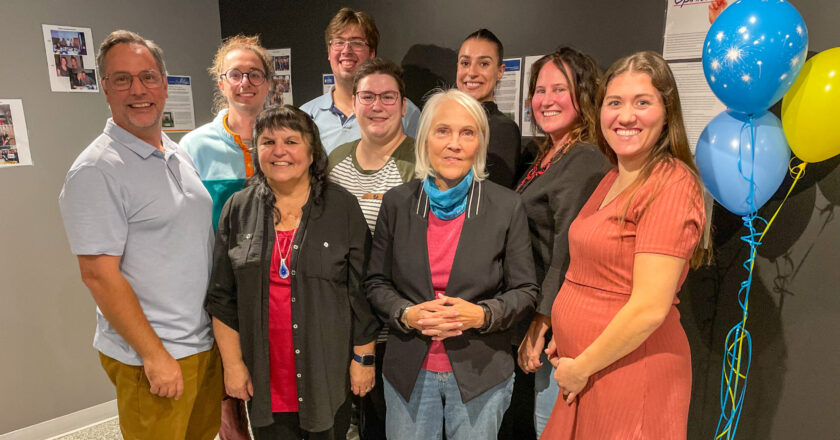
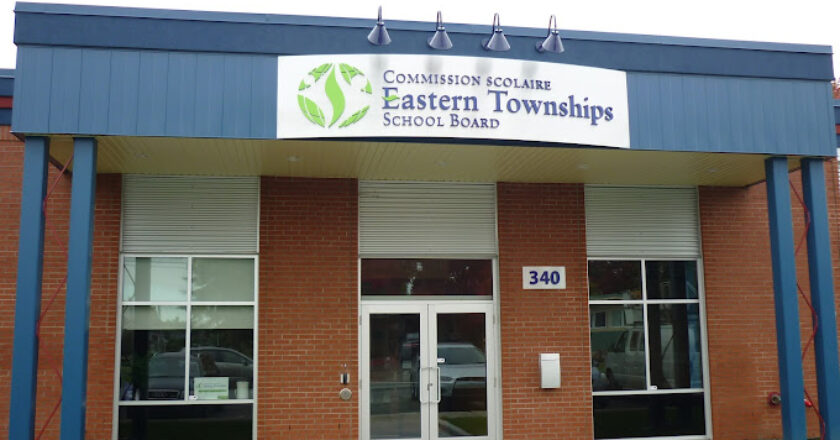
Martinville resident Mary-Ellen Kirby returns as our region’s commissioner at the Eastern Townships School Board (ETSB), following school board elections held in the English-language system this fall. All candidates for the ETSB were acclaimed, meaning only one person was interested in running for each seat.

Community representation by election is a carefully guarded right that English-language school boards are managing to protect through major recent changes by the Quebec government. French-language schools, on the other hand, are now managed by “service centres” rather than publicly elected school boards.

Chantal Guertin

20th annual exhibition at Bury United Cultural Centre

Seventeen artists of the region packed the Bury United Cultural Centre with more than 170 artworks in a one-day art fest on October 19. The annual art exhibition is now in its 20th year, said Margaret James, president of the non-profit group running the centre.

The event was organized by a team of eight, led by Martine Staehler. She said more than 100 people visited the exhibit during the day, viewing the art, talking with the artists, and enjoying a bountiful array of homemade refreshments in the café.

Some artists showed a dozen or more works; others exhibited a select few. Their media and styles varied widely. Figurative paintings predominated, many dream-like. Landscapes were frequent, befitting the countryside of the Haut-Saint-François.
Accomplished watercolourist Denis Palmer of Randboro, skilled dry-pastel landscape painter Christa Kotiesen of Sawyerville, and veteran oil painter Stuart Main of Dudswell are all open-air artists working from observation.

Chantal Guertin of Bury exhibited her own stained glass works as well as those of children who participated in her mosaic workshops. One, by 12-year-old Jean-Gabriel gluing cut-glass pieces, depicted a cat in fanciful form, complete with curly whiskers.
Also from Bury, Martine Brault showed her pastels and acrylics, Patrick Boël exhibited his photos, and Rosalie Longpré and Francine Jacques showed their acrylics. Joanne Delage of Cookshire showed oils, and Clément Corriveau of East Angus offered high-definition oil paintings of bygone farm scenes.

Lucille Duhaime, formerly from Bury, now in Sherbrooke, showed oils painted from imagination; among others, farm buildings with bright red roofs. She has been creating “art naif” oil paintings for 30 years.

Muriel Fitzsimmons of Lennoxville showed watercolours and ink drawings. Anne Bergeron of Sherbrooke exhibited oils painted in relief with spatulas. Other painters from Sherbrooke were Francine Gauthier, Pauline Boudreau (oils and watercolours), Jean-Claude Breton (high-definition watercolours), and Shirley Thompson (oils).

The Centre offers an unusual exhibit space. Visitors were up-close-and-personal to the art, lined up along the aisles, on wood-panelled walls and windowsills. The sun poured through the stained glass windows of the two adjoining church buildings, casting surprising reflections over many of the works.

In 1998 when the church at 560 Main Street was closed, “it was very emotional to people who came. At the first meeting, we had a full house. We started the centre as a way to save the building,” James said. “We were told it was a big white elephant, because it had structural problems.”

Over the years, it took a lot of work to maintain the two churches ― the Bury United Church wedded to the McKenzie Chapel moved there from Gould Station. “But we saved it for them,” she said, gesturing at the bilingual crowd of artists and art lovers of all ages.

©2026 Journal Le Haut-Saint-François