Rachel Garber

Rachel Garber

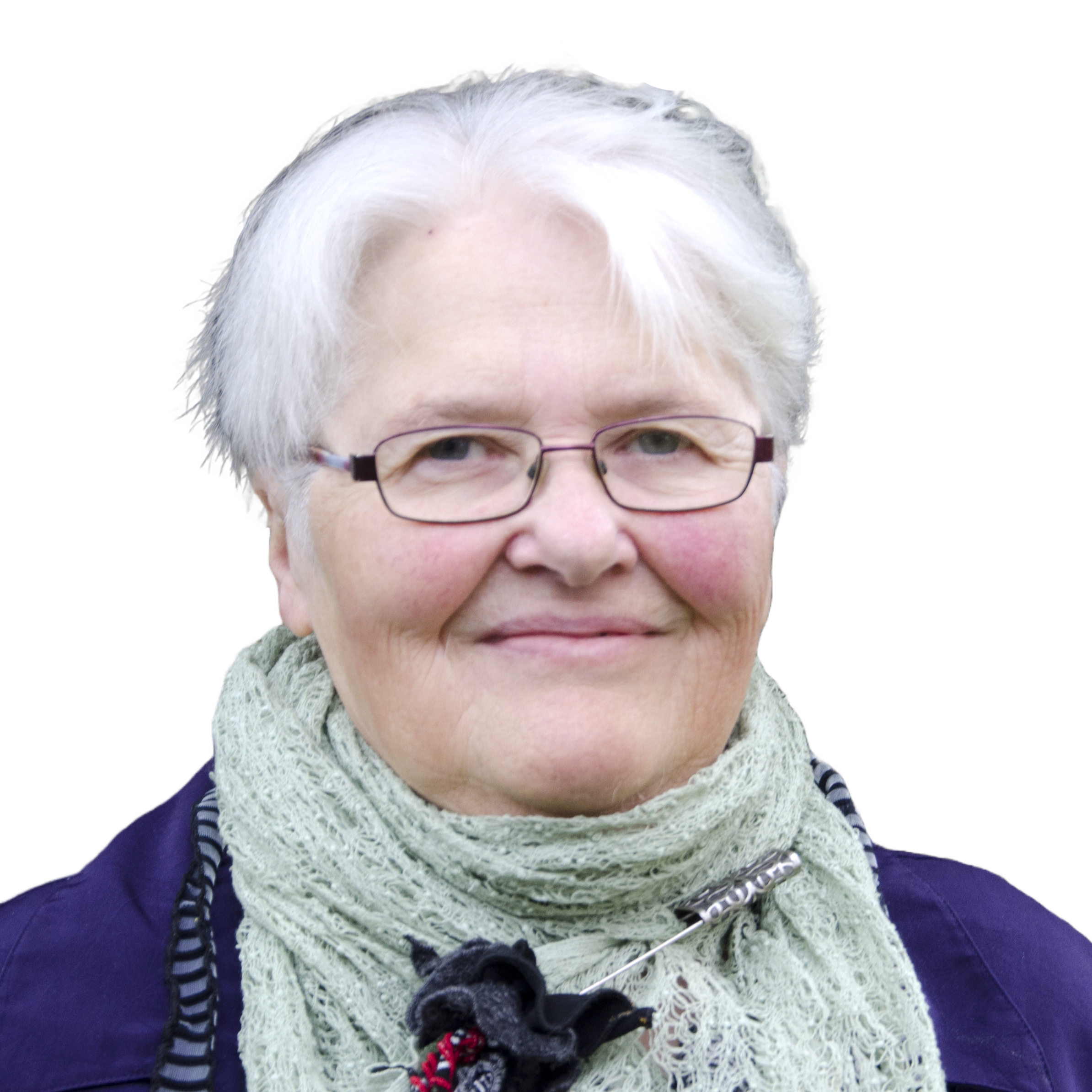
Rachel Garber writes from her home in the old hamlet of Maple Leaf, in Newport. (rawrites@gmail.com)
Rachel

Canada is IN!

During my brief abode in Toronto some 50 years ago, I was struck by how American many Torontonians were, or aspired to be. At work I heard tales of weekend trips across the border, and trying to lose the «eh?» and other telltale Canadianisms in their speech.

Having grown up in the U.S. and then lived abroad, I valued my Canadian identity. That’s likely part of the reason I ended up in Quebec. Because, it turns out, the French fact is a major trait of that identity, more so than many realize.

Look, we waved past Flag Day two weeks ago. It’s a passage of more than usual note, as we collectively strengthen our Canadian spine against threats from south of the border. Even Premier Legault is sounding particularly Canadian these days.

But did you realize the Maple Leaf came to us from French Canada? In fact, both the flag and the national anthem have their origins in Quebec.

I used to play pétanque ― the French version of lawn bowling ― next to the Centre culturel Calixa Lavallée in Montreal. I had no idea Calixa had composed the music for “O Canada”, a poem written by Adolphe-Basile Routhier. It was first performed in 1880, in Quebec City at a banquet marking Saint-Jean-Baptiste Day and honouring the Congrès national des Canadiens français. Only in the 1900s did it acquire an English translation.

Back to the Maple Leaf. In 1834 the Société Saint-Jean-Baptiste was founded and adopted the maple leaf as its emblem; two years later Le Canadien newspaper called it the emblem of Lower Canada. After that, it was used on publications, on pennies, and in the last decades of the 19th century on all Canadian coins. It bedecked Canadian military uniforms, and finally, in 1965, after a great flag debate, it rose to adorn the official flag of Canada. This flag I always wore visibly when I travelled abroad, to make sure I was not mistaken for an American. (Canada: friendly; U.S.: domineering.)

It’s in the U.S. where I should have displayed the Maple Leaf―it seems our Canadian identity, no matter our origins or languages, needs reiterating to the elephant south of us as it stirs in its sleep.
“What will be the result of our present unsettled relations with the neighbouring republic, it is very difficult to say. The government is composed of such unprincipled men, that to calculate on it by the ordinary rules of action would be perfectly absurd” (gutenberg.org).
That quote, my friends, came from Major-General Sir Isaac Brock, hero of the War of 1812, a war started by the U.S., and which united Canada like never before.
Here we go again!

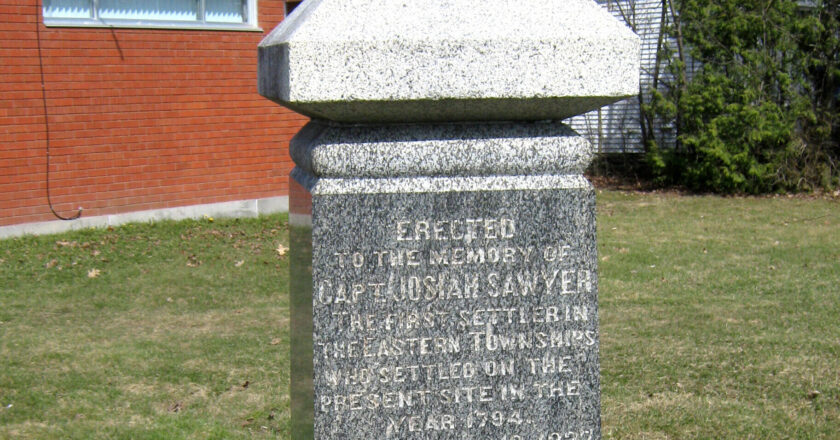
Josiah Sawyer Memorial 2013

To join or not to join : U.S. & Canada; Sawyer’s head & body

This memorial stone was originally the base of the Josiah Sawyer statue.

I received a very astute question about my last Rachel Writes piece, « Josiah Sawyer’s Head. »
Henry Musty noted, « The speech referred to ‘the union of the flags and anticipated the time when the two great countries would in reality be one.’ Did you time this article just before Trump takes over? » he asked.


In fact, I penned that column in December, not so long after Trudeau visited Trump (November 30), sparking an avalanche of Trump’s « jokes » about annexing Canada. While reading the 1901 newspaper report about the unveiling of the Josiah Sawyer statue, I noted the litany of appeals by Josiah Sawyer’s American descendants for Canada and the United States to join forces. Yes, it reminded me of the current kerfuffle.


What goes around, comes around. Not just in 1901, but other times too. When I was a high school senior in Virginia, I heard Canada mentioned exactly once. One of the students asked, « When do you think Canada will join the United States? »


The teacher wisely countered, « What could possibly motivate them to do that? »
Not much. Worlddata.info offers dozens of reasons why Canadians would want to remain « friends with benefits, » rather than moving in with the U.S. Those are the words of Mark Carney on a recent appearance on The Daily Show with Jon Stewart.

I received another intriguing response from Sawyerville history connoisseur Daniel Bousquet, about the statue of Josiah Sawyer. On some points, he agrees with Sharon Moore and Jack Garneau: The statue is not a likeness of Josiah himself, and it was vandalized twice. But he has more to say.
« Actually, the statue was moved twice before it was vandalized, » he wrote. « When the William Sawyer house was sold, the new owners did not want the statue on their property, so it was moved to the Sawyer Brook Cemetery. » He sent me photos to prove it.


As early as 1935, a newspaper clipping says that Sawyerville Women’s Institute members petitioned the town council to move the monument « now in the Sawyer Brook Cemetery » to a « more prominent place on the Town Hall lot. »


Alas, in 1940 the statue was still in the Sawyer Brook Cemetery, now quite neglected. Bousquet sent me a clipping of a 1940 letter to the editor of the Record, about « an eerie but commanding and spectacular lifesize monument high up on a wooded slope, » amidst a « terrific growth of bushes, briars, thistles and undergrowth » and among several gravestones.


Eventually, he told me, it was indeed moved to « the vacant lot where the Sawyerville post office now stands. There it was first vandalized by partyers from the Sawyerville Hotel. »
The stone that supported the statue still stands beside the Post Office, a monument in its own right, bearing the original inscription to Capt. Josiah Sawyer, « who settled on the present site. » Photos clearly show this inscription at the statue’s unveiling, across the river at the residence of William Sawyer, to the left of the United Church.


So … where exactly is the site where Josiah Sawyer settled? Likely not beside the post office.
And where is the statue’s body? Bousquet suggests it could be lying hidden in the bushes, snowbound. Come spring, I’ll be on the lookout for it!
Rachel Garber is editor of the Townships Sun magazine and writes from her home in the old hamlet of Maple Leaf, in Newport.

Josiah Sawyer Statue

Josiah Sawyer’s Head

Josiah Sawyer Statue

I read all about it in The Sherbrooke Examiner of September 30, 1901.
« GREAT DAY FOR SAWYERVILLE. A Monument to Early Settlers Unveiled. ADDRESSES WERE DELIVERED BY PROMINENT SPEAKERS. Special to the Examiner. »
This, the longest article on the front page, tells how a statue was erected in Sawyerville in honour of its first settler.


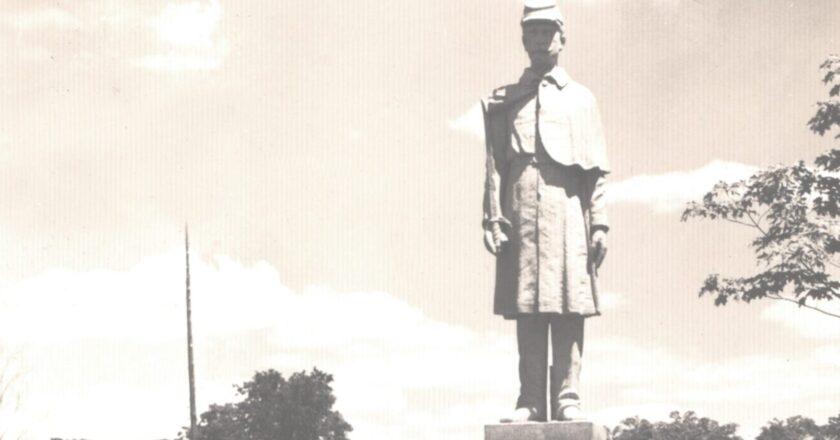
I’m on a quest for information because of a unique photo John Mackley unearthed in the Townships Sun archives. He found a tiny negative sheet measuring 2.25 by 3.125 inches, a glossy sepia print the same size, and a cropped black-and-white glossy version, 3 x 4.5 inches, with scalloped edges, indicating it was probably printed in the 1940s or 50s.

It shows a statue of a soldier, one hand holding a sword. Its inscription reads, « Erected to the memory of Capt. Josiah Sawyer, the first settler in the Eastern Townships who settled on the present site in the year 1794, who died Mar 10 1837 in the 81st year of his age. »


That’s the who, but what are all the other details. Where is the statue today?
The Examiner article describes the unveiling of the statue on the property of Josiah’s descendent, William Sawyer. First, an ode to the wonderful weather, verified by the cumulus clouds and sunny scene in the photo. Crowds from «the surrounding country,» come to pay tribute «to the first settlers of the township of Eaton, who were the first settlers in the Townships east of lake Memphremagog.»
The statue stood « wrapped beneath the folds of the Union Jack, with the Stars and Stripes close by its side, fastened to the same cord, apparently signifying the strong chord of national friendship that binds our two great countries together. »


Rev. W.P. Boshart led opening devotions. The « chairman » (William Sawyer, I presume) told about « starting the settlement of this beautiful and productive region. » Then Lyman Alger of Stewartstown, N.H. (across the bridge from Beecher Falls, VT), praised the settlers, the men’s character, their privations, « and especially to the courage and energy of the women, who feared not the difficulties of pioneer life. »


After « a most excellent lunch » in the basement of the nearby Methodist Church (on the site of the United Church which burned down in 2006), came the real business of the day: the unveiling of the statue.


Another descendent of Josiah Sawyer, The Honorable Willis Sawyer of New York City did the honours, drawing the cord to reveal the statue. The base was of St. John’s granite, measuring one foot eight inches by three feet high. A life-size statue stood on it, carved from granite from the Barrie, Vermont, quarry.


In his speech, he « referred to the union of the flags and anticipated the time when the two great countries would in reality be one. » Then the Citizens Band played « The Maple Leaf, » the « Star Spangled Banner, » and « God Save the King. »


Eight additional speeches rounded out the ceremonies.
This article tells me the Sawyer family wanted very much for Canada and the United States to be united. In fact, I recall from Bernard Epps’s The Eastern Townships Adventure that Josiah Sawyer was definitely not a Loyalist. He was born in Massachusetts and had joined the Continental Army and fought against the British at Bunker Hill and on Long Island.


But where is the statue now? I phoned Sharon Moore of the Eaton Corner Museum. She tells a horrific story of the statue’s adventures. It was vandalized twice. Once it was dumped in the pond at the bottom of the Lindsay property, retrieved and put in the old fire hall. Then it was vandalized again, and damaged beyond repair. Only the head remains. It is in storage in the Eaton Corner Museum.
But the head is not, she says, the likeness of Josiah himself. « Jack Garneau will tell you that! »
Jack Garneau confirms he’s seen identical statues in several places in New England.


Indeed, in The Eastern Townships Adventure, I read that Josiah Sawyer had « met with an accident when young which turned his nose round on one side. » I zoom in on the photo of the statue, and under the shadow of his military cap I see a perfectly straight nose and a hefty Hungarian moustache.
Happy New Year! And do join us for more photo detective adventures (See « Photo Detective Challenge » in Rachel’s Agenda.)

ACTU-Rachel

Endings & Beginnings

The Townships Sun used to publish books under the “Sun Books” label. Some four decades later, we still get queries about long-out-of-print books. A number of them are by Bernard “Bernie” Epps, who hailed from Bury between the ‘60s and ‘90s.

For example, two books, Tales of the Townships (1980) and More Tales of the Townships (1985), were true stories told by a master storyteller, both published by Sun Books.

Other books abounded. There was Pilgarlic the Death (1967). Sheer fiction. Then The Outlaw of Megantic (1973), non-fiction, about Donald Morrison of Milan, near Scotstown, but brought to life by Epps’s extraordinary skill. He wrote prolifically, and his major source was Townships history.

“History isn’t boring; historians are boring,” Epps wrote in his introduction to The Eastern Townships Adventure. He’d likely deny being a historian himself. His books are full of stories. He was a colourful writer who was also a rigorous researcher.

“His stories of the characters and events and intrigues that shaped the early years of the Eastern Townships are anything but boring. They are lively and interesting and they help to bring the past back to life,” commented Matthew Farfan, executive director of the Quebec Anglophone Heritage Network.
So now, in the midst of a postal strike, the Townships Sun is going back to its roots, launching the newly published two-volume set of Epps’s The Eastern Townships Adventure. In mid-November, the editorial team―Jody Robinson of the ETRC, Angela Leuck of Shoreline Press, and myself―finished proofreading Volume 1 and then Volume 2, and okayed the presses to start.

We counted the days on our fingers. Would the books be printed on time for the December 1st launch? It was a rocky end of the road and simultaneous beginning of a new one.

Well, that’s also the fitting theme of the December/January Townships Sun, endings/beginnings―those of the universe, of the earth, of nature, of the year, of humans.

For example, Peter Moliner MD writes about end-of-life issues and need-to-know nuggets about navigating the health-care system. Adele Ernstrom writes about living through the creation of the atom bomb, and Noémi Blom writes about what she calls “the fourth trimester,” a new mother’s life after giving birth.

Because of the mail strike, print subscribers will receive a pdf of this issue by email. Then the print version will follow after the mail strike ends. For details, check TownshipsSun.ca. Wishing you a kind-hearted holiday season. Have courage.

Rachel Garber

Need to vent?

I hope you’re not too disappointed. I decided against using this space to vent about the American elections. Or Canadian politics. But if you feel the urge, read on.

Mental Health Resources, in English
A new 28-page Guide to Mental Health Resources in Estrie is now available from Mental Health Estrie (MHE), in partnership with Vent Over Tea (VOT). The free Guide is available in English, in either print form (to get yours, email projects@mentalhealthestrie.com) or in digital form (download it from mentalhealthestrie.com/Resources/). While you’re there, I suggest you check out MHE’s other resources and events, offered in English for residents of the Estrie region.

The Guide is a great idea. In community surveys, Townships English speakers have long said that one of their greatest barriers to receiving health services is not the language of service; it’s learning a service exists and knowing how to access it.

Looking at the Guide, I am surprised by the variety of services described. It lists 18 different 24/7 emergency numbers! It describes various access points for the local health care system. It identifies resources offered by local non-profit groups and Quebec-wide associations.

One that was new to me: Vent Over Tea is a province-wide service that matches persons who need to talk with a trained volunteer active listener. The two meet in a café, and the volunteer commits to listen without judgement. It’s free; you each pay for your own beverage, be it tea or coffee.
VOT was created by two students who were frustrated over the lack of accessible mental health resources. The idea is to « provide a casual, confidential and non-judgmental outlet for members of the community who simply want to talk to someone outside their family or social circle, » I read at VentOverTea.com.
Hmm. I wonder now, what would I vent about?


HUGS For Persons Who Don’t Have a Home
Mental Health Estrie has another project, the annual HUGS campaign. From November to March, MHE accepts donations of NEW Hats, Underwear, Gloves, Socks, Scarves, and other warm articles of clothing. MHE gives these new winter clothes to local resources that help people experiencing homelessness. Items can be donated at MHE’s office, 3355 College in Lennoxville, Monday to Thursday, 9 a.m. to 4:30 p.m. Online donations are also accepted at mentalhealthestrie.com. For information, contact projects@mentalhealthestrie.com or 819-565-3777.

Chantal Guertin

20th annual exhibition at Bury United Cultural Centre

Seventeen artists of the region packed the Bury United Cultural Centre with more than 170 artworks in a one-day art fest on October 19. The annual art exhibition is now in its 20th year, said Margaret James, president of the non-profit group running the centre.

The event was organized by a team of eight, led by Martine Staehler. She said more than 100 people visited the exhibit during the day, viewing the art, talking with the artists, and enjoying a bountiful array of homemade refreshments in the café.

Some artists showed a dozen or more works; others exhibited a select few. Their media and styles varied widely. Figurative paintings predominated, many dream-like. Landscapes were frequent, befitting the countryside of the Haut-Saint-François.
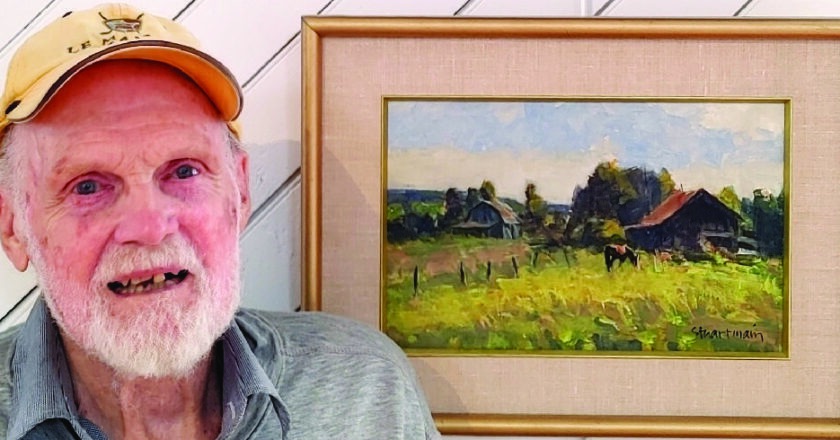
Accomplished watercolourist Denis Palmer of Randboro, skilled dry-pastel landscape painter Christa Kotiesen of Sawyerville, and veteran oil painter Stuart Main of Dudswell are all open-air artists working from observation.

Chantal Guertin of Bury exhibited her own stained glass works as well as those of children who participated in her mosaic workshops. One, by 12-year-old Jean-Gabriel gluing cut-glass pieces, depicted a cat in fanciful form, complete with curly whiskers.
Also from Bury, Martine Brault showed her pastels and acrylics, Patrick Boël exhibited his photos, and Rosalie Longpré and Francine Jacques showed their acrylics. Joanne Delage of Cookshire showed oils, and Clément Corriveau of East Angus offered high-definition oil paintings of bygone farm scenes.

Lucille Duhaime, formerly from Bury, now in Sherbrooke, showed oils painted from imagination; among others, farm buildings with bright red roofs. She has been creating “art naif” oil paintings for 30 years.

Muriel Fitzsimmons of Lennoxville showed watercolours and ink drawings. Anne Bergeron of Sherbrooke exhibited oils painted in relief with spatulas. Other painters from Sherbrooke were Francine Gauthier, Pauline Boudreau (oils and watercolours), Jean-Claude Breton (high-definition watercolours), and Shirley Thompson (oils).

The Centre offers an unusual exhibit space. Visitors were up-close-and-personal to the art, lined up along the aisles, on wood-panelled walls and windowsills. The sun poured through the stained glass windows of the two adjoining church buildings, casting surprising reflections over many of the works.

In 1998 when the church at 560 Main Street was closed, “it was very emotional to people who came. At the first meeting, we had a full house. We started the centre as a way to save the building,” James said. “We were told it was a big white elephant, because it had structural problems.”

Over the years, it took a lot of work to maintain the two churches ― the Bury United Church wedded to the McKenzie Chapel moved there from Gould Station. “But we saved it for them,” she said, gesturing at the bilingual crowd of artists and art lovers of all ages.

Exposition d’art au Centre culturel de Bury

Dix-sept artistes de la région ont rempli le Centre culturel de Bury avec plus de 170 œuvres d’art lors d’une journée de festival artistique le 19 octobre dernier.

L’exposition d’art annuelle en est maintenant à sa 20e année, a déclaré Margaret James, présidente de l’association à but non lucratif qui gère le centre.

L’événement a été organisé par une équipe de huit personnes dirigée par Martine Staehler qui a dit que plus de 100 personnes ont visité l’exposition au cours de la journée, admirant les œuvres, discutant avec les artistes et dégustant un large éventail de rafraîchissements faits maison au café.

Certains artistes ont présenté une douzaine d’œuvres ou plus, d’autres en ont exposé quelques-unes choisies. Leurs médias et leurs styles étaient très variés. Les peintures figuratives prédominaient ; certaines étaient oniriques. Les paysages étaient fréquents, dignes de la campagne du Haut-Saint-François.

L’aquarelliste accompli Denis Palmer de Randboro, la paysagiste Christa Kotiesen de Sawyerville, experte en pastel sec, et le peintre à l’huile chevronné Stuart Main de Dudswell sont tous des artistes qui œuvrent en plein air à partir de l’observation.

Christa Kotiesen avec deux de ses exquis paysages au pastel sec.

Chantal Geurtin de Bury a exposé ses propres pièces de vitrail ainsi que ceux des enfants qui ont participé à ses ateliers de mosaïque. L’une d’entre elles, réalisée par Jean-Gabriel, 12 ans, qui a collé des morceaux de verre taillé, représentait un chat de forme fantaisiste avec des moustaches bouclées.

Martine Brault, également de Bury, a présenté ses pastels et ses acryliques ; Patrick Boël a exposé ses photos ; Rosalie Longpré et Francine Jacques proposaient leurs acryliques. Joanne Delage de Cookshire a présenté des huiles, et Clément Corriveau d’East Angus a offert des peintures à l’huile haute définition, illustrant des scènes de sur la ferme d’autrefois.

Lucille Duhaime, anciennement de Bury, maintenant à Sherbrooke, a présenté des huiles peintes d’après son imagination, notamment des bâtiments de ferme aux toits rouge vif. Elle crée des peintures à l’huile d’« art naïf » depuis 30 ans.

Muriel Fitzsimmons de Lennoxville exposait des aquarelles et des dessins à l’encre. Anne Bergeron de Sherbrooke nous donnait de voir des huiles peintes en relief à la spatule. D’autres peintres sherbrookois exposants étaient Francine Gauthier (acryliques), Pauline Boudreau (huiles et aquarelles), Jean-Claude Breton (aquarelles haute définition), et Shirley Thompson (huiles).

Le Centre offre un espace d’exposition inhabituel. Les visiteurs ont pu admirer de près les œuvres alignées le long des allées, sur les murs lambrissés et sur les rebords de fenêtres. Le soleil entrait à flots à travers les vitraux des deux églises adjacentes, projetant des reflets surprenants sur de nombreuses œuvres.

En 1998, lorsque l’église du 560, rue Main, a été fermée, « les gens qui sont venus étaient très émus. Lors de la première réunion, nous avions une salle comble. Nous avons créé le centre pour sauver l’édifice », a déclaré Mme James. « On nous a dit que c’était un gros éléphant blanc, car il y avait des problèmes structurels. »

Au fil des ans, il a fallu beaucoup de travail pour entretenir les deux églises ― l’église unie de Bury, associée à la chapelle McKenzie qui a été déménagée depuis la Station Gould. « Mais nous l’avons gardée pour eux», a-t-elle déclaré, en désignant la foule bilingue d’artistes et d’amateurs d’art de tous âges.

Rachel

THRIFTING

We have such a glut of stuff. Despite that, it’s hard to resist accumulating more.
As my sister used to say, « Things just glom onto me! »

Remember when « re-gifting » became a thing, especially around holidays where giving is one of the principal rituals? That was the beginning of our enlightenment, so to speak. We simply had too much stuff, and many of the items we could not use and maybe didn’t really like … but couldn’t bear to hurt the feelings of the giver. Re-gifting was a relief.

For me, this is personal. My mother was a teacher. Little treasures, little glass doodads, rained onto her desk every Christmas, and she kept them faithfully on display.

I had to dust them.
Then came the minimalist movement: get rid of everything and keep only the bare minimum needed for daily living.

« Comptoirs familials » are wonderful places to lighten our burden, bit by bit, by dropping off a box of things. They’re also great places to acquire more stuff, for bargain prices and for only a sliver of guilt.

Newcomers to our fair « forgotten » Townships―the Haut-Saint-François and points east―may not be familiar with our hidden economy. It’s not quite under the table; it’s on them.

I’m talking about the practice of « thrifting, » or shopping at thrift shops, flea markets, discount stores, and, most of all, comptoirs. Thrifters revel in the joy of the hunt, the triumph of getting something for almost nothing, finding something really unusual, and most of all, making short ends meet.

A relatively new Haut-Saint-Françisan, Xania, asked me where she could « thrift, » and I introduced her to the comptoir in Cookshire, in the basement of the big Catholic church just across the street from Korvette’s. That’s the Église Paroisse St-Camille, 170 Principale East.

Go down the hill, turn into the driveway just before the church building, I told her. Go around the back, and park along the right side of the church, near the front. The entrance to the comptoir is right there. It’s open Wednesdays from 8:30 a.m. to 3 p.m. They’ve got everything―kitchen stuff, clothes, toys.

A little further east is a lesser known comptoir, at the Centre des Loisirs, 529 Main Street in Bury. It’s open 9 a.m. to 4 p.m. on Tuesdays and Wednesdays. They have everything too, but especially clothes―for men, children, babies, women. And linens―sheets, blankets, pillows, tablecloths.

They have doodads, too!
Do you know more great places to go thrifting in our area? Please let me know at rawrites@gmail.com.

Rachel Garber is editor of the Townships Sun magazine and writes from her home in the old hamlet of Maple Leaf, in Newport.

Rachel Garber

Gould was scammed

Out of the skies of cyberspace has emerged five nifty videos about our forebears here in the Townships. Right in the centre of the fivesome is Gould Station in Bury.

The videos belong to « Raising Spirits, » a series of shorts (14 to 20 minutes) « exploring the cemeteries, crossroads, and vanishing places of rural Quebec, » in the words of the Quebec Anglophone Heritage Network, the series’ promoter. They are easily found at youTube.com/@QAHNCanada.

Closest to home is the third film in the series, about Gould Station, featuring family historian, Rebecca MacMillan. This once prosperous hamlet has a sawmill and train station, but today it has almost disappeared.

One of Gould Station’s special features is that it contains the Epps home, where Bernard Epps lived and wrote many of his Eastern Townships books. Among them was The Outlaw of Megantic: One Man’s Fight Against Injustice, and another was The Eastern Townships Adventure, an ambitious work that braids together stories of the generations of Townships explorers and settlers before 1900.

Heads up : A brand new edition of The Eastern Townships Adventure is being published by the Townships Sun in partnership with the Eastern Townships Resource Centre and Shoreline Press. The Bury Historical and Heritage Society is hosting its launch on Sunday, December 1st, at the Bury Armoury.

It’s just a bit ironic that Epps does not tell the intriguing story of Gould Station itself in this book, but we have QAHN’s video to do that. In short, Gould was scammed. The railway promised the village it would have its own station if it paid for the tracks. Gould paid up, but because of the terrain, the company situated its station about 10 kilometres away from the village―in Bury! So in 1875, when the railroad was built, thus was born Gould Station—in the municipality of Bury.

The five films were produced this summer under the leadership of historian Heather Darch. They begin with Episode 1, Malmaison, telling the story of this hamlet in Stanbridge Township, once the seigneury of James McGill.

The second episode, Heathton, is about this crossroads in Barnston Township near Stanstead, located along the Stagecoach Road.

The fourth, Magoon’s Point, shows the ruins of a community near Georgeville on Lake Memphremagog, once renowned for its lime production.

In the final episode, Townships writer Maurice Crossfield tells a story about the Lost Nation, a place that no longer exists except for a tiny overgrown graveyard in the middle of a woods in West Bolton, in Bolton Township.

Rachel Garber

Girls—washing dishes. A girl and her orange shirt.

My sister the storyteller was seven years older than I was. Doing the dishes was our job. She would wash; I would dry.

Looking back at my last column, I see I wrote about bad feelings between me and the act of washing dishes. Anger. Resentment. But today, I write about good feelings. Put my hands in dishwater, and I feel a sense of solidarity with the many girls and women around the world whose responsibility it is to make food and wash dishes. I remember my sisters. I think stories.

In those days, when I was eight or nine, the rectangles surrounding us were windows rather than screens. And books.

My preferred occupation was reading a book. Spending good reading time on the mindless repetition of doing dishes seemed a waste. My sister got me to help her by telling stories while we worked.
The one I recall, with many chapters, was about the Alphabet family. The father was Andrew for A, the mother was Barbara for B, the oldest brother was Caleb for C, and so on―13 children, all the way to Baby O.

Every dishwashing session, my sister required me to recite the name of each Alphabet family member, and recap the ending of the previous instalment. Only then would she start inventing a new chapter in the family’s adventures.

When I got enthralled in the story, my hands would stop moving. When that happened, my sister’s mouth would stop moving―until I quickly picked up another plate and began wiping again.
When my sister left home, I was on my own. I’d stand hours with my hands in the dishwater, reading a book propped open on the windowsill above the sink. My strategy was to string out the job as long as possible, to avoid the next job. I’d finish just before my mother entered the kitchen to make the next meal.

Some might think I was lazy, but I worked hard at my stories.

Stories are powerful. Think of Phyllis Jack Webstad’s story. She wrote a children’s book telling what happened when authorities took her, at age 6, to a residential school. She was wearing a new orange shirt her grandmother had given her. On her arrival, it was stripped from her, along with her other clothes, and never returned.

The orange shirt story is a strong reminder of the mission of the residential school system to destroy the children’s Indigenous identity. The story became a focal point in raising awareness of the atrocities of the residential school system in Canada. This awareness has been hammered home in recent years by the discovery of more than 1,000 unmarked graves surrounding former residential schools.
Webstad’s story led to September 30 being named as the National Day of Truth and Reconciliation, or
Orange Shirt Day. Her story lets readers identify with her, to feel what she felt as a six-year-old. To empathize.

It is said that Truth must come first in order for Reconciliation to happen. I agree. But so must empathy. It is one thing to know what happened to someone else; it is another to understand how they felt. A story lets us imagine ourselves inside their experiences and to feel their feelings, at least for a few minutes.
Today when I am washing dishes, I like to listen to memories in my head, like an inner radio. My hands swing in rhythm, and my mind flies far away on the wings of a story.
In my mind, my sister the storyteller is beside me still. We let the dishes air dry.

Rachel Garber

A man—washing dishes!

Visiting my family reminds me of my love-hate relationship with doing the dishes.


Flashback 1:
Angry mother

In our old farm kitchen, my father stood at the sink, elbow-deep in dishwater.
Supper was over. Of the seven children, the older ones were in the barn doing the evening chores. My mother was upstairs, putting the littlest ones to bed.
This was before my time―I was the eighth child. My sister told me this story. She was the middle one, hiding around the corner, watching and listening.
Grandmother―my father’s mother―came into the kitchen behind him. She was visiting from Virginia.
“John! What are you doing? A minister of the Gospel washing dishes! Shame on you! Why isn’t your wife doing that? A man―washing dishes!”
Hearing about it as a teenager, after both Grandmother and Father were dead and buried, I sucked my breath in sharply.
“What did he do? What did he say to her?”
“Nothing. He didn’t even look at her. He just kept on washing the dishes.”
We sit together in silence, imagining the scene. Our father, the ultimate authority in our young lives, washing dishes. His mother, whipping him with her angry words. My sister, the secret witness.


Flashback 2:
50-50 not always fair

We agreed our relationship would be an equal partnership, fifty-fifty. But what did that mean, exactly? What if we both hated washing dishes, what then?
In his previous marriage, he never did the dishes. They had a dishwasher. So we must too, he said. The cost of the machine must be split fifty-fifty, even if he earned twice as much as I did. Was that fair?
I closed my mouth and acquiesced, feeling lucky to be with a man who didn’t expect me to do all the housework alone.
Our evenings were governed by a rigid routine. Supper, we took turns preparing: He, one day; me, the next; my son on day three. The person who made supper loaded the dishwasher.
We never did any of this together. It got done, but it was never fun.
He died some 20 years later. One of the first things I did? Get rid of the dishwasher. I was living alone then, and just cooking for myself.
It was a relief to be one hundred percent of my partnership.


Flashback 3:
Boys’ toys

My antipathy for dishwashers of the mechanical kind dates way back. I guess I was in third grade when our reading book fed us a story that confused and enraged me.
A brother and a sister had a certain rivalry, the story went. He thought boys were the bees knees. Boys had all kinds of new machines that girls were not allowed to use. A lawn mower. A tractor and wagon. A motorcycle.
Sister was jealous.
Then she got her own machine―a dishwasher!
Now Brother was jealous, but Sister wouldn’t let him touch it. Only girls were allowed to use it, she insisted.
This was unbearable for Brother. One afternoon when Sister wasn’t around, he sneaked into the kitchen to try out the dishwasher. But woe! When he started the machine, a great clatter arose and scared him out of his wits.
Sister heard the noise and came running. With an air of calm triumph, she opened the dishwasher and discovered a loose cup rattling around among the plates.
Moral of the story: Only girls were allowed to operate dishwashers, and it was a privilege to do so, a privilege denied to boys, whose birthright was, however, all kinds of other motorized toys.
I seethed in silence. I remember standing in the kitchen facing a pile of dirty dishes, full of rage.
Rachel Garber is editor of the Townships Sun magazine and writes from her home in the old hamlet of Maple Leaf, in Newport.

BuryCultural

Le Centre culturel de Bury lance sa nouvelle saison

Des projets de folk, de blues, de cabaret jazz, d’ateliers d’art et possiblement de café faisaient partie des nouveautés proposées lors du 5 à 7 de lancement de la saison d’activités du comité du Centre culturel de Bury, le 31 août dernier. Plus de 50 personnes, pour la majeure partie de jeunes adultes, ont pu profiter d’un généreux buffet.

Côté ancienneté, on retrouve un « magnifique immeuble », selon les mots de Martine Staehler, membre du comité de nouvelles activités. L’assistance était installée selon une formule bistro dans la chapelle Mackenzie, bâtie en 1910 à Gould Station et déménagée en 1958 pour devenir l’école du dimanche de la Bury United Church. L’église de Bury a été construite en 1898. Ses deux petits bâtiments en forme de L sont revêtus de contreplaqué de bois à l’intérieur.

En 1998, un comité dirigé par Margaret James a fondé le Centre culturel de Bury, reconnu pour ses performances artistiques. À présent, le nouveau comité promet une programmation beaucoup plus dynamique pour tous les âges.

L’assistance a applaudi lorsque Mme Staehler a décrit les événements à venir : un spectacle blues-folk lors des Journées du patrimoine religieux; un cabaret jazz avec le Trio du Haut le 27 septembre; poésie et ateliers de dessin le 28 septembre; une soirée artistique réunissant une quinzaine d’artistes locaux le 19 octobre; le Migratory Roots Festival de Literacy in Action incluant cuisine collective et artisanat le 31 octobre; des ateliers de danse et de musique les 15 septembre, 6 et 27 octobre (au Victoria Hall le 8 novembre); et des ateliers d’artisanat les 22 septembre et 13 octobre (à la bibliothèque de Bury le 1er décembre).

Mme Staehler dit qu’elle était contente de voir tant de jeunes impliqués. « Je crois qu’ils ont besoin d’une place pour se réunir », a-t-elle souligné. « Et c’est un si bel endroit. »

Elle a reconnu le soutien de la population locale, autant bénévoles que participants, de même que le soutien financier. Le comité prévoit faire des demandes de bourses pour ses activités et rénover l’immeuble en l’isolant en vue de la saison froide. Martine Staehler espère ouvrir un café en mai 2025, si elle reçoit le soutien adéquat.

Juste avant le dessert, l’assistance s’est tue alors que Chloé Fortier s’est mise à chanter et à jouer de l’autoharpe en entonnant « I heard a story… » Ensuite, Sandy Lalancette a donné une interprétation bien sentie de la traditionnelle Mes sabots, accompagné de chants et de claquements de main. Les deux performances ont généré des applaudissements nourris.

BuryCultural

Bury’s United Cultural Centre launches new season

Plans for folk music, blues, a jazz cabaret, arts workshops, and maybe a café were “something new” at a 5 à 7 on August 31st, when the new Cultural Centre committee launched a new season of activities. More than 50 people enjoyed a bountiful buffet, including a strong contingent of young adults.

“Something old” is the “magnificent building,” in the words of Martine Staehler, who chairs the new activities committee. The crowd was seated café-style in the Mackenzie Chapel, built in 1910 in Gould Station, and moved in 1958 to become the Sunday School space for the Bury United Church. The Bury church was built in 1898; the two small buildings form a unique L-shape, with intricate wood panelling lining the interior.

In 1998, a committee led by Margaret James formed the Bury Cultural Centre, known for its art shows. Now, the new committee promises a much more active program for all ages.

The crowd applauded when Staehler described upcoming events, a Folk-Blues show as part of the Religious Heritage Days, now past; a Jazz Cabaret on September 27 with the Trio du Haut; poetry and drawing workshops on September 28; an art show with more than 15 local artists on October 19; a Migratory Roots Festival with Literacy in Action on October 31, with a collective kitchen and crafts; dance and music workshops on September 15, October 6 and 27, and at the Victoria Hall on November 8; and arts and crafts workshops on September 22 and October 13, and December 1st at the Bury Library.
Staehler said she was glad to see so many young people involved. “I think they need a place to get together,” she said. “And this is such a beautiful space.”

She pointed out their initiative needs support from local people, both volunteers and participants, as well as financial assistance. The committee plans to apply for grants for the activities, as well as to restore the building and perhaps winterize it. She hopes to open a café in May 2025, if they have adequate support.
Just before dessert, the crowd fell silent as Chloë Fortier sang and played her autoharp, beginning, “I heard a story…” Then Sandy Lalancette gave a rousing rendition of a traditional Quebec song, “Mes Sabots,” accompanied by clapping and chanting. Both performances earned enthusiastic applause.

ACTU-Rachel

SMALLPOX

Stephen Burroughs is infamous for his counterfeiting activities back in the 1790s and early 1800s. It was in the Eastern Townships, at Burroughs’ Falls among other locations. But flash forward to about 1835: Then almost 70, he had converted to Catholicism and was headmaster of a school in Three Rivers, as Trois-Rivières was then known. A visitor reported, “I inquired if his health was feeble at that period of life. ‘No,’ said he, ‘but everyone then said I should be hanged before I was forty!’”


Indeed, Burroughs barely escaped hanging after a volatile life that included impersonating a minister, posing as a ship’s surgeon, and functioning as a revolutionary soldier, a schoolteacher, a rake, a confidence man, and a counterfeiter. Fed up with the rampant counterfeiting of American bills in the Townships, the Vermont legislature sent a delegation to the Governor of Lower Canada, asking for the death penalty for counterfeiters. After several arrests and escapes, Burroughs was captured and found guilty at last, but was “pardoned on giving heavy bonds for his future good conduct.”

All this, Bernard Epps recounts in detail in his An Eastern Townships Adventure, Volume 1. Epps leaned on Burroughs’ own memoir, newspaper reports and personal correspondence of the day. But he also tells about Stephen Burroughs’ connection with two Haut-Saint-François townships, Eaton and Newport.
The occasion was an outbreak of smallpox in the fall of 1802.
It was recorded that Burroughs “set to work with untiring energy and in almost every instance treated the disease successfully.”
Smallpox broke out again in the fall of 1810. Newport appointed a committee to watch out for any cases within the township, and to quarantine those families to prevent it spreading. The History of Eaton recorded, Epps wrote, that “when but 17 years old Mr. [Ward] Bailey was taken sick at La Baie [on the St. Francis 18 miles from Three Rivers] and was given over by his physician, when Stephen Burrows [sic] happened to come along and told them what to do and how to treat him, and brought him through all right.”


It seems Stephen Burroughs had learned a few things during his stint as a ship’s doctor (“There were directions, he explained, on all the bottles of medicine.”).
Burroughs’ story is one of many narrated in the two volumes of An Eastern Townships Adventure set to be published in December by the Townships Sun, Shoreline Press, and the Eastern Townships Research Centre, supported by the Bélanger-Gardner Foundation. Look for it!

EATON CORNER
In a former congregationalist church built in 1840, the Eaton Corner Museum at 374 Route 253 offers a permanent exhibit, “A Tale of the Townships.” Temporary exhibits in the church building as well as displays across the street in the Old Academy building include the Bill “The Glass Man” McCallum’s glass exhibit, with an added feature. Also on display are quilts and linens, a full British Home Children Display, the Bobbin Lace-Making Machine, a few artefacts from the Sherbrooke Protestant Hospital School of Nursing, and more.
During September, the Museum is open Saturdays and Sundays from 11 a.m. to 4 p.m. Info: 819-875-5256 or eatoncorner59@gmail.com.


BULWER GOLDEN AGERS
If it’s Tuesday, it’s Bulwer Golden Agers! Every second Tuesday, that is, starting September 10, from 1:30 to 4:30 p.m., at the Bulwer Community Centre, 254 Jordan Hill Road. On the agenda are card parties, carpet bowling, and a light lunch, accompanied by general friendliness. “New members are welcome,” said Peggy Grapes, who prepares the lunch.
Info: Peggy & Leigh Grapes, 819-875-3543.


CANTERBURY POTLUCK
A potluck supper is planned for the Canterbury Centre on Saturday, September 14, from 4:30 to 8:30 p.m. Corn-on-the-cob, salads, meats, desserts, and delights from the kitchens of you and your friends. Everyone is welcome; RSVP to Candace Coleman, 819-657-4661.


BROOKBURY HALL
Brookbury Hall hosts a “this ‘n’ that” garage sale on Saturday, September 14, from 9 a.m. to 2 p.m., at 571 Brookbury Road (aka Route 255). Info: Brenda Bailey, 819-884-5984.


VIACTIVE
Two bilingual Viactive groups meet Wednesdays in Sawyerville and Newport: Bring water. Wear good shoes and comfortable clothes.
The Newport group starts September 18 at 1:30 p.m., led by France Demers and Lyne Maisonneuve at the Newport Municipal Hall, 1452 Route 212, Island Brook. Info: 819-889-1340.
Sawyerville recommences at 10 a.m. on September 11 or later, depending on the availability of the space. Gérard and Denise Nault lead the sessions in the basement of the Saint-Rosaire Catholic Church, 4 Randboro Road, Sawyerville. Info: 819-889-2630.


CULTURE IN BURY

The United Cultural Centre, 560 Main Street, Bury, plans a series of music and art events, starting with a dance workshop on Sunday, September 15, at 4 to 5:30 p.m., and a crafts workshop on Sunday, September 22, from 2 to 4 p.m. On Friday, September 27, at 7:30 p.m. is a Cabaret, with a jazz show by the Trio du Haut beginning at 8:30 p.m. (bring your own drinks). On Saturday, September 28, are poetry and drawing workshops from 1 to 4 p.m. Info: Centre Culturel de Bury’s Cultural Center Facebook page.


CHURCHES
United. Sunday, September 15, Trinity United Church’s 161st Anniversary Worship Service is planned for 10:30 a.m. On September 22 at 10:30 a.m. is a service at Sawyerville United, and September 29 at 11 a.m., a joint service for all United Church communities at Lennoxville United Church, followed by a potluck lunch. Info: 819-889-2838. For pastoral care, call Rev. Spires at 819-452-3685.
Baptist. Sunday services are in French at 9 a.m. and in English at 11 a.m. at the Sawyerville Baptist Church, 33 Cookshire St. For information, please contact Pastor Michel Houle at 819-889-2819.
Anglican. A Sunday service is on September 15 at 9 a.m. at St. Peter’s Anglican Church in Cookshire. St. John’s in Brookbury is closed for the season. To find services in the deanery, check the schedule at deaneryofstfrancis.com/calendar/. Info: 819-887-6802, or quebec.anglican.ca.
Do you have news to share? Call 819-640-1340 or email rawrites@gmail.com by September 12 for publication September 25.

Eglise_St-Peters

CHURCHES GALORE

Religious Heritage has grown BIG. The Bury Historical & Heritage Society used to organize an annual one-day open house of churches in the area. Now it’s a three-day affair, the weekend of September 7-8, and 180 churches across Quebec are participating in the seventh edition of the Religious Heritage Days.


In the Haut-Saint-François, 11 churches, many that have turned museum or cultural centre, are participating. They offer a variety of tours, exhibits, and other activities. Admission is free. So here’s your tour, starting down east, then arcing back to Sawyerville.

CHALMERS OF GOULD
Chalmers Church, built in 1891, was named after Thomas Chalmers, famous Presbyterian preacher of the Free Kirk of Scotland. In the 1970s, it was moved from Route 257 to 17 Route 108, in Gould (Lingwick). Unusually clad in red brick, it is now one of three venues of the Oscar-Dhu Cultural Centre. Visitors are welcome Sunday, September 8, from 1 to 4 p.m.
CANTERBURY CENTRE
Canterbury Centre, 1095 Victoria Road (Route 214), Bury. This little white church-turned-cultural-centre with flying buttresses was built in 1896. This jewel in the crown of the Bury Historical & Heritage Society is open Saturday 12 to 4 p.m. and Sunday 11 a.m. to 3 p.m., exhibiting watercolours and drawings―landscapes, portraits, and more―by painter John Ward, born in England and residing in Lingwick.
UNITED CULTURAL CENTRE
In downtown Bury at 560 Main Street, this erstwhile church is open Friday, Saturday, and Sunday from 1 to 5 p.m. and offers guided tours, English tea, and on September 6 at 4 p.m., a musical show by Chloé Fortier. It was built in 1897.
SAINT JOHN’S
This ancient little Anglican church known as Brookbury Church, at 170 Route 255 N., in Bury―now called Batley Road―was built in the 1840s by architect John Baxter. In the cemetery surrounding it is a tombstone dated 1845. The church is open for visits on Saturday from 10 a.m. to 2 p.m., and has a Sunday service on September 8, at 10 a.m.
BISHOPTON UNITED
Built in 1899 by Milan Bishop, builder, and Oscar A. Bishop, engineer, this church at 203 Main Street, Dudswell, is in a Victorian neo-gothic style and has a distinctive bell tower and wood-panelled interior. It is open to visitors Friday and Saturday, 7 to 10 p.m., with a soloist singing at 7 p.m.
SAINT-ADOLPHE
Built in 1897, once a Catholic church, now a museum, Saint-Adolphe at 191 Principale East, Dudswell, is open Friday, 2 to 6 p.m., and Saturday and Sunday, 10 a.m. to 4 p.m. Besides the exquisite building and artefacts, it also exhibits wooden models of historical rural scenes by Louis-Emile Beauregard of Dudswell.
SAINT-LOUIS-DE-FRANCE
This imposing stone Catholic church at 166 Saint-Jean East in East Angus, built in the 1920s, has gorgeous stained-glass windows. It is open Saturday, 1 to 3:30 p.m., and Sunday, 1 to 4 p.m., with an organ concert on Saturday at 2:45 p.m. and Sunday at 1 p.m.
SAINT PETER’S
Built in 1869, this intriguing stone structure at 45 Principale West, Cookshire, is an Anglican church. Visiting hours are Saturday and Sunday, noon to 4 p.m. A Sunday service is on September 1st, at 9 a.m.
TRINITY UNITED
Built in 1860 at 190 Principale West, Cookshire, by Albert Haseltine, the Trinity United Church is open for visits on Saturday, 1 to 4 p.m. The September 1st Sunday service is at 10:30 a.m. (A Sunday service on September 8 will be 10:30 a.m. at the Sawyerville United Church.)
Also on September 8 at 2 p.m., the Trinity United Church celebrates its 161st anniversary with a concert by Jim Robinson, Sue Fowler, and Ronnie Hazeltine. Refreshments are to be served at the intermission, and, Rev. Tami Spires says, “Donations are gratefully accepted at the door.” Finally, on Sunday, September 15, the Trinity United Church’s 161st Anniversary Worship Service is planned for 10:30 a.m. Info: 819-889-2838. For pastoral care, call Rev. Spires at 819-452-3685.
EATON CORNER
In a former congregationalist church, built in 1840, the Eaton Corner Museum at 374 Route 253 offers a permanent exhibit recounting the history of Compton County. It is open Friday, September 6, from 1 to 4 p.m.
SAWYERVILLE BAPTIST
In downtown Sawyerville at 33 Cookshire Street (Route 253), the Sawyerville Baptist Church was built in 1889, and is open for visits on Saturday and Sunday from 1 to 4 p.m., with an exhibit of historical photos and refreshments. Sunday services are in French at 9 a.m. and in English at 11 a.m. Info: Pastor Michel Houle, 819-889-2819.
This Quebec-wide event is organized by the Quebec Religious Heritage Council. Info: journeesdupatrimoinereligieux.ca.
A FOOT IN TWO WORLDS
Relation entre deux mondes (Relationship Between Two Worlds) is the title of an exhibition by artist Sylvie Cadorette that offers 16 artworks inspired by experiences of six persons who immigrated to Quebec from Rwanda, Colombia, Cameroon, Italy, and Croatia. A jury selected this show as part of the International Association for Intercultural Research at Université Laval in June 2023. Now Cadorette’s art has come to the Cookshire-Eaton Art Gallery, 125 Principale West, where it is on exhibit in the Salle Suzanne-Genest until October 6. The Gallery is open Sundays from noon to 4 p.m.
BROOKBURY HALL
Brookbury Hall hosts a garage sale on Saturday, September 14, from 9 a.m. to 2 p.m., at 571 Brookbury Road (aka Route 255). Info: Brenda Bailey, 819-884-5984.
VIACTIVE
The season for Viactive is at hand, including the two bilingual groups, meeting Wednesdays in Sawyerville and Newport. Starting September 18, France Demers and Lyne Maisonneuve will lead the Newport Viactive group at 1:30 p.m., at the Newport Municipal Hall, 1452 Route 212, Island Brook. Info: 819-889-1340.
Viactive Sawyerville recommences next week, on September 4, at 10 a.m. Gérard and Denise Nault facilitate the sessions in the basement of the Saint-Rosaire Catholic Church, 4 Randboro Road, Sawyerville. Info: 819-889-2630.
Do you have news to share? Call 819-640-1340 or email rawrites@gmail.com by August 29 for publication September 11.

Stuart & Violet Main

Stuart Main, le peintre en plein air par excellence

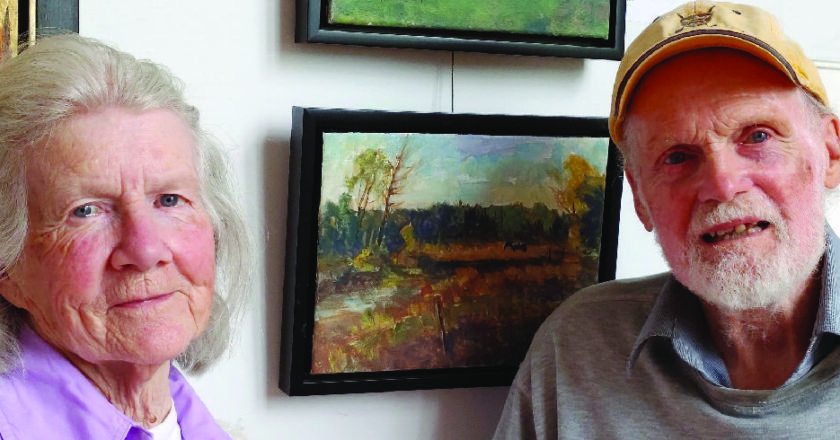
Stuart & Violet Main.

Les montagnes, les champs, les granges et surtout les chevaux occupent une place importante dans son œuvre. Il peint dans la nature, et il a la nature dans sa poche.

Je parle à l’artiste Stuart Main à la Galerie d’art Cookshire-Eaton, où lui et ses collègues Chantal Julien et Pauline Boudreau terminent une exposition à trois. Ils peignent ensemble depuis plus ou moins 25 ans.

« Il a un cheval dans sa poche, » plaisante Mme Julien. En effet, « les chevaux ne font pas ce que vous voulez qu’ils fassent. Je trouve qu’il est bien mieux de les inventer, » nous confirme M. Main.
Mais il a toutefois plusieurs années d’expérience à les peindre. Il a récemment fêté son 90e anniversaire et a commencé très tôt en tant qu’artiste.

Quand il avait cinq ans, son père, Cecil, âgé de 29 ans, est décédé de la tuberculose. Stuart avait également la tuberculose, d’abord dans les poumons, puis dans la hanche. « Les médecins ont fusionné mon os de la hanche pour que je puisse marcher, » dit-il en brandissant sa canne.


À cette époque, la tuberculose n’était pas facile à traiter et il a passé huit ans à l’Hôpital de Montréal pour enfants. « J’ai commencé à faire des dessins à l’hôpital parce qu’il n’y avait rien d’autre à faire. Sans cela, je serais probablement un grand athlète plutôt qu’un artiste médiocre, » dit-il en riant.

Mme Julien se moque. Elle trouve cette affirmation excessivement modeste, comme bien d’autres.
Après une carrière de 30 ans comme illustrateur à Montréal, utilisant un large éventail de styles, Stuart Main a commencé à peindre des paysages en 1975. Un livre de deux pouces d’épaisseur créé par sa fille Wendy en présente une centaine parmi plus de 2 000 œuvres qu’il a peintes. Son travail est disponible en ligne. Artmagazine.ca présente l’art de M. Main parmi celui de seulement cinq artistes. On peut le voir également sur Canadianclassicfineart.com et Galeriedartyvondesgagnes.com.

Principalement peintes en extérieur, à l’huile, ses œuvres mesurent moins de 16 pouces sur 20 pouces, mais sont de stature solide. Son travail au pinceau est habile et pictural, mélangeant les couleurs, sculptant des formes plutôt que dessinant des lignes. Un cheval solitaire constitue souvent un point central dans ses paysages.

Une dizaine de fois par année, il part une journée pour peindre avec Mmes Julien et Boudreau. Ils partent à 9 heures et rentrent chez eux vers 15 h 30. Il a effectué des voyages de peinture dans Charlevoix et dans d’autres régions, mais il fréquente aujourd’hui les montagnes de Stoke.

« Parfois, il faut plus de temps pour trouver un paysage que pour le peindre, » dit-il. « Souvent, nous retournons au même endroit, mais ce n’est jamais pareil. Ce sont des saisons différentes, un éclairage différent, une heure différente dans la journée. »


M. Main est un peintre de toutes les saisons. « Je les aime toutes, » dit-il. « Mais c’est l’hiver la plus facile. »Je lui pose des questions sur la peinture de la verdure. « Tout est si vert ici. Que dois-je peindre ? » Georgia O’Keefe a dit un jour à propos du nord de l’État de New York.
« Oui, mai et juin peuvent être difficiles à peindre, car tout est si vert, » admet-il. « Mais ça simplifie les choses. J’aime le vert. »

Originaire d’East Angus, M. Main revient dans les Cantons-de-l’Est en 1972 avec son épouse Violet Bennett et leurs trois enfants. Ils ont acheté une ferme à Bishopton, où ils vivent toujours, et il continue à peindre. « J’ai eu quelques contretemps en cours de route, » résume-t-il, « mais j’ai été très chanceux toute ma vie. »
Traduction par Lise-Anne Blais

Stuart Main

Stuart Main, plein-air painter par excellence

Mountains, fields, barns, and especially horses figure prominently in his work. He paints in nature, and has nature in his pocket.


I’m talking to artist Stuart Main in the Cookshire-Eaton Art Gallery, where he and his colleagues Chantal Julien and Pauline Boudreau are wrapping up a three-person exhibition. They’ve been painting together for 25 years, more or less.

“He has a horse in his pocket,” jokes Julien. Indeed, Main confirms, “horses don’t do what you want them to do. I find it’s much better to just make them up.”
But then he’s had quite a few years of experience painting them. He recently had his 90th birthday, and he had an early start as an artist.


When he was five years old, his father, Cecil, age 29, died of tuberculosis. Stuart had TB too, first in his lungs, then his hip. “The doctors fused my hipbone so I could walk.” He flourishes his cane.
In those days, TB was not easily treated, and he spent eight years in the Montreal Children’s Hospital. “I started doing artwork in the hospital because there was nothing else to do. If it weren’t for that, I’d probably be a great athlete instead of a so-so artist,” he laughs.
Julien scoffs. She finds that statement excessively modest, as would many others.
After a 30-year career as an illustrator in Montreal, using a wide range of styles, Main began painting landscapes in 1975. A two-inch-thick book created by his daughter Wendy displays some 100 of the more than 2000 works he’s painted. His work is available online. Artmagazine.ca features Main’s art among that of only five artists. It’s at Canadianclassicfineart.com and Galeriedartyvondesgagnes.com, too.


Main paints mostly outdoors, in oils. His works measure less than 16 by 20 inches, but are solid in stature. His brushwork is deft and painterly, blending colours, sculpting forms rather than sketching lines. A lone horse often provides a focal point in his landscapes.
Some 10 times a year, he goes out on day-long painting forays with Julien and Boudreau. They leave at 9 a.m. and come home at about 3:30 p.m. He has taken painting trips to the Charlevoix and other regions, but these days he frequents the Stoke mountains.
“Sometimes it takes longer to find a landscape than to paint it,” he says. “Often we’ll go back to the same place, but it’s never the same. It’s different seasons, different lighting, a different time of day.”
Main is a painter for all seasons. “I like them all,” he says. “But winter is easiest.”
I ask him about painting greenery. “Everything is so green here. Whatever shall I paint?” Georgia O’Keefe once said about upstate New York.


“Yes, May and June can be tough to paint, because everything is so green,” he admits. “But it does simplify things. I like green.”


A native of East Angus, in 1972 Main returned to the Townships with his wife Violet Bennett and their three children. They bought a farm in Bishopton, where they still live, and he continues to paint.
“I’ve had a few hitches along the way,” he summed up,” but I’ve been very fortunate my whole life.”

cavaliers Expo Cookshire

Riding high, looking great!

COOKSHIRE CHICKENS It’s hard to miss the Cookshire Fair this week, Thursday to Sunday. But alas, chickens will be missed. “Due to the bird flu, chickens cannot be exhibited at this edition’s fair,” says expocookshire.com, for the second year in a row.


In the next breath came an invitation to both adults and children to create a chicken to be displayed at the Fair. “Back by popular demand! Create a chicken out of recycled materials & craft supplies.”
What fun! For inspiration, see the bright blue rooster standing tall (polyester resin on stainless steel support, by Katharina Fritsch) on the roof of the National Gallery of Art in Washington D.C. Closer to home, check out the vigilant sentinel beside the front door to the Musée des beaux-arts de Sherbrooke; a fine cock, his metal feathers in fine fettle.


Then the materials. You could start with them. Raid the recycling bin or the junk closet. Tear things apart, put them together. Explore the curves of things, or make your chicken out of straight angles. If you have a conceptual mind frame, think about the idea of chicken and play with it―create your chicken entirely of egg cartons! What fun!
It’s not complicated to participate. Register by emailing your name and the number of entries (one or more) to expocookshire@hotmail.ca. Then on Thursday between 6 and 9 p.m., bring your chicken creations to the small-animal barn. See you there!

THE ITCH
We’ve got a bunch growing near the Black Locust trees―Spotted Touch-Me-Nots, or Jewelweed. (No, not poison ivy!) “Impatiens capensis” is hard to miss when it’s in bloom, and that’s right now, until the first hard frost. The orange flowers with red speckles resemble tiny irises and are beloved by hummingbirds. The oval leaves are tender and gently toothed; green on top, a little paler underneath.
Our stand of Jewelweed is a good four feet tall or more, in partial shade. You can find it in wooded areas alongside a creek. It is said the flowers are edible, and the seedpods taste like walnuts. But that’s not why I love it.
It’s for insect bites, and all those other itches that summer brings to your skin. For example, an encounter with stinging nettles. For me, this is an irritating itch; for others, it’s a wretched rash; for John, a full-blown allergic reaction.
He had a recent run-in with a Fall Webworm Moth Caterpillar (hyphantria cunea), a long-haired light-green job with parallel rows of black dots running along its sides. (The moth is smallish white with tiny black dots on its wings.) John felt something crawling on the back of his neck, reached up to grab it, and inadvertently moved it around on his skin: Welts. Blisters. Spreading redness. Pain.
For these crises, Benadryl (diphenhydramine) was prescribed, and did the trick.
But for me, summer is just one long itch. For instant soothing, I crush a handful of Jewelweed leaves and rub them on the irritated spot. For a year-round supply of the balm, I go high-tech and put some of the leaves in a plastic bag in the freezer. It’s so easy.
Other Jewelweed lovers make things a little more complicated, cooking up a salve and bottling it. Ashley Adamant (practicalselfreliance.com) nurses a concoction of Jewelweed leaves and olive oil in a double-boiler over very low heat for up to 48 hours. Then she strains the leaves out, and adds beeswax to the infused oil, again over low heat, before putting it in a fancy container.
By then, my itching would be unbearable.
Editor’s note: Not everyone reacts the same to remedies and medicines, so please seek medical advice before following any proposed treatments, including the above or others.

LINE, VOLUME, IMPRINTS
Last chance to see an exhibit of works on paper at the Cookshire-Eaton Art Gallery, featuring Eric Daudelin, Francine Simonin, and Lisa Tognon, in collaboration with the Eric Devlin Gallery. Ditto for an exhibit by Sandra Tremblay on the phenomenology of imprints, paintings where pictorial and psychic imprints are energized. Until August 18, both exhibits are at the Cookshire-Eaton Art Gallery, 125 Principale West, Wednesday to Sunday, noon to 5 p.m.
EATON CORNER
Summer hours at the Eaton Corner Museum are ending soon. Visit it quick, Thursday to Sunday, 11 a.m. to 4 p.m. Admission: adults, $8; seniors, $6; and youth, $5. A family of two adults and two youth, $20. Info: 819-875-5256.
JIM ROBINSON
Heads up for a concert by Jim Robinson slated for Sunday, September 8, at 2 p.m. It’s in honour of the Trinity United Church’s 161st anniversary, and will be at said church, 190 Principale W., Cookshire.
BROOKBURY HALL
Brookbury Hall hosts a garage sale on Saturday, September 14, at the Brookbury Hall, 571 Brookbury Road (aka Route 255). Info: Brenda Bailey, 819-884-5984.
MURMURING IMAGES
Outdoor images projected onto the walls of Victoria Hall and other buildings take you back to the beginnings of Eaton Township. Starting at nightfall on Thursdays, Fridays, and Saturdays. Murmures du Canton, at the Parc des Braves, 85 Principale West, Cookshire.
CANTERBURY
The Canterbury Centre’s public market is on every Saturday in August, from 10 a.m. to 1 p.m. Info: Candy, 819-657-4661.
CHURCHES
Baptist. Sunday services are in French at 9 a.m. and in English at 11 a.m., at the Sawyerville Baptist Church, 33 Cookshire St. For information, please contact Pastor Michel Houle at 819-889-2819.
Anglican. Sunday services: August 18, at 9 a.m., at St. Peter’s, Cookshire, and August 25, at 10 a.m., at St. John’s, Brookbury. To find services in the deanery, check the schedule at deaneryofstfrancis.com/calendar/. Info: 819-887-6802, or quebec.anglican.ca.
United. Sunday services are at 10:30 a.m.: August 18, at the Trinity United Church in Cookshire, and August 25, at the Sawyerville United Church. Info: 819-889-2838. For pastoral care, call Rev. Spires at 819-452-3685.

Rachel Garber

HMM. HEMP.

It was 1800 and hemp had a future in Eaton Township. And then it didn’t.
These days I am reading the two-volume Eastern Townships Adventure by Bernard Epps, the late Bernie of Gould Station. It’s a riveting read, the story of the Townships in the 1800s and its transformation into farmland by immigrants.
One Hugh Finlay, Bernie reported, toured Eaton Township in September 1800. He had high praise for Josiah Sawyer and his associates. He wrote about ˝a settlement called Cookshire, where there’s a school already established that has 30 scholars.˝ He found «abundant» crops and urged a road be built north to Quebec City so farmers could market their wheat, oats, peas, millet, kidney beans, buckwheat, Indian corn, potatoes, turnips, tobacco, flax, pumpkins, squashes, and yes, hemp.
Hemp had a glowing future. The military-minded British government needed hemp for rigging and caulking their tall ships. They thought Lower Canada (Quebec) could supply it, and set up a ˝Board for the Encouragement of Hemp.˝
With Governor Craig’s blessing, in 1806 entrepreneur Jesse Pennoyer established hemp plantations in the area and began building a hemp mill in Waterville. To be successful, he needed two things: good quality hemp seed, and a road to Quebec City.
Governor Craig did build a road to Quebec―Craig’s Road. It was begun in October 1810 and completed in January 1811. Alas, a few months later, the spring thaw rendered the road dysfunctional. With the impending War of 1812, Governor Craig had more pressing priorities of a political and military nature.
Pennoyer persevered. His hemp grew well, but he was not able to get it to market. In 1811, he complained to a friend ˝that he hadn’t been able to sell a single pound of hemp since he’d begun in the business five years before—save a small quantity made into rope.˝
About hemp, he wrote, ˝As far as it has been tried, it grows extremely well. No country or soil (Russia not excepted) will produce better hemp than this part of Lower Canada.˝
In the spring of 1812, a flood badly damaged Pennoyer’s unfinished hemp mill. ˝That was the end of the hemp business in the Townships,˝ Epps wrote.
For more of the Craig’s Road story, visit 100objects.qahn.org. For more about the hemp story, look for The Eastern Townships Adventure, to be published this fall by the Townships Sun and partners.
DAVID FRANCEY, Aug. 3
Here’s hoping it’s not too late to get tickets for four-time Juno award winner, David Francey, returning to the Townships for a concert at The Piggery Theatre, 215 Simard, North Hatley, on Saturday, August 3, at 8 p.m. Tickets: $35/person, at piggery.com/boxoffice or 819-842-2431.
BROOKBURY’S 100th, Aug. 3
Brookbury Hall celebrates its 100th anniversary on Saturday, August 3, from 1 to 5 p.m. with an Old Fashioned Afternoon featuring sandwiches, tea and scones, old fashioned games outdoors, and a book of memories and pictures. The event is free of charge, at the Brookbury Community Centre, 571 Brookbury Road (aka Route 255). Info: harperjm55@gmail.com, or 819-872-3205.
A garage sale planned for Saturday, September 14, at the Brookbury Hall. Info: Brenda Bailey, 819-884-5984.
CONCERT, Aug. 4
Biscuits, Storms, and Melodies (Biscuits, tempêtes et mélodies) is a young-in-spirit, young-in-years concert in collaboration with Valérie Milot and Production Anémone 47. ˝It’s an ode to the imagination that allows both children and adults to let themselves be carried away by the music.˝
Here’s how it goes: ˝Simone is bored; his mother confiscated his tablet. She’s really not happy! But suddenly the sounds coming from her window seem to come to life. Thanks to her abundant imagination, musical worlds inspired by delicious cookies, breathtaking storms and celestial melodies unfold before her eyes and ears!˝
The concert is on Sunday, August 4, from 2 to 3:30 p.m. at the Cookshire-Eaton Art Gallery, 125 Principale West. Free of charge.
CANTERBURY
The Canterbury Centre’s public market is on every Saturday until the end of August, from 10 a.m. to 3 p.m., featuring weaving, jams, baked goods, vegetables, honey, and maple products. Info: Candy, 819-657-4661.
LINE, VOLUME, IMPRINTS
An exhibit of works on paper, constructed around line—˝a line which defines an imaginary volume, that of the body or space˝—is at the Cookshire-Eaton Art Gallery. The show features Eric Daudelin, Francine Simonin, and Lisa Tognon, in collaboration with the Eric Devlin Gallery.
Another exhibit, by Sandra Tremblay, treats the phenomenology of imprints, paintings where pictorial and psychic imprints are energized: ˝a sensitive look at the living traces that relational experiences leave in oneself over the years.˝
Both exhibits are at the Cookshire-Eaton Art Gallery, 125 Principale West, until August 18, Wednesday to Sunday, noon to 5 p.m.
EATON CORNER
The Eaton Corner Museum is open Thursday to Sunday, 11 a.m. to 4 p.m., with temporary additions to the permanent exhibits. Admission: adults, $8; seniors, $6; and youth (up to age 18), $4. A family of two adults and two youth, $20. Info: 819-875-5256, and the Musée Eaton Corner Facebook page.
MURMURING IMAGES
Outdoor images projected onto the walls of Victoria Hall and other buildings take you back to the beginnings of Eaton Township. Beginning at nightfall on Thursdays, Fridays, and Saturdays. Murmures du Canton, at the Parc des Braves, 85 Principale West, Cookshire.
CHURCHES
Anglican. Sunday service: August 4, at 9 a.m., at St. Peter’s, Cookshire, and August 11, at 10 a.m., at St. John’s in Brookbury. To find services in the deanery, check the schedule at deaneryofstfrancis.com/calendar/. Info: 819-887-6802, or quebec.anglican.ca.
United. Sunday services are at 10:30 a.m. in these locations: August 4, at the Sawyerville United Church; August 11, at East Clifton United Church. Info: 819-889-2838. For pastoral care, call Rev. Spires at 819-452-3685.
Baptist. Sunday services are in French at 9 a.m. and in English at 11 a.m., at the Sawyerville Baptist Church, 33 rue de Cookshire. For information, please contact Pastor Michel Houle at 819-889-2819.
Do you have news to share? Call 819-640-1340 or email rawrites@gmail.com by August 1 for publication
August 14
.

Rachel Garber

FOOTPRINTS

Footprints into Newport Township, the big historical book by Frederick Edmund Hurd based on his ancestors’ accounts, is the topic of a presentation at the Eaton Corner Museum on Sunday, July 14, from 2 to 4 p.m. A PowerPoint presentation and notes by Hurd, who now lives in Huntsville, Ontario, will be presented by Bethany Rothney.
Fred Hurd is a direct-line descendant of Colonel Edmund Heard and Captain Josiah Sawyer, the first settlers of Newport Township, Quebec. His book, he says, “is intended as a tribute to the ‘lives lived’ by our ancestors.” It’s “a story that brings the ‘dash’ to life … the ‘dash’ that represents real lives but sits quietly on the tombstones between the dates.”
The event is in the Old Academy, 375 Route 253 (across the street from the Museum church building). An entrance fee of $5/person will help cover costs; cookies and beverages will be available.
Black Cat Books (819-346-1786) will be present, and will sell the book for $63.50 plus tax.
Oh yes, the Eaton Corner Museum is open Thursday to Sunday, 11 a.m. to 4 p.m. Admission: adults, $8; seniors, $6; and youth, $5. A family of two adults and two youth, $20. Info: 819-875-5256, and on Facebook (Musée Eaton Corner).
ORFORD AT TRINITY
“Orford sur la Route” brings a recital by talented Orford Music Academy students to the Trinity United Church, 190 Principale W., on Wednesday, July 10, at 7:30 p.m. The concert is free of charge (donations invited), and is accompanied by comments from musicologist Louis Brouillette and mediator Paola Deteix.
LINE, VOLUME, IMPRINTS
Works on paper, constructed around line, “a line which defines an imaginary volume, that of the body or space,” is a new exhibit at the Cookshire-Eaton Art Gallery. The show features Eric Daudelin, Francine Simonin, and Lisa Tognon, in collaboration with the Eric Devlin Gallery.
A new exhibit by Sandra Tremblay treats the phenomenology of imprints, paintings where pictorial and psychic imprints are energized; “a sensitive look at the living traces that relational experiences leave in oneself over the years.”
Both exhibits are at the Cookshire-Eaton Art Gallery, 125 Principale West, July 6 to August 18, Wednesday to Sunday, noon to 5 p.m.
BRASS QUINTET
In collaboration with the Sherbrooke Symphony Orchestra, the De Vito Brass Quintet offers a musical journey through eras and genres, from baroque to jazz, plus film music. This concert is free of charge on Sunday, July 28, 5 to 7:30 p.m., at the Parc des Braves in Cookshire-Eaton. (In case of rain, at the Trinity United Church, 190 Principale W.)
DAVID FRANCEY
Our very own four-time Juno award winner is returning to the Townships for a concert at The Piggery Theatre, 215 Simard, North Hatley. Scottish-born, carpenter-turned-songwriter David Francey put out his first album, Torn Screen Door, in 1999. Since then, he has released 13 albums, His most recent of 14 albums is The Breath Between (2024), winning the Traditional Roots Album of the Year.
The concert is on Saturday, August 3, at 8 p.m. Tickets: $35/person, at piggery.com/boxoffice or 819-842-2431.
Other upcoming Piggery events are Cadillac Music on July 6; Mystery Dinner, Murder at the Baking Olympics on July 13; and Bowser & Blue on July 20.
BROOKBURY’S 100th
Brookbury Hall celebrates its 100th Anniversary on Saturday, August 3, from 1 to 5 p.m. with an Old Fashioned Afternoon. “We will serve sandwiches, tea and scones, and play old fashioned games outside,” wrote Jocelyn Bennett on behalf of the Brookbury Community Centre. The event is free of charge, at the Hall, 571 Brookbury Road (aka Route 255).
“Over the years the hall has been used for many different events, including a Welcome Back for the Hong Kong vets, Women’s Institute meetings, dances, plays, showers, weddings, suppers, and Halloween parties,” Bennett wrote. “Given such a rich history, we hope to compile a book with all the memories and pictures that we can find, and to have it ready for the celebration on August 3rd.”
“We need you to share your memories with us as soon as possible, please!” she continued. “It can be a big or small memory. We cherish whatever memories you have!” Email harperjm55@gmail.com or phone Bennett at 819-872-3205. Also, “if you have pictures that we could scan, please phone and I will come and scan them.”
BROOKBURY IN THE CARDS
At the Brookbury Hall are three card parties on Tuesdays, July 2, 16, and 30, at 2 p.m. Entrance fee of $8 includes lunch. Brookbury Hall is at 571 Brookbury Road (aka Route 255). Info: Brenda Bailey, 819-884-5984.
P.S. Heads up for a garage sale planned for Saturday, September 14, at the Brookbury Hall.
CAPTURE YOUR HERITAGE
The “Capture ton patrimoine” exhibit of works by 5th and 6th grade students at the Cookshire Elementary School is at the John-Henry-Pope Maison de la Culture, 25 Principale W. in Cookshire-Eaton. The Maison de la Culture is open seven days a week, 10 a.m. to 5 p.m.
MURMURING IMAGES
Outdoor images projected onto the walls of Victoria Hall and other buildings take you back to the beginnings of the Eaton Township. Beginning at nightfall on Thursdays, Fridays, and Saturdays. Murmures du Canton, at the Parc des Braves, 85 Principale West, Cookshire.
CHURCHES
United. Sunday services are at 10:30 a.m. in these locations: July 7, at the Trinity United Church; July 14, at the Sawyerville United Church; July 21, at Trinity United; and July 28 at Grace United in Brookbury. Info: 819-889-2838. For pastoral care, call Rev. Spires at 819-452-3685.
Baptist. Sunday services are in French at 9 a.m. and in English at 11 a.m., at the Sawyerville Baptist Church, 33 rue de Cookshire. For information, please contact Pastor Michel Houle at 819-889-2819.
Anglican. Sunday services: July 7 and July 21 at 9 a.m. at St. Peter’s, Cookshire; July 28 at 10 a.m. in Brookbury. To find services in the deanery, check the schedule at deaneryofstfrancis.com/calendar/. Info: 819-887-6802, or quebec.anglican.ca.
Do you have news to share? Call 819-640-1340 or email rawrites@gmail.com by July 4 for publication July 31.

Rachel Garber

MUSIC, ART

CANTERBURY CONCERT
Canterbury Concert: Paula Chiasson, Normand Breton, and Christian Nolet offer a concert at the Canterbury Centre on June 21st at 8 p.m. for the Fête Nationale, featuring traditional Quebec music with guitar, mandoline, accordion, violin, bass, and voices. Space is limited; reserve in advance at 819-872-3400. Tickets: $15. The Canterbury Centre is at 1095 Victoria Road (Route 214), Bury.
CONCERTS IN THE PARK
The “Duo Vivo,” Roxanne Sicard and Richard Zheng, offer a violin duet in a “Concert-Apéro” on Sunday, June 30, from 5 to 7:30 p.m. in the Parc des Braves, 85 av. du Parc, in Cookshire. (In case of rain, the concert will be at the Trinity United Church, 190 Principale West.) The two violinists have a classical repertoire in addition to bringing together different musical styles in original arrangements. They have been playing together since 2020, and this year are touring Quebec, Ontario, and the Maritimes with the Jeunesses Musicales Canada. More about them is at Duovivoduet.com. Offered by the Galérie d’Art Cookshire-Eaton, the concert is free.
Upcoming concerts are July 10, at 7:30 p.m., in the Trinity United Church, is the “Orford sur la route” by interns at the Académie Orford. On July 28 at 5 p.m. in the Parc des Braves, is the “Quintette De Vito” wind instruments with Robin Doyon and Stéphane Beaulac (trumpets), Gabriel Gauthier Beaudoin (horn), Martin Ringuette (trombone), and Jean-Philippe Dutil (tuba).
Finally, on August 18 at 5 p.m. in the Parc des Braves, is the “Quintette Silience” with Léanne Teran-Paul (oboe), Mariane Pellerin (clarinet), Thomas Gauthier-Lang (saxaphone), Gwénaëlle Ratouit (bass clarinet), and Alex Eastley (bassoon).
FROM LINE TO VOLUME
“De la ligne au volume” is the title of a new exhibition at the Cookshire-Eaton Art Gallery, opening Saturday, July 6. It features three artists, Eric Daudelin, Francine Simonin, and Lisa Tognon, who work on paper rather than canvas, and also construct their compositions around a line which defines an imaginary body or space. The exhibit will be in the Louis-Pierre Bougie Hall until August 18, and is open from Wednesday to Sunday, from 12 to 5 p.m. The Gallery is at 125 Principale West.
June 30 is the final day of an exhibit of outdoor paintings by Stuart Main, Pauline Boudreau, and Chantal Julien. Admission is free.
CHILDREN’S ART
“Capture ton patrimoine,” an exhibit of works by 5th and 6th graders at the Cookshire Elementary School, is at the John-Henry-Pope Maison de la Culture, 25 Principale W. in Cookshire-Eaton, until September. Organized by Chloë Southam of the Haut-Saint-François MRC and Rebecca Coates, teacher at the Cookshire Elementary School, it is inspired by a photography exhibit of Action patrimoine. The Maison de la Culture is open seven days a week, 10 a.m. to 5 p.m.
BROOKBURY
The Brookbury Barbecue is Saturday, June 22, at 5 p.m. offers hotdogs, salads, chips, and ice cream sundaes. Entry: $10/person. The Brookbury Hall is at 571 Brookbury Road (aka Route 255). Info: Brenda Bailey, 819-884-5984.
Also at the Brookbury Hall are planned three card parties on Tuesdays, July 2, 16, and 30, at 2 p.m. The entrance fee of $8 includes lunch.
Plan ahead: On Saturday, August 3, from 1 to 5 p.m. is to be a 100th Anniversary celebration of the Brookbury Hall, and on Saturday, September 14, is planned a garage sale.
MURMURING IMAGES
Time-travel back to the beginnings of the Eaton Township through images projected onto the outdoor walls of Victoria Hall and other buildings. All summer, beginning at nightfall on Thursdays, Fridays, and Saturdays. Murmures du Canton, at the Parc des Braves, 85 Principale West, Cookshire.
EATON CORNER MUSEUM
The Eaton Corner Museum opens June 22-23 and 29-30 from 11 a.m. to 4 p.m. In July, it is open Thursday to Sunday. Admission: adults, $8; seniors, $6; and youth, $5. A family of two adults and two youth, $20.
PARTY IN SAWYERVILLE
Loisir Sawyerville is to host a Fête-Saint-Jean-Baptiste party on Sunday, June 23, from 3 p.m. to midnight at the Sawyerville ball park. Bouncy castles, a canteen/bar service, a bonfire, and music are lined up for the evening. More details to be posted on the Loisir Sawyerville Facebook page.
CANADA DAY IN BURY
“Is there strawberry shortcake?” asked Brenda.
“Yes there is,” replied the Bury Athletic Association.
That exchange was on the Facebook page of the Bury Athletic Association, sponsor of the Canada Day festivities on Saturday, July 29. (An article about Canada Day is elsewhere in this issue.)
Volunteers of the Bury Historical and Heritage Society will whip up the strawbery shortcake from 10 a.m. to 4 p.m. in the Bury Armoury Community Centre, 563 Main Street. BHHS President Praxède Lévesque Lapointe says the price is $8.
Across the street at the erstwhile United Cultural Center, 560 Main Street, festival goers can top off their shortcake with a plate of salads for $12, and at the same time, explore the site of the village’s future community café.
Visitors will also be able to appreciate more than 60 banners lining the streets, bearing the images of soldiers in past wars. The exhibit is organized by the Bury Historical and Heritage Society, and has been funded, in part, by the families of veterans, in memory of their loved ones.
CHURCHES
Baptist. Sunday services are in French at 9 a.m. and in English at 11 a.m., at the Sawyerville Baptist Church, 33 rue de Cookshire. For information, please contact Pastor Michel Houle at 819-889-2819.
Anglican. Sunday services: June 23 at 10 a.m. at St John’s, Brookbury, and June 30 at 11 a.m. at St. George’s in Lennoxville. To find services in the deanery, check the schedule at deaneryofstfrancis.com/calendar/. Info: 819-887-6802, or quebec.anglican.ca.
United. Sunday services, until June 30, are at the Trinity United Church in Cookshire at 9:30 a.m., and at the Sawyerville United Church at 11 a.m. Info: 819-889-2838. For pastoral care, call Rev. Spires at 819-452-3685.
Do you have news to share? Call 819-640-1340 or email rawrites@gmail.com by June 19 for publication July 3.

©2026 Journal Le Haut-Saint-François