Rachel Garber

Rachel Garber

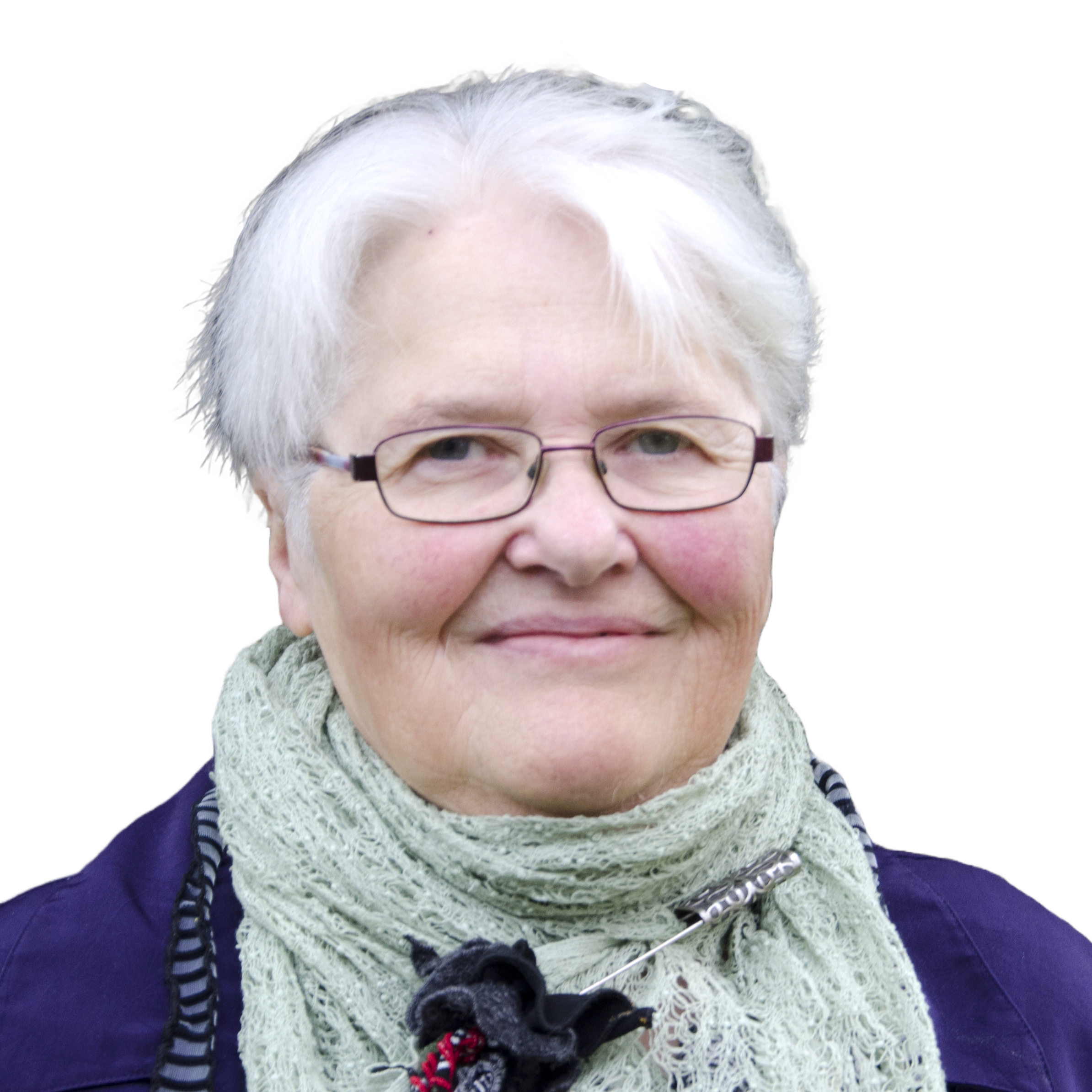
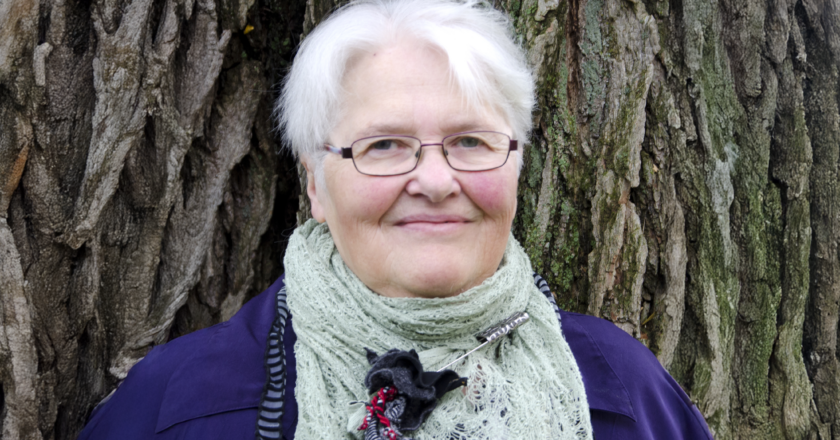
Rachel Garber writes from her home in the old hamlet of Maple Leaf, in Newport. (rawrites@gmail.com)
Joanne Delage

Joanne Delage, artiste émergente

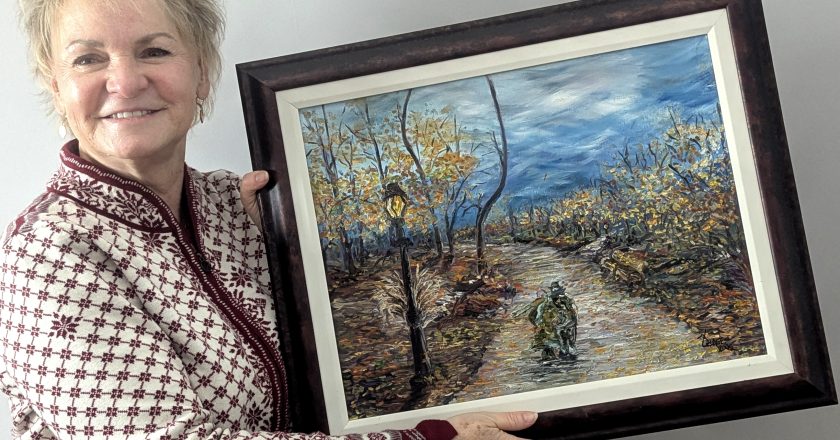
Joanne Delage avec sa peinture à l’huile (14 x 18 po), « Rafale de vents à Central Park ». « Il faut avoir le chaos en soi pour donner naissance à une étoile dansante » (Friedrich Nietzsche). Photo: John Mackley

La retraite peut être source d’un regain d’énergie et donner un nouveau sens à la vie. Cela n’a jamais été aussi vrai que pour Joanne Delage, qui a pris sa retraite à 61 ans pour se consacrer à sa passion, la peinture.


En novembre dernier, elle a organisé un « tour artistique » en solo de sa maison à Cookshire. Le terme « tour » est le mot juste ; sa maison est grande, baignée de lumière naturelle, et chaque pièce expose plusieurs de ses peintures à l’huile, chacune racontant sa propre histoire. « J’ai eu quarante-quatre visiteurs et neuf ventes ; un grand succès compte tenu du fait que c’était une première ! » a-t-elle écrit dans un courriel.


Delage a commencé à peindre il y a 25 ans, mais son travail et ses responsabilités parentales « laissaient peu de place à mon âme créative », a-t-elle écrit sur son site web. « Je reprends possession de cette partie de moi. […] Je renoue avec la peinture à l’huile, guidée par l’émotion, inspirée par la vie. »


Elle se définit comme une « conteuse en couleurs », et en effet, chaque tableau véhicule un souvenir personnel, ainsi qu’une parcelle de poésie ou de philosophie qui enrichit l’image. Prenons par exemple « La vieille dame aux chats », où Delage utilise ses trois chats et sa grand-mère comme modèles. À côté, on peut lire une citation de Cyntha Eden : « Elle avait toujours adoré Halloween. Une nuit magique. Une nuit où tout pouvait arriver. Les monstres pouvaient être réels. La magie pouvait murmurer dans l’air. »


Les toiles de Delage sont de taille raisonnable, généralement moins de deux pieds de haut. La plupart représentent des paysages locaux, souvent aux couleurs automnales, et son approche est expressionniste. Ses coups de pinceau vifs frôlent l’empâtement, créant une surface texturée qui confère mouvement, profondeur et une dimension tactile à l’œuvre. « J’expérimente au fur et à mesure », dit-elle.


Après avoir enseigné le français pendant 39 ans à l’école secondaire régionale Alexander Galt, elle a saisi l’opportunité de suivre son cœur, et elle l’a fait avec détermination. Passant environ deux heures par jour dans son atelier, elle a créé au moins 100 peintures à l’huile au cours des dernières années.
Elle est également devenue membre du Lennoxville Art Group, et son tableau « La vieille dame aux chats » a récemment reçu une mention honorable au 13e concours international d’art Tera Varna 2025. Ses œuvres sont visibles sur son site web bilingue (https://sites.google.com/view/100-rue-prevost/home), et elle espère organiser un nouveau « tour artistique » dans sa maison en novembre prochain.

Greffière et mairesse 8 déc, SS

Griefs à Cookshire-Eaton: Audience du tribunal reportée 

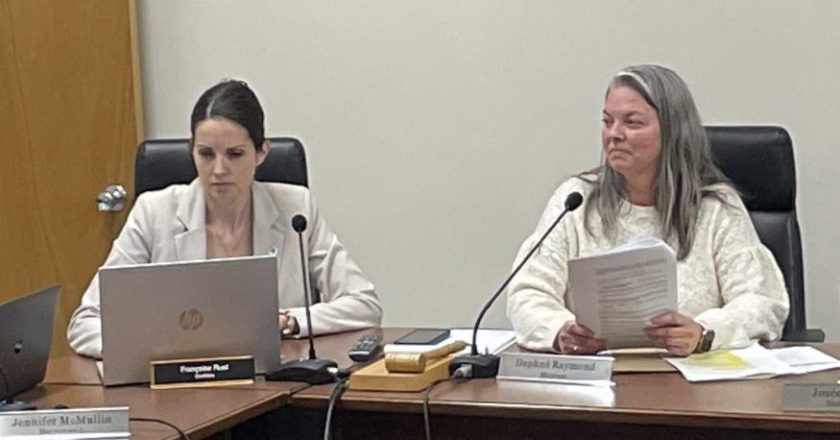
La séance ordinaire du conseil municipal du 8 décembre dernier. Photo : Scott Stevenson

Par Rachel Garber

De nouveaux développements dans l’affaire en cours concernant les griefs à la Ville de Cookshire-Eaton ont entraîné le report de l’audience prévue le 16 décembre devant le Tribunal administratif du travail, et la possibilité d’un règlement à l’amiable. 

En août dernier, une plainte a été déposée contre Jean-Charles Bellemare, jusqu’à récemment directeur général par intérim de Cookshire-Eaton, par l’employée Anick Fredette. 

Selon des documents obtenus par le journal Le Haut-Saint-François auprès du Tribunal, l’avocat de M. Bellemare, Me Olivier Séguin, a demandé le report de l’audience, ce que la Ville de Cookshire-Eaton et les plaignants ont accepté. 

Aucune nouvelle date n’a été fixée, mais le juge chargé de l’affaire a demandé à la Ville et aux plaignants de lui faire un retour au plus tard le 19 décembre « afin de l’informer des possibilités de règlement hors cour du litige ». 

Le 16 décembre, le Tribunal a également reçu un avis de Me Martin Brunet indiquant qu’il ne représenterait plus la Ville de Cookshire-Eaton dans cette affaire. 

Rachel Garber - en-tête chroniques

Invincible summer

Coming home from western Pennsylvania took an unexpected turn as we dodged the first major snowstorm in the “lake effect” region just south and east of the Great Lakes. Yes, winter arrived early.
But the new route brought some unexpected perks, such as signs announcing “Pumpkin Spice Oil Change,” or an arrow announcing “To Rt. 40 – YOUR GPS IS WRONG.” And the banner near Brattleboro, Vermont: “Hate does not grow well in the rocky soil of Vermont.”


A letter to the Brattleboro Reformer pointed out this slogan was coined in 1882, countering a nearby Ku Klux Klan activity. Today, the writer noted, his Black or Native neighbours can bear witness that the assertion remains not entirely true, and should be rephrased to show intention, “Root out hatred from the rocky soil of Vermont.”


Food for thought, as we sit in a traffic jam caused by a snow-related accident on Highway 91.
We visited the US not by choice. It was a difficult journey through a snowstorm of chaos, fear, and despair. But we also encountered good will. As Canadians, we heard “please forgive us,” and “please know that we’re not all like that guy”―“that guy” not requiring explanation.


And we encountered people with an attitude of quiet determination that evoked, for me, Albert Camus’s words: “In the depths of winter, I finally learned that within me there lay an invincible summer” (Personal Writings).


Camus lived through tumultuous times―political turmoil and World War II. He edited an outlawed newspaper in Nazi-occupied Paris and won a Nobel Prize in Literature. He was often called an existentialist but preferred the label of absurdist.


It seems paradoxical that an absurdist would speak of an inner invincible summer. But he went on to say, “And that makes me happy. For it says that no matter how hard the world pushes against me, within me, there’s something stronger―something better, pushing right back.”


I’m thinking on this. His stance is neither one of hope nor despair, but turning to a sanctuary within oneself, a quiet determination to take positive action. “We must mend what has been torn apart, make justice imaginable again in a world so obviously unjust, give happiness a meaning once more to peoples poisoned by the misery of the century,” he wrote.


As this tumultuous year ends, may we each find our quiet, invincible summer within.

Rachel writes from the old hamlet of Maple Leaf, in Newport (rawrites@gmail.com).

Séance extraordinaire I, SS

Problèmes de vote pour les résidents de Learned Plain

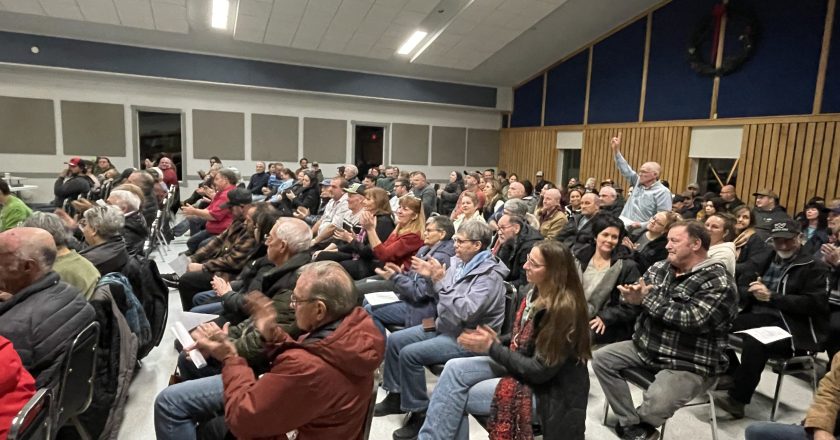
Bruno Veilleux demande d’intervenir à la séance extraordinaire du conseil le 26 novembre dernier à la salle Guy-Veilleux. Photo: Scott Stevenson

Peu après les élections municipales du 2 novembre, une quinzaine de citoyens de Cookshire-Eaton ont signé une plainte auprès d’Élections Québec concernant une irrégularité électorale qui a touché les résidents du chemin Learned Plain à Cookshire-Eaton, selon Bruno Veilleux.


Bruno Veilleux et Yves Veilleux étaient parmi plusieurs citoyens qui se sont plaints de cette irrégularité lors de trois récentes réunions du conseil municipal. Les électeurs ont déclaré qu’ils avaient été informés à la porte du bureau de vote, sans avertissement préalable, qu’ils devaient voter pour le conseiller du district 5 au lieu du district 6, pour lequel ils avaient toujours voté auparavant.
Exceptionnellement cette année, les citoyens n’ont pas reçu d’informations sur le vote avant les élections en raison de la grève de Postes Canada.

« Pour moi, c’était la journée de vote par anticipation », a déclaré Bruno Veilleux en entrevue téléphonique. « J’ai subi le déplacement des électeurs d’un district à un autre. Ce n’est pas tout le monde qui est allé voter, mais de ceux qui sont allés voter, tout le monde était en colère ».
Enfin, il a voté pour les postes de maire et de préfet, mais n’a pas pu voter pour un conseiller, car il ne connaissait pas les candidats du district 5.


Les deux citoyens ont qualifié la réponse du président des élections, alors directeur général par intérim, Jean-Charles Bellemare, d’ « irrespectueuse envers les électeurs ».
« Ce n’était pas une bonne expérience pour ces personnes-là », a déclaré Yves.


Lors d’une récente conférence de presse, M. Bellemare a expliqué la raison du changement de district. « C’était une question de proportionnalité entre districts. Il y avait certains districts qui ont eu beaucoup de nouvelles constructions, ce qui faisait que ça débalançait la proportionnalité. De mémoire, on parle en tout d’une quinzaine de portes. Je pense qu’on a exagéré l’ampleur. »


Bruno et Yves Veilleux se sont tous deux dits satisfaits des mesures prises par la nouvelle mairesse, mais aucune réponse n’a encore été reçue concernant la plainte déposée auprès d’Élections Québec.
Dans un courriel adressé au Journal, la porte-parole d’Élections Québec, Julie St-Arnaud-Drolet a expliqué : « La réception d’une plainte ne mène pas automatiquement à l’ouverture d’une enquête. Le directeur général des élections entreprend des enquêtes seulement lorsque des faits sérieux indiquent qu’une infraction prévue aux lois électorales québécoises pourrait avoir été commise ».

Delage famille 2025-12-06 JMackley

Danika Delage, 15 ans de La Patrie, lance son premier roman

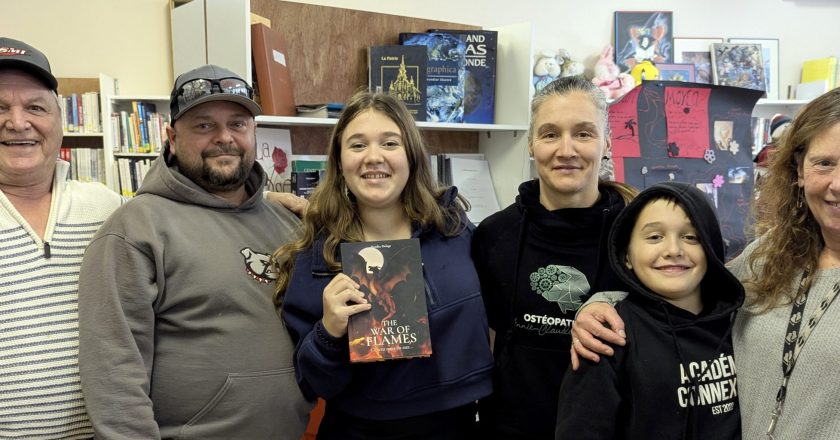
Aux côtés de l’auteure Danika Delage lors du lancement de son livre à La Patrie (de gauche à droite) : son grand-père Rejean Delage, son père Éric Delage, l’auteure, sa mère Amélie Verret, son jeune frère Yanik Delage et sa grand-mère par alliance Nicole Gagné. PHOTO : John Mackley

The War of Flames : Ce sera nous ou eux… est le titre d’un roman de 445 pages récemment publié par Danika Delage et lancé le 6 décembre à la bibliothèque municipale de La Patrie. Quelque 35 personnes ont assisté à cet événement festif, et la jeune auteure était entourée de sa famille et de ses amis. Ses parents sont originaires de La Patrie, mais vivent maintenant à Saint-Amable, et elle est étudiante au secondaire à Boucherville.


Les dragons jouent un rôle important et fougueux dans l’histoire, qui met également en scène des personnages inspirés de ses amis et des membres de sa famille, notamment son petit frère. Mais il s’agit clairement d’une œuvre de fiction et de fantasy, une « romantasy », comme la décrit Danika, destinée aux lecteurs âgés de 15 ans et plus.


 Je sais que les dragons n’existent pas, mais s’ils existaient, ce serait mon animal préféré », plaisante-t-elle.


Bien que le livre soit écrit en français, le titre est en anglais « pour des raisons esthétiques », a-t-elle déclaré, soulignant que d’autres auteurs écrivant en français utilisent parfois des titres anglais. Elle est bien placée pour le savoir, car elle est une lectrice avide, ayant l’habitude de lire un livre par jour, en français mais aussi en anglais.


Danika a écrit ce livre en trois mois, y compris la révision et la relecture par sa mère et son enseignante, « Mme Annie-Pierre ». Cet exploit est d’autant plus impressionnant que l’histoire est bien construite, avec des dialogues habiles et des descriptions vivantes.


« Je n’ai pas du tout utiliser l’IA dans mon projet, puisque je trouve que ça n’aurait pas fait de moi une vraie autrice, » a-t-elle écrit dans un courriel. La couverture du livre représente un dragon s’élevant vers le ciel, d’après une esquisse qu’elle a elle-même réalisée.


« J’ai écrit ce livre avec un plan précis en tête, soigneusement réfléchi et calculé. Mais au fil du temps, j’ai laissé l’histoire me porter, mes mains écrire une aventure au sens parfois étrange, mais qui reflète en partie ma vie, » a-t-elle écrit dans sa page de remerciements.


Mais ce n’est pas tout. Elle a déjà écrit un deuxième tome de sa nouvelle série « The Blood Series », et a bien avancé dans la rédaction du troisième. Son premier livre est auto-édité et disponible sur Amazon.ca.


Danika envisage-t-elle une carrière d’écrivaine ? Pas vraiment. Elle songe plutôt à devenir psychologue légiste.


Une chose est sûre : son intelligence et son imagination, tant à l’écrit qu’à l’oral, laissent présager un avenir très prometteur pour Danika Delage.

Rachel Garber - en-tête chroniques

Lines

We crossed the line at midday, at the tiny Beecher Falls, just south of East Hereford. No, our phones were not searched. We Canadians are received kindly.
As we went south, the snow gradually disappeared from the ground, and near Lancaster, Pennsylvania, we crossed another line into Mennonite/Amish territory. Fields and lawns were clipped short; people were friendly and polite. We were surrounded by Trump voters, but we did not talk politics.
Three days later, we crossed the Mason-Dixon Line enroute to Richmond, Virginia. This city voted bright blue in the recent elections, and the brightest line across its centre is Monument Avenue. Its five bronze statues of Confederate “heros,” including Jefferson Davis and Robert E. Lee, were torn down after the murder of George Floyd in 2020.

Lined by genteel southern mansions, it celebrated a race-based way of life, and engendered pride for some, and pain and rage for many others.
“Now I am able to drive down Monument Avenue,” said a friend, who is Black. “I never could, before.” Still standing is the Arthur Ashe Monument, honouring the African-American tennis champion.
Across the Blue Ridge Mountains, we passed through Harrisonburg, Virginia, reddest voting of the red districts, and Mennonite country. I remember, as a student, protesting the Vietnam War in front of the courthouse. Every Saturday a pair of us stood holding our placards. That was the first time in my life someone spat at me.

The Applachian Mountains form another line, as we go northwest. Our car’s GPS leads us along a ridge on a narrow, recently paved (part of President Biden’s infrastructure bill?) road. Leaving West Virginia, we once again cross the Mason-Dixon line, up to more Trump country near Butler, Pennsylvania, where Trump’s ear was shot in an assassination attempt before his second election.
At my brother’s home, his well-lighted sign in the window welcomes us. It is a rare sight in this town still dominated by lawn placards supporting Trump. “In our America,” it reads, “No human is illegal. Women are in charge of their own bodies. Science is real.” And more.
Wherever we go, TV news commentators speculate about the possible outbreak of civil war. In this America, lines crisscross families and neighbours. People keep their mouths shut, but protests are growing. We are all on the front lines, it seems.

Rachel writes, usually, from the old hamlet of Maple Leaf, in Newport (rawrites@gmail.com).

Rachel Garber

Loving what is

I love WorldData.info. Solid facts are laid out in clear sight, like a landscape uncovered by snow. No little hands waving in front of your eyes, no ALL CAPS, no strident voices distracting you from what is.
I’m loving what is.

Take WorldData’s five pages of Canada vs. United States comparisons. The differences are stark.
Canada has more land than the US, but fewer people ― 299 million fewer, with 4.1 inhabitants per square km, compared to 35.7 in the US. But then with our elbows up, we need the space.
We expect to live more years, on average (80 vs. 76 for males, 84 vs. 81 for females).
But how does the quality of those years compare? The two countries rank exactly the same on the cost of living (33), on a scale of 0 (bad) to 100 (very good).

My ears prick up. How can that be, considering the exchange rate and average income levels that constantly disadvantage Canadians? And considering that our unemployment rate is 6.5% compared to 4.1% in the US, presumably measured before the US government shutdown. (Most WorldData.info data are based on the previous calendar year.)

Canada looks good on other economic measures. The inflation rate is 2.4% compared to 3% in the US, and our federal government debt at ‘‘only’’ 52% of our GDP compared to 102.69% in the US.
Canada scores higher on political stability (86 compared to 71), civil rights (94 vs. 82), health (76 vs. 75), and popularity (89 vs. 77).

On this point, I have to pause again, glimpsing little hands waving. What in the world does ‘‘popularity’’ mean?
WorldData.info calculates popularity on a mix of several factors. The migration rate for Canada is 8.93% compared to 3.78% for the US, meaning that more people immigrate into Canada per 100 inhabitants, compared to refugees fleeing. Also considered are the number of foreign tourists, and the United Nations’ World Happiness report.

That pretty much explains why Americans abroad have been caught wearing the Maple Leaf on their backpacks. And why my American relatives sometimes ask if I could take them in. Yes, despite its many shortcomings, Canada is pretty popular.
It’s so easy to be complacent, if not downright self-satisfied. But loving what is ― that means loving truth, both the easy and the hard truths. What to do about the hard ones? That’s what keeps me awake at night.

Rachel writes from the old hamlet of Maple Leaf, in Newport (rawrites@gmail.com).

St-Peters Church & Rectory JM hi rez

La préservation de l’église St. Peter’s mise en doute

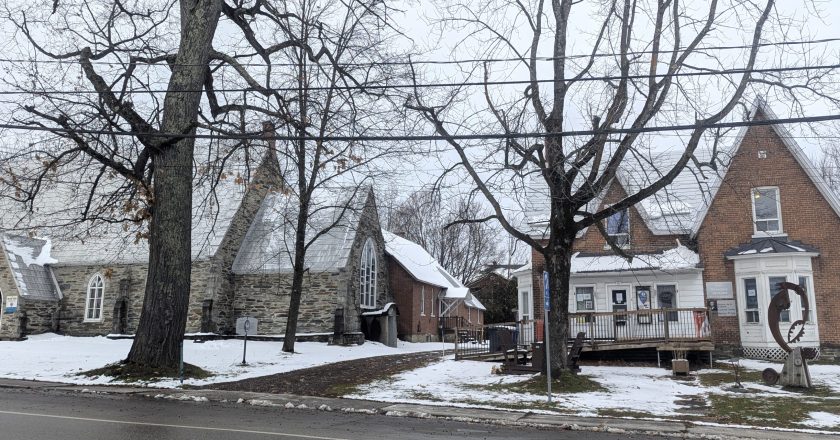
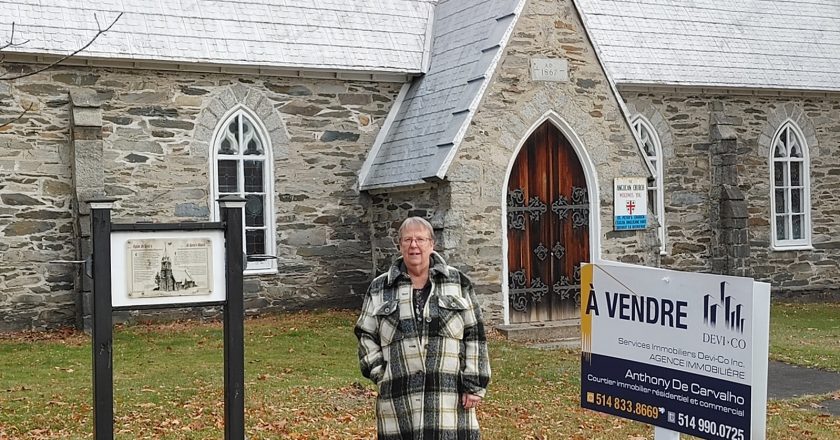
L’église Saint-Pierre est adjacente au stationnement de l’ancien presbytère, acheté auparavant par Gilles Denis, et qui abrite aujourd’hui l’office du tourisme et le bureau de M. François Jacques, député de Mégantic. Le terrain de l’église ne dispose pas de stationnement.

« Plusieurs offres et près de dix visites ont été reçues, » a déclaré l’agent immobilier Patrick De Carvalho par téléphone près de trois semaines après la mise en vente de l’église anglicane St. Peter’s, située au 45 rue Principale Ouest, à Cookshire, sur le site Realtor.ca. Le prix demandé est de 199 000 $. 

Le diocèse anglican de Québec, propriétaire du bien, avait refusé en août une offre de 50 000 $ de Gilles Denis, président de l’Espace culturel Cookshire-Eaton. 

Le représentant immobilier chargé de la vente, Anthony De Carvalho, a déclaré par courriel que l’offre de Denis « était malheureusement incomplète : elle n’était pas dûment signée et les conditions fixées étaient assez complexes et lui donnaient un avantage, ce qui rendait difficile son acceptation par le diocèse. De plus, le prix était assez bas compte tenu du patrimoine et du potentiel de la propriété ». 

Le Journal a laissé plusieurs messages téléphoniques et envoyé un courriel au Vénérable Dr Edward Simonton, vicaire général et archidiacre de Québec, mais n’a reçu aucune réponse. 

Lorsqu’on lui a demandé s’il ferait une nouvelle offre, Denis a répondu par courriel par un « OUI ! » catégorique. « Beaucoup de personnes m’ont demandé de continuer. » 

« Je n’ai AUCUN intérêt financier dans ce projet », a-t-il écrit. « C’est un projet communautaire, et oui, je veux y mettre du mien, mais il n’y a pas de revenus à obtenir, mais des dépenses. J’ai fait visiter le bâtiment et il y a des réparations importantes à faire. Mon offre était une offre à condition que la ville y fasse une bibliothèque, sinon je n’ai pas de projet. Cette église doit servir la communauté anglophone et francophone. » 

Son projet s’inscrirait dans le cadre du Cœur Villageois, a-t-il expliqué, aux côtés du presbytère anglican, de l’Église unie, qui deviendrait une salle de concert, et du Victoria Hall avec ses galeries d’art, tous bâtiments précédemment acquis par l’Espace culturel Cookshire-Eaton. 

« Nous avons fait nos preuves », a-t-il écrit. « Nous investissons de 150 000 $ à 200 000 $ par an dans le Cœur Villageois. Je ne vois pas pourquoi les propriétaires de St. Peter’s douteraient de nous. » 

Il a fait remarquer que si quelqu’un lui avait envoyé une offre non signée, il lui aurait simplement demandé de la signer. 

Le courriel d’Anthony De Carvalho indiquait que le prix est le critère principal. « Bien que nous reconnaissions que la propriété nécessite d’importants travaux de restauration, nous avons l’obligation fiduciaire d’en obtenir une juste valeur marchande pour notre client, le diocèse anglican de Québec. Le produit de cette vente est essentiel, car il sera directement réinvesti dans l’entretien nécessaire de plusieurs autres églises du diocèse. » 

Démolition? 

« Bien que le diocèse anglican de Québec soit certainement attristé de voir ce magnifique bâtiment patrimonial démoli et qu’il aimerait beaucoup le voir préservé, l’utilisation finale de la propriété par tout futur acquéreur est généralement laissée à sa discrétion », a-t-il écrit. « Nous nous efforçons d’obtenir une offre équitable et respectueuse pour la propriété, quelle que soit l’utilisation à long terme envisagée par l’acheteur. » 

Selon l’agente de développement en patrimoine immobilier de la MRC, Chloë Southam, l’église ne « pourrait jamais être démolie », et la citation municipale représente « une certification de la volonté de préserver l’immeuble dans le long terme. » 

La citation aiderait aussi l’obtention de subventions permettant la restauration du bâtiment, mais n’est pas restrictive comme une classification provinciale, comme a obtenu l’Académie d’Eaton Corner, selon Mme Southam.  

En raison de son emplacement au centre-ville et de son statut historique, « la valeur foncière de l’église seule, si l’on ne considérait que la valeur du terrain, est supérieure au prix demandé pour l’église », a déclaré Patrick De Carvalho. 

L’intérêt de la communauté semble élevé. Un article paru dans le dernier numéro du Journal sur la situation a été publié le 31 octobre sur la page Facebook du Journal en français et sur la page Facebook « Souvenirs et photos des Cantons-de-l’Est » en anglais. Au cours des dix jours suivants, les deux publications ont reçu 109 emojis et 48 commentaires, presque tous en soutien à Denis, et ont été partagées 34 fois. 

Boites postaux II, Marbleton

Les entreprises locales et Le Journal rencontrent le ministre Lightbound

La politique « Acheter canadien » est arrivée dans la région de l’Estrie la semaine dernière, lorsqu’une quarantaine de propriétaires d’entreprises se sont réunis à Lennoxville pour une séance de 90 minutes avec Joël Lightbound, ministre de la Transformation gouvernementale, des Travaux publics et de l’Approvisionnement, et Marianne Dandurand, députée fédérale (Compton-Stanstead). 

Cette politique a été introduite dans le nouveau budget fédéral de 2025, a déclaré le ministre Lightbound, « et ses détails sont en cours de définition ». À cette fin, il a lancé une série de consultations auprès des petites et moyennes entreprises. 

La présidente Suzanne Jutras et le directeur Scott Stevenson de l’organisme sans but lucratif Le Journal régional Le-Haut-Saint-François ont rencontré séparément le ministre Lightbound, Mme Dandurand, et des membres de leurs équipes, et leur ont présenté un mémoire de cinq pages sur « l’avenir des journaux communautaires, du journalisme, de Postes Canada et des communications au Canada ». 

Mme Jutras et M. Stevenson ont abordé des sujets étroitement liés à l’initiative « Acheter canadien » : la communication du gouvernement avec le public, la viabilité et le rôle de Postes Canada dans la distribution des journaux, et la survie des journaux communautaires – sans lesquels le journalisme professionnel lui-même est menacé. 

Stevenson-Jutras-Lightbound-Dandurand, Equipe Dandurand

« Les journaux communautaires à travers le Canada luttent pour leur survie, beaucoup d’entre eux faisant faillite, alors qu’ils constituent un moyen essentiel et efficace de communiquer avec et entre les Canadiens. Leurs perspectives économiques actuelles pourraient être considérablement améliorées grâce à une approche « Acheter canadien » du gouvernement du Canada et à un traitement préférentiel de la part de Postes Canada », ont-ils écrit. 

Mme Jutras et M. Stevenson ont proposé que les petites organisations telles que Le Journal soient reconnues comme des « communicateurs efficaces permettant au gouvernement du Canada d’atteindre les Canadiens, même dans les régions les plus isolées ». 

Ils ont souligné que les communications en ligne, trop souvent privilégiées par le gouvernement, sont moins susceptibles d’être basées au Canada ou de privilégier le contenu canadien, par rapport aux médias communautaires locaux. 

Dans un courriel, M. Stevenson a indiqué que le ministre Lightbound et Mme Dandurand avaient tous deux manifesté de l’intérêt pour le mémoire du Journal et « convenaient que les journaux sont essentiels aux communautés qu’ils desservent ». M. Stevenson s’est dit convaincu que leurs « idées contribueront à influencer les décisions futures et que nos associations de journaux (l’Association des médias écrits communautaires du Québec, Hebdos Québec, et l’Association des journaux communautaires du Québec) continueront de faire pression pour que ces changements se produisent ». 

Lors de la séance destinée aux chefs d’entreprise, des représentants de Services publics et Approvisionnement Canada ont également expliqué le fonctionnement des appels d’offres gouvernementaux. Le ministre Lightbound a déclaré : « Depuis les six mois que j’occupe ce poste, j’entends dire que, pour de nombreuses petites entreprises, répondre à des appels d’offres publics peut s’apparenter aux douze travaux d’Astérix. Nous voulons faciliter ce processus. » 

Mme Dandurand a souligné que le gouvernement canadien est le plus important acheteur au Canada et que, compte tenu de la perte de contrats américains en raison des tarifs douaniers, les entreprises locales pourraient tirer profit des contrats gouvernementaux. 

« Un contrat vaut mieux qu’une subvention », a fait remarquer le ministre Lightbound. 

Il a réitéré l’objectif du gouvernement, qui est que les investissements fédéraux servent de levier pour accroître les investissements dans le secteur privé. Le gouvernement vise également à étendre la politique « Acheter canadien » aux sociétés d’État et à encourager les provinces à s’approvisionner en matériaux canadiens, tels que l’acier et le bois d’œuvre. 

Dans son communiqué de presse, Mme Dandurand a indiqué vouloir s’assurer que les entreprises des Cantons-de-l’Est « puissent pleinement profiter » de cette nouvelle ère d’innovation et de collaboration. 

L’église St. Peter’s à Cookshire: Les anglicans locaux dans l’obscurité

Depuis la semaine dernière, une nouvelle pancarte « À vendre » est affichée devant l’église anglicane St. Peter’s, située au 45, rue Principale Ouest, à Cookshire, à la suite du refus d’une offre d’achat faite par Gilles Denis, président de l’Espace culturel Cookshire-Eaton.

Mais les membres de l’église anglicane locale n’étaient pas au courant de la transaction. « Nous n’avons rien entendu », a déclaré Linda Hoy, comptable de St. Peter’s. « Les fidèles ont été laissés dans l’ignorance la plus totale. Nous sommes tristes. »

Une autre membre, Jane Bishop, a partagé son sentiment. « À bien des égards, je suis déçue, car je pensais qu’il serait quelqu’un qui respecterait l’église », a-t-elle déclaré. « C’est une situation assez triste. J’aimerais simplement que l’église soit préservée pour l’histoire. »

L’église St. Peter’s appartient au diocèse anglican de Québec, selon Mme Hoy, et les deux ministres qui en ont la charge sont le révérend chanoine Giuseppe Gagliano, à North Hatley, et le vénérable Dr Edward Simonton, de Lennoxville, vicaire général et archidiacre de Québec. « Ils ont en fait supprimé la corporation » de St. Peter’s, a-t-elle déclaré, expliquant pourquoi les anglicans locaux ne peuvent pas prendre de décisions concernant la vente.

Joint par téléphone, le père Gagliano a refusé de commenter les raisons du refus de l’offre de M. Denis. Il a laissé la parole à l’archidiacre Simonton, présent à une conférence en Égypte et injoignable avant la mise sous presse.

M. Denis avait offert 50 000 $ pour le bâtiment, qui nécessite des réparations. Des fuites d’eau s’infiltrent au sous-sol, a indiqué Hoy, et la fournaise ne fonctionne pas ; la partie principale du bâtiment n’est donc pas chauffée depuis un certain temps. Bien que construit avec d’imposants murs de pierre et d’impressionnantes poutres en bois, le bâtiment présente des signes de détérioration, comme une fenêtre cassée et des marches affaissées.

« Il y a beaucoup de travail à faire », a déclaré M. Denis. « Le projet doit être rentable financièrement. »

Son offre comportait quatre conditions, notamment la signature d’un bail de 10 ans avec la Ville de Cookshire-Eaton pour une bibliothèque municipale, l’obtention de fonds du Programme d’entente en patrimoine du Québec, la remise d’un rapport Éco Bâtiment sur l’état du bâtiment, et une inspection du bâtiment.

Environ huit personnes ont assisté aux cinq offices célébrés à St. Peter’s l’été dernier, a indiqué Mme Hoy.

« Gilles est celui qui s’intéresse à l’histoire », a ajouté Mme Bishop. « Il aurait été notre premier choix, pour la plupart d’entre nous. »

Rachel Garber - en-tête chroniques

Persona non grata

Our family is on a road trip. I introduce my aged mother to other travelers. 

“Her name is Persona Non Grata. You can call her ‘Persona’.” 

What a weird dream, my waking mind says, then does a double take. Of course! Of all the unwelcome persons in the world, who is less wanted than an old woman? 

Books have been written about crones, old women viewed as disagreeable, even sinister. In past decades, younger women have tapped into Jungian psychology to describe the Crone archetype as an elder woman with wisdom developed over a lifetime of experience. But alas, our culture hasn’t really laid hold of this concept. 

Now we younger women have become old. It’s been said that no one is more invisible than an old woman, and I can see that. We—myself included, old woman that I now am—are often guilty of letting our eyes slide past the old person we see before us, overlooking their many identities and adventures. 

Aging is a process of letting go, but it is also an additive process. Reflecting on my life, my mind embraces the five-year-old running barefoot in the rain, the 22-year-old teaching English in Somalia, and the 38-year-old at my mother’s funeral. They’re all nested within me, along with innumerable others, like so many Russian dolls. 

I’ve been editor of the Townships Sun for four years now. It’s been a challenging, learning experience, but now I feel plum tuckered out. That’s why I’m resigning at the end of this month. 

Maybe, just a little, my dream was expressing my fear of becoming my mother, Persona Non Grata. She spent a lifetime stifling her voice. 

For inspiration, I turn to the poem by Jenny Joseph, “When I am an old woman I shall wear purple / With a red hat which doesn’t go, and doesn’t suit me.” She vows to indulge in a whole bunch of other unacceptable behaviours. To be free, as only a Persona Non Grata can be. 

Well, I’m hoping to gather my resources and explore my Russian dolls (aka memoir-writing). In the meantime, I hope you come celebrate my graduation at the Townships Sun’s AGM on Saturday, September 27, at 3 p.m. in the Cookshire-Eaton Art Gallery, 125 Principale West (downstairs). 

Come early and take in the Where are the children? exhibit upstairs. It ends October 5. You’ll remember it forever. 

The inmates

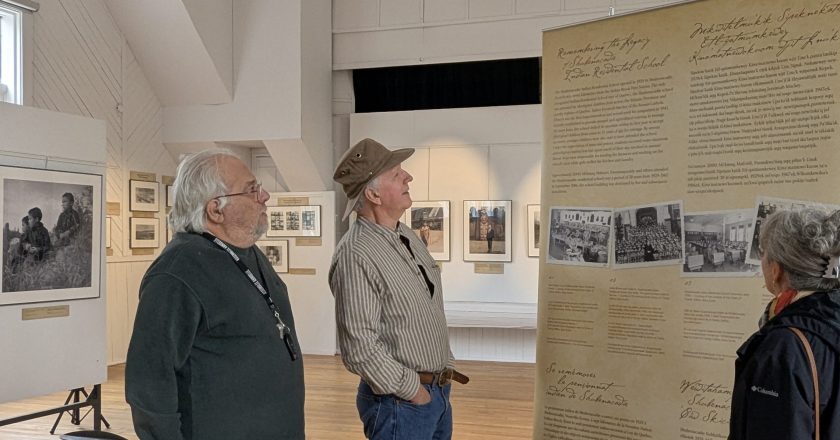
Gilles Denis, Denis Palmer, and Diane Dugal at the “Where are the children?” exhibit. Credit : John Mackley 

“Daily service is held morning and evening, at which all inmates of the institution are expected to be present.” 

It sounds like a prison, but its name was the Calgary Industrial School, and the “inmates” were Indigenous children. Where are the children? is an exhibition by the Legacy of Hope Foundation, exploring the history and impacts of Canada’s Residential School system. It’s now on at the Cookshire-Eaton Art Gallery. 

Viewing it is full of little shocks of new awareness or recognition, such as this one. It’s a bit like climbing through an electrical fence. Not fun, but unforgettable. 

Walking into the luminous gallery filled with more than 70 photos and displays is a sort of spiritual experience. A tour of the room discloses multiple views, both through a wide-angle lens of the overall system, as well as a close-up look at individual Survivor stories. Both deliver shocks. 

Revealed is a religious obsession with how people dress as a major aspect of destroying “the Indian.” How do you reconcile that with the sight of the deputy superintendent of Indian Affairs dressed in full Indian Costume for a historical ball on Parliament Hill, Ottawa, in 1869? 

What do you make of this instruction to teachers? “The unnecessary use of textbooks to be avoided.” 

In 1879, Prime Minister John A. Macdonald sent an envoy to Washington D.C. to learn about the American government “policy of aggressive civilization.” 

“The day-school did not work, because the influence of the wigwam was stronger than the influence of the school,” the report noted. Residential schools were established across Canada, 139 of them. More in the west than in the east; but then—hey!—so many Indigenous people had moved west to escape the civilization of aggression that pushed them off their lands. Still, Quebec had six residential schools. 

There is also healing. The exhibit displays a Personal Bill of Rights. Positive role models among Indigenous elders. Thoughts on healing as not only a personal process, but a collective action. 

I encourage you to take in this exhibit, to reflect on the shocks it delivers, and how they relate to our lives today. This is an important experience, and I highly recommend it. 

The Legacy of Hope Foundation is an Indigenous-led charitable organization. The exhibition is bilingual and open weekends from 12 to 4 p.m. at 125 Principale West (upstairs). It ends October 5. 

Well, well, well

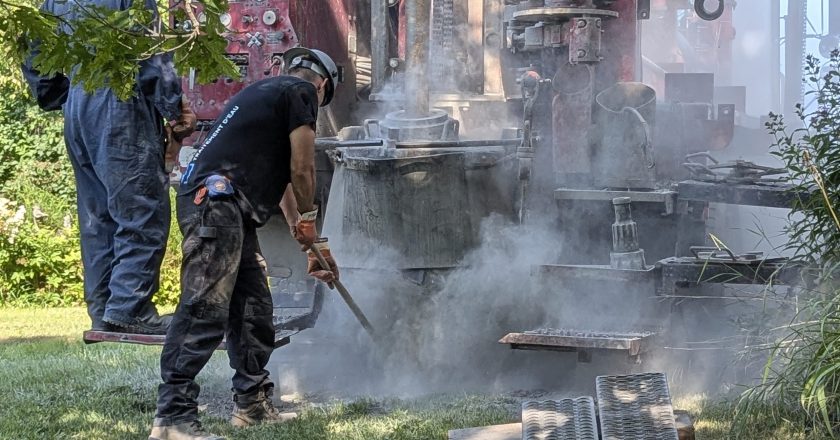
Rock dust billows up around the drill. Photo: John Mackley

It’s 7:35, eventide, and getting dark. The chickens will be heading to bed soon. But he is still out in the shadows, wrapping insulation around 150 feet of water pipe leading from our new well to the basement. 

This has been a rocky summer. We learned our well water was contaminated. The well was an ancient one, inconveniently located under the veranda steps. Also inconveniently, its location was illegal―too close to the septic tank. 

We found a spot for our new well about 12 feet east of the house. 

It took weeks to study the options and choose a well-drilling company whose proposed contract matched its estimate. We figured it could cost somewhere around $15,000―a well less than 100 feet deep, a trench and water pipe 12 feet long, a new pump, new electrical wiring. 

We got the drilling permit, and I have only accolades for the personnel at the Municipality of Newport―the inspector, the office staff, the mayor, everyone! One driller told us we’d probably have to wait three weeks and pay $200. We waited less than three hours and paid $25. (I love living in Newport.) 

Drilling day came, and the surprises began piling up. The truck could not handle the crazy terrain at our chosen spot. Another legal location (more than 100 feet from neighbouring fields) was chosen, 150 feet west of the house. About five feet deep, the drill hit solid rock. Water came in at 320 feet, enough for a family of five, they said. 

Our neighbour with his backhoe dug the five-foot trench in a few hours, extending across both wings of our driveway. Another surprise: in two stretches, he hit solid rock less than three feet below the surface. We learned we’d have to thoroughly insulate the pipe before filling in the trench. 

The new pump was installed, the water pipe laid, the electricity connected. Eureka! Water! 

After the requisite treatment, it’s as chlorinated as a swimming pool, and we’re still hauling drinking water from generous neighbours. It seems we have guardian angels all around us. 

The cost? Almost twice our guesstimate. And about 40 feet more of pipe to insulate before filling in the trench. Tomorrow is another day. What a summer! 

Josiah Sawyer Statue

Head & Body

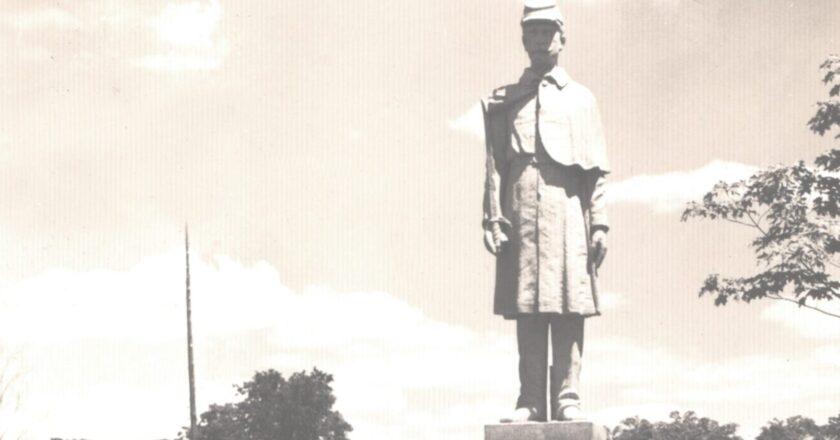
He gazes sadly over the arm of the chair on which sits his head. 

Or do his eyes express the dreamy grandeur we project onto our distant heroes? 

The wooden base supporting the granite head bears a plaque: “Captain Josiah Sawyer, Jan. 27, 1757 ― Mar. 10, 1837. Founder of Sawyerville.” 

The head is in storage, upstairs in the former Congregational Church housing the Eaton Corner Museum. Despite its label, Sharon Moore says it’s not really a likeness of Josiah himself. As I wrote in my January 15th Rachel Writes, Captain Sawyer had a crooked nose. This nose is perfectly straight. 

Source: John Mackley 

What about the body? In January, I promised to look for it, come spring, lying somewhere in the bushes. 

Sharon’s sharp rejoinder was, “We know exactly where the body is! And it’s standing up, not lying down.” 

Indeed, it’s standing in the wooded area behind the Eaton Corner Museum’s church. 

I hesitated to reveal its location because of the statue’s sad history of being vandalized. Both Sharon and Daniel Bousquet reported the statue was vandalized at least twice in its previous locations in Sawyerville. It may have been vandalized again since then; the body’s legs are missing, although Sharon recalls seeing at least one leg in the past. 

I wonder what motivated the vandalism. Were the vandals simply partyers from the hotel, whose idea of fun was to smash up a granite statue? 

Source: John Mackley

Hurts and angers of many kinds can find temporary relief in attacking a granite statue. Did the vandals think Josiah Sawyer was a Loyalist; were they expressing Quebec nationalism? 

Actually, as a New Englander, Captain Sawyer fought against the British in the U.S. Civil War. But later, he did succeed in wresting land from the British American Land Company, whose purpose was to encourage British settlers. 

The careers of both Josiah Sawyer and the statue are an interesting aspect of our local history. John Mackley and Daniel Bousquet propose to recuperate this statue and its story. Their idea has received the blessing of the Eaton Corner Musuem’s board, although the Museum cannot finance it.  

In fact, the Museum is busy restoring its outside walls, helped by a new donation of $2000 from the Quebec Anglophone Heritage Network. Sharon estimates the whole restoration job will cost $10,000, and invites contributions. 

Filthy Lucre

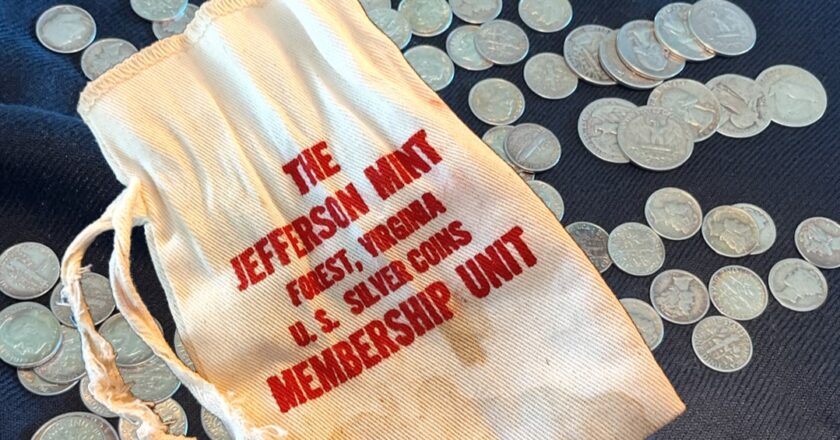
I have a friend who has taken into hand the little bag of silver US coins that was a legacy from my father. My friend wants to check its value. She is into buying and selling silver. 

Great, I say to myself, a diversion to soothe me while the US Congress passes Trump’s “big beautiful” monstrosity. Alongside the US-Canadian exchange rate, it is wreaking havoc on my retirement. 

When my father died in 1993, my brother, the executor of his will, sent me a small bag of US coins. Each of us eight children got one. I’m sure my brother counted fairly. 

Mine came in a little canvas bag labeled “The Jefferson Mint,” the name of a scheme that sent my father a handful of silver coins each month. 

In my bag were three half-dollars, 20 quarters, and 121 dimes. My brother said the coins were then worth about two cents more than their face value, with a quarter coming in at 27 cents. 

But that has changed, my friend says. 

The price of silver has been going up by peaks and valleys. On October 23, 2005, it was $9.61 per Troy ounce. On August 25, 2022, it was $25.64. On July 4 this year, it was up to $50.33. 

We go to a local money shop, where the agent offers 22 times the face value of the coins. He offers to buy a US half-dollar for $11 Canadian, no matter whether it sports JFK’s face or that of Benjamin Franklin. The little bag of coins would net me $410. 

That, he says, is the “spot” price, the on-the-spot value based on the current market price of silver, quick ‘n’ easy pricing for coins with silver content, or “junk silver.” The term covers US coins dated before 1965 (90% silver), and Canadian coins dated before 1968 (80% silver). 

My friend is seriously into these things. She says that, considering the current market price, he should have offered 25 times the face value, or $465. But more than that, some of the coins could have numismatic value and be worth a lot more. 

I owe a little money to my friend, but she wants to be paid in silver rather than with that worthless plastic stuff. So we make an agreement that she will take the coins back to her home in the big city and check their value with a coin dealer there. Then she will keep the silver she is owed, and cash in the rest for me. 

She wants to hang onto her silver for awhile, hoping it will get up to $100 an ounce, where it seems to be heading. 

By the way, “filthy lucre” is mentioned four times in the Bible, instructing that church deacons eschew dishonest financial profits. They must not abuse their office to make money. 

Now who in the world would do something like that? 

Short, strange life

Crédit : Adobe Stock

A young buck peered into our side door, his two points resembling sturdy sausages. 

Shakti, shy kitty that she is, crouched low a few feet from his nose. 

Our minds went to nature films from Africa. 

“She’s getting ready to pounce on him and sink her teeth into his neck!” 


This is our Door to Wildlife. 

It’s where Pepe encountered his first wild animal. 

He had just moved with us from Montreal. A stranger had begged us to adopt him. 

A middling-big fellow with longish honey-brown fur and floppy ears, Pepe had apparently never gone outside during his first six months of life. When we took him for walks, he took care to “hold it in” until we got home and he could pee in the kitchen. Trees were scary. Stumps, even more so. When he met his first one, he yelped and jumped high in the air like Bugs Bunny’s first cousin. Every scrap of paper, every pebble, was an existential threat. 

Pepe was in constant motion. So, when friends visited, we put the gyrating, yapping dog out the side door. We counted on his agoraphobia to keep him close. 

A moment later, the yelping took on an unprecedented intensity. We looked out the door and almost leapt out of our skins. Nearby, on the lowest branch of the old oak tree, was an adolescent bear, three times bigger than Pepe. Bear clung to the branch as Dog bounced up and down, inches below, excited to meet a long-lost friend. 

How his mind worked still mystifies me: A tree stump or a scrap of paper scared him silly, but he saw a bear as a playmate? 

Sometimes I feel like Pepe, like I’m on a strange planet where danger can take any innocuous shape. A playmate, a thing of joy, or an object of ridicule, can in fact be life-threatening, and I won’t even realize it. 

I’m not alone, I think. So many threats surround us. So many voices tell us, so incessantly, what to fear. Often, they warn us against phantoms. How to discern real dangers from fake news? 

How to see clearly what to do about raging wars-upon-wars? Can we even dream of solving climate change? Can we save ourselves from pollution? How to fix the economy gone haywire? Can we rescue the health-care system? How to depose the oligarchies of the world? 

It’s unnerving, so we find relief by focusing on something like Bigfoot, contrails, or vaccines. 

Pepe got himself hit by a car. Did he have one moment of clarity as he died? I wonder. He had such a short, strange life. 

Shakti, on the other hand, wisely came back inside, and the young buck lived another day. 

Dowsing rag

How well is your well water?

John’s first try at dowsing.

The well-drilling contractor sitting on our veranda burst into laughter.
I’d just told him how we learned our well water was contaminated. For a sidebar to an article on chemicals by Dian Cohen in the current Townships Sun, we were researching how to test well water for bacteria, pesticides, and PFAS compounds.


Why not test our own well water, and report on it?
We got a test kit from Eurofins Environex in Sherbrooke for $99. A sterile bottle for microbiological analysis and an ice pack came in a nifty insulated bag. (We couldn’t afford the test for glyphosate at $270. Not being a business, nor could we test for PFAS compounds, those “forever chemicals.”)
The test results came back a day after the magazine went to print.


Moderately bad news: 22 coliform bacteria per 100 mL of water, a bit more than twice the criterion of 10 maximum. Dr. Google told us these bacteria are not likely to cause illness, but their presence indicates that other pathogens could be in the water.


Sighing in relief at the absence of E. coli, we began following the three-step instructions: evaluate the source of potential contamination, disinfect our well, and then test the water again.


Yikes. Investigation of our very old surface well involved crawling under the veranda and lifting off a wooden lid. Below it was a mouldy wooden frame. A rodent had apparently chewed through it about three feet down. Lower down, the sides of the well seemed to have collapsed in, and the surface was covered by dirt.


The test results did not advise us to boil our water, but eye-balling our water supply did! The certificate of analysis did not tell us to put in a new well, but logic did. This time, an artesian well, drilled, not dug. One that goes down to bedrock.


So, there we were, sitting down with the first of three contractors, exploring the ins and outs of an astonishingly complex project, starting with finding the best spot to drill. The legal parameters did not leave us much choice: at least 100 feet from a farm field, an unsealed septic tank, or drain field, and 50 feet from a sealed septic tank. The eligible area near our house was about 6 by 12 feet.


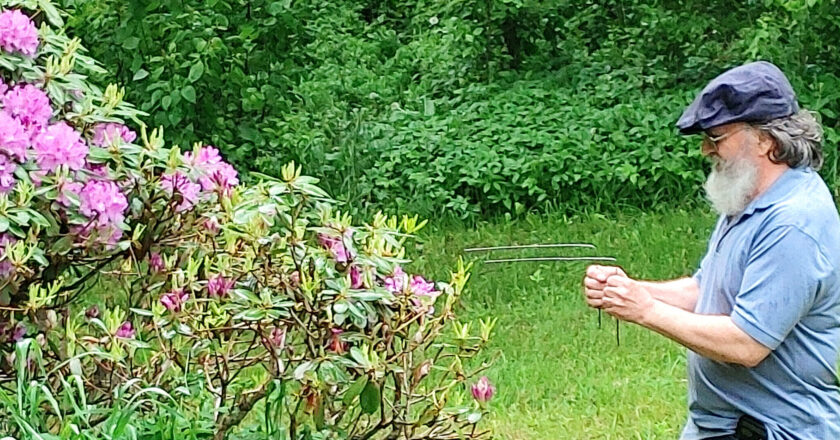
Next, out came the dowsing rods. On this topic, Wikipedia is categorical: “Scientific evidence shows that dowsing is no more effective than random chance. It is therefore regarded as a pseudoscience.” Yet there we were, identifying a spot near our Rhododendron bush where the copper rods whispered the likelihood of a water vein deep below.


The exact cost of drilling depends on the depth of that vein. Maybe $15,000?
So that is the dearest little piece of writing I’ve ever done! No wonder the contractor had such a good laugh at our expense.

Rachel Garber writes from her home in the old hamlet of Maple Leaf, in Newport. (rawrites@gmail.com)

Rachel Garber - en-tête chroniques

F—!

Now there’s a word to raise hackles. At least among English speakers.
(I’m told the equivalent in Québécois, in terms of emotional impact, has more to do with religion than sex. But that’s another story.)

I’ve observed that F— is bandied about these days quite freely. I pass a roadside banner almost daily: “F— Carney,” recently updated from “F— Trudeau.”

What the f—?! Why am I subjected to this spurt of poison, posted on private property but plainly polluting the public view?

Our friends and neighbours in local government, more and more often, are targeted by abusers. A spate of “F” posters went up recently around Bury, singling out one particular municipal employee.
The abusive language toward municipal workers, both elected and hired, goes beyond signage. In the news this past year are women in municipal office who are leaving politics because of harassment, including the mayors of Gatineau and Sherbrooke.

Last year, Quebec’s Municipal Affairs Minister reported that since 2021 a growing number of elected officials have quit or left politics because of intimidation and harassment, about 10% by December 2024. Quebec has even set up a helpline for municipal politicians.

The abusive climate also affects municipal employees; several in the Haut-Saint-François have privately said they left their jobs because of intimidation from individuals in our communities.

The “F” word and other epithets tell us mostly about the mud slinger’s own state of mind: stressed, no doubt, as many of us are. We’re living in a time when SNAFU (Situation Normal: All Fucked Up) applies. But relieving our distress by throwing verbal stones only helps upgrade our SNAFU status to FUBAR (Fucked Up Beyond All Recognition).

Next door to Canada is a great big bully with a nasty tongue. We seem to have given ourselves licence to emulate or tolerate his behaviour. But we have reason to reject abuse, and to do so openly when we see it happening.

I’m reading a tiny handbook by a historian on surviving our times. It’s called On Tyranny: Twenty Lessons from the Twentieth Century, by Timothy Snyder. The 9th lesson surprised me: “Be kind to our language.” Snyder writes about how propagandists use catch phrases and epithets to limit language and thought. He cites Ray Bradbury’s Fahrenheit 451, in which the regime burned books and limited language “by eliminating ever more words with each edition of the official dictionary.”

He summarizes the 9th lesson like this: “Avoid pronouncing the phrases everyone else does. Think up your own way of speaking, even if only to convey the thing you think everyone is saying. Make an effort to separate yourself from the Internet. Read books.”

Hmm. Back to the Internet: Wikipedia offers a detailed history of the “F” word and cites research suggesting that eating processed foods puts less wear and tear on our teeth. In adults, this leads to an overbite which facilitates producing “f” sounds, “and humorously, cleared the way for words like ‘Fuck’.”
Well, okay. Let’s eat local, fresh food. But, really, a lot of different words begin with “f”―our overbites don’t really explain the tyranny of intimidation.
Freedom!

Rachel Garber - en-tête chroniques

Paws up!

The federal election is just over, and in tiny Maple Leaf, here’s one befuddled voter.
In the privacy of this confessional, I admit this is the first time I ever voted other than NDP. In our riding, the party I voted for won; it’s only the second time in history I’ve voted on the winning side. (The first was during Jack Layton’s orange wave.) I never anticipated I would feel so bad, the morning after.
I’ve always supported the New Democratic Party. A little before the election, I invested in an NDP “Resist” T-shirt modelled by a cute little “good boy.” Beyond his cuteness, I was attracted to the poetry of his message, “Paws Up!”

In 1974, I returned to Canada after living three years under a dictatorship, where one’s every word, every action, was ruled by fear. The gap between rich and poor was excruciating, on a daily basis. And “desertification” threw sand in your teeth whenever you stepped outside your door.

So how could I not support a party that fights for environmental stewardship, economic equity, personal rights, international peace, and expanding our universal healthcare system? Starting with Saskatchewan Premier Tommy Douglas in 1947, the NDP led the provinces and the Canadian government to finally establish medicare based on need rather than wealth. It has never wavered in its values. Jagmeet Singh’s effective promotion of dental coverage and pharmacare, and his eloquent compassion expressed on so many occasions, have carried this heritage forward.

I too have never wavered in my values. But then an economic assault by Canada’s nearest neighbour muddied the pot. “They want to break us, so they can own us,” Prime Minister Mark Carney said. He seems capable of handling this existential threat, so that’s how I voted.

But now I am questioning what will happen on this side of the border―we put up our elbows and stopped buying American, but will we put up our paws to protect and promote our Canadian values?
In the election aftermath, I feel bad that the orange wave has so ebbed, and Jagmeet Singh has resigned. I wish I had stuck to my guns and voted NPD, as my son did. Paws up!

Frankly Speaking

Until June 29 at the Cookshire-Eaton Art Gallery, a collective exhibition, Franc-Parler, offers a dialogue between diverse artistic approaches, both in style and form. The works of Do Lessard, Mephisto Bates, Étienne Plante, Marie Ève Richard, Émile Algue, Vincent Arnold, and JRD include paintings, sculptures, installations, and live painting performances. The Gallery, at 125 Prinicipale West, Cookshire, is open weekends from noon to 4 p.m.

Inspired by Nature

Works by Randboro artist Denis Palmer are at the Uplands Cultural and Heritage Centre alongside landscape paintings by Sara Peck Colby and ceramic creations by Lucy Doheny. The works of all three artists are inspired by nature.

Colby has been painting Townships landscapes for more than 50 years. Doheny, who presents original and delicate ceramics, says “To work with clay is a wonderful thing. Imagine; the material is as old as the earth. There is a connection to the earth and its beginnings.” Palmer shows works created from life, with a focus on “trees, forests, waterways, and natural places.” He is showing ink drawings, watercolour sketches, and woodcut prints, often accompanied by stories.

Uplands, at 9 Speid Street in Lennoxville, is open Thursday to Sunday, from 10 a.m. to 4:30 p.m.

Paper, Poetry, Cards

The Bury United Cultural Center extends an open invitation to “come make paper and turn them into cards with poetry for Mom.” The free activity is from 1 to 4 p.m. on Saturday, May 10, at the Center, 560 Main St., Bury.

The Center also hosts a poetry workshop on Sunday, May 18, at 2 p.m., and card parties on Thursdays, May 15, 22, & 28, at 2 p.m.

Bilingual Viactive

The Newport Viactive group takes a summer break after Wednesday, May 14, at 1:30 p.m., at the Newport Municipal Hall, 1452 Route 212, Island Brook. Info: 819-889-1340.

The bilingual Sawyerville Viactive group meets for the last time this season on Wednesday, May 22, at 10 a.m. in the basement of the Saint-Rosaire Catholic Church, 4 Randboro Road, Sawyerville. Info: 819-889-2630.

Canterbury Flea Market

The Canterbury Cultural Centre’s annual Flea Market and Farmers’ Market is in the works for May 17-18. Tony De Melo is looking for antiques, books, DVDs, dishes, pots and pans, stemware, jewelry, tools and other hardware, small electric appliances, and more. “Old, new, used, vintage or antique items in good condition are welcome,” he wrote. “We do not accept large pieces of furniture, appliances or clothing.” All proceeds are for the restoration and regular maintenance of the Canterbury Centre at 1095 Victoria Road (Route 214), Bury. Info: Tony at 819-872-3400.

Brookbury Potluck & Silent Auction

The Brookbury Hall is open for business! The first event of the season will be a potluck supper and silent auction on Saturday, May 24, at 5 p.m. “Anything goes” for the potluck, said Brenda Bailey. “People who come can just bring an item to go into the auction. Sometimes baked goods, some books. Whatever!” All are welcome. The Hall is at 571 Brookbury Road (aka Route 255). Info: 819-884-5984.

CHURCHES

United. Sunday services are at 9:30 a.m. at the Cookshire Trinity United, and at 11 a.m. at the Sawyerville United Church. Info: 819-889-2838. For pastoral care: Rev. Tami Spires, 819-452-3685.
Baptist. Sunday services are in French at 9 a.m. and in English at 11 a.m., at the Sawyerville Baptist Church, 33 rue de Cookshire. Info: Pastor Michel Houle, 819-889-2819.

Anglican. A Sunday service is on May 18 at 10 a.m. at the St. John’s Church, 170 Batley Road (erstwhile Route 255 N.), Brookbury. Schedule: check deaneryofstfrancis.com/calendar/. Info: 819-887-6802, or quebec.anglican.ca.

Do you have news to share? Contact 819-640-1340 or rawrites@gmail.com by May 12 for publication May 22.

Rachel Garber - en-tête chroniques

Ed Pedersen, Champion of History

The news is just out: Edward Pedersen is to receive a 2025 Marion Phelps Award for his outstanding long-term contributions to “the preservation and promotion of Anglophone heritage in Quebec.” The annual award by the Quebec Anglophone Heritage Network recognizes the significance, quality, and personal dedication of his volunteer work over the past 10 years with the Bury Historical and Heritage Society.

President of the BHHS from 2015 to 2019, Pedersen’s contributions began much earlier, and continue to this day. Among them are the purchase and restoration of the Christ Church Canterbury, and its transformation into a cultural centre. Then there was the annual Church Heritage Tour featuring up to 12 churches in the Haut-Saint-François, volunteer appreciation suppers, fundraising community events such as the annual Strawberry Shortcake brunch at Canada Day in Bury.

Under his leadership, the BHHS organized a series of compelling conferences on local history, featuring forestry, transportation, military, and food and cooking. These were accompanied by booklets painstakingly researched and written by Petersen himself.

A retired music teacher, Pedersen is known for his gracious leadership and mentoring skills, creating a convivial experience for his fellow volunteers in the BHHS, and for the larger community.
Congratulations, Ed! And thank you for enriching our region!

Rachel Garber - en-tête chroniques

Chickens are fun

Preparing to climb out of the car, I told my son in the back seat, «I’ll leave the key in the car, so it doesn’t yell at you when I leave.» I was referring to the panicked beeping my car emits if the key leaves the car while the motor is still on.

An accusatory voice at my elbow made my hair stand on end. «It is not recommended to leave your keys in the car because it could lead to theft!»

As the verbal finger-wagging continued, I located its source. My cell phone! Opening it, I saw the little screen flashing, proudly announcing that Gemini, Google’s AI chatbot, was speaking to me.
I felt the more unsettled to realize that Gemini had also been eavesdropping on my conversation with my son.

Not seeing any button, icon, or means of finger-stroking Gemini into submission, I tried a commanding tone, the kind I’d use to reprimand a bad dog.

«Gemini, I don’t want to hear anything more from you! Stop listening to me. Go away and go to sleep! Shut down!»

Mercifully, the screen went dark, and the phone went quiet.
Later, at home, we performed surgery on my phone. It involved googling «gemini.google.com.activity,» touching a little hamburger menu in the corner (a little stack of horizontal lines), and then selecting from the menu, «Turn off and delete activity.»


Our chickens give me respite from the netherworld of artificial intelligence (AI). Sometimes I check out «Backyard Chickens» for news from the feathered world. Today, I read, «Hello. I’ve just joined because I don’t have a clue about chickens, and I now have two of them.

«They belonged to a neighbour,» wrote the new chicken owner. «They escaped soon after he got them. I am guessing they are six or seven months old and have just started laying eggs. For reasons I do not know, they picked me to live with.»

The pair of hens, Thelma and Louise, follow their new benefactor around and sleep in the neighbour’s trees. Louise lays an egg almost everyday in the nest box of their new little coop, but Thelma decided to lay her eggs in the tiniest flowerpot in the greenhouse.

I laugh as the story unfolds. I hear my hens cluck outside the window.
Chickens are good for my blood pressure. May bird flu stay far away!

©2026 Journal Le Haut-Saint-François